
Postojnska jama, a layered karst underworld beneath Postojna
Published on 09/19/2026 at 09:35 | Editorial responsibility: Rafael Müller, Editor-in-Chief AD HOC NEWS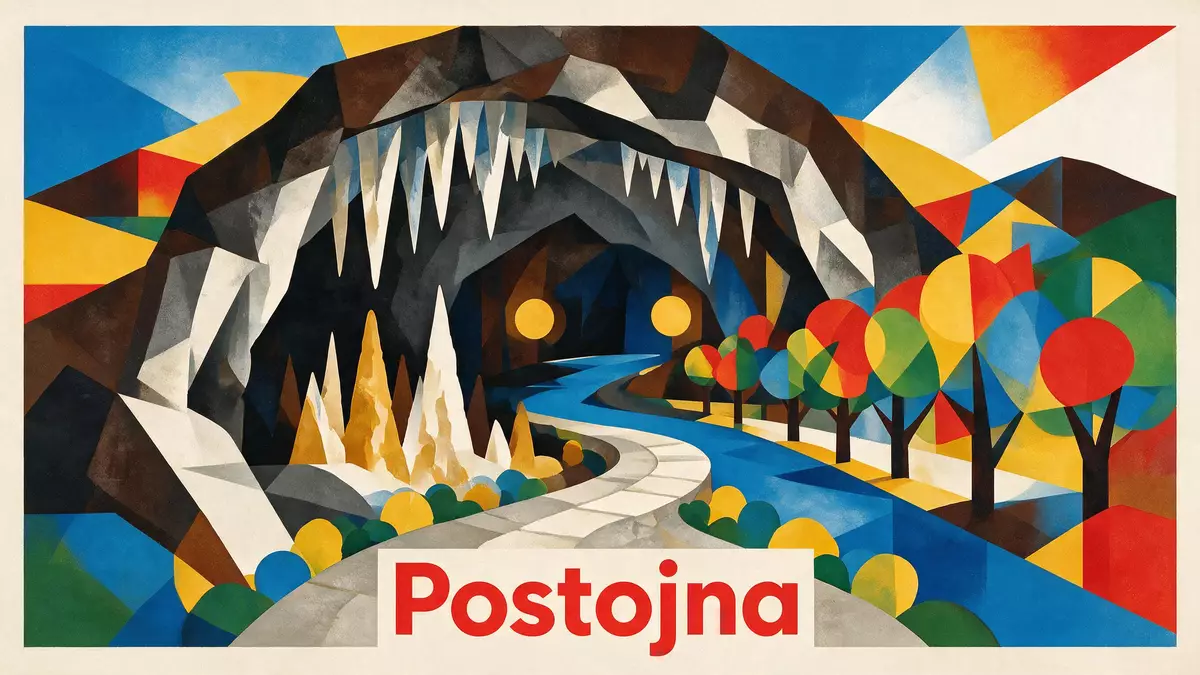
Postojnska jama, known in English as Postojna Cave, is a long karst cave system running beneath the town of Postojna in south?western Slovenia, where passages and chambers form a layered underworld landscape shaped in limestone over geological time. The explored channels extend for well over 20 km (12.4 mi), placing Postojnska jama among the most extensive mapped cave systems in Slovenia and a major show cave within the Classical Karst region.
A cave system shaped by subterranean water
Postojnska jama lies beneath the Pivka basin on the southern edge of Postojna, in a belt of thick limestone where surface streams sink into fissures and reappear further downstream as springs. The cave system follows the course of the Pivka River through the rock, with channels arranged on several levels that reflect different phases of erosion and deposition over time.Postojnska jama lies beneath the town of Postojna In plan, the mapped passages form a branching web of tunnels, galleries and halls rather than a single cavern, giving the cave its character as a system that extends below the surrounding hills.
Survey work has documented more than 24 km (14.9 mi) of subterranean tunnels and chambers in the wider Postojna?Planina cave system, with Postojnska jama forming its southern part.Survey measurements record over 24,000 m of tunnels The inner sections of Postojnska jama were first explored in the early nineteenth century, opening up a sequence of decorated halls whose dripstone formations, columns and curtains are a defining feature of visits.
Limestone halls, dripstone forests and an underground railway
Visitors encounter Postojnska jama as a succession of differently scaled spaces, from narrower corridors to larger halls where speleothems form dense clusters on the floor and ceiling. These formations grew from mineral?rich water slowly depositing calcite, building stalactites, stalagmites and columns that can reach several metres in height. Over longer distances the passages bend and change level, with dry fossil galleries higher in the system contrasting with sections closer to the active route of the river.
The mapped depth of Postojnska jama reaches around 115 m (377 ft) beneath the surface, so the visitor route moves between levels within the limestone plateau above Postojna.The cave system reaches depths of up to 115 m A small railway carries visitors into the interior along part of the show?cave trail, covering a section of several kilometres before visits continue on foot. At points where the passages widen, dripstone formations cluster into what resembles a forest of stone, while narrower stretches reveal the layered structure of the limestone beds themselves.
Part of the wider Postojna?Planina cave system
Postojnska jama is the best?known part of the Postojna?Planina cave system, a connected set of karst channels that together reach at least 34 km (21.1 mi) in measured length.The Postojna?Planina cave system exceeds 34 km Within this network, Postojnska jama links to other named caves and entrances, including Otoška jama, Magdalena jama, ?rna jama and Pivka Cave, which together form a multi?level karst complex that has long attracted scientific attention for its subterranean biodiversity.The cave system includes several natural and historical entrances
Over nearly two centuries, guided tours have introduced visitors to this underworld, establishing Postojnska jama as an early example of a show cave with organised access.Guided visits have taken place for almost 200 years The combination of large decorated halls, an underground railway and the connection to a broader karst system makes the cave distinctive among European limestone landscapes, especially within the Dinaric Karst belt that runs across south?western Slovenia.
Visiting Postojnska jama: what travellers from Western Europe should know
- Postojnska jama lies on the southern edge of Postojna in south?western Slovenia, with the main visitor entrance reached from Jamska cesta and signposted road links from the A1 motorway.
- The show?cave route combines a ride on the underground railway with a section on foot, including stretches of gently graded paths and stairways through larger halls and connecting passages.
- Postojnska jama forms part of the wider Postojna Cave Park, where other caves such as ?rna jama and Pivka Cave are accessed separately from the same karst landscape.
- The official language is Slovene and the currency is the euro.
Searching for Postojnska jama on social platforms
These links open searches for Postojnska jama on each platform.
Frequently asked questions about Postojnska jama
Where is Postojnska jama located?
Postojnska jama lies beneath the town of Postojna in south?western Slovenia, in the Classical Karst region along the valley carved by the Pivka River.
What can visitors expect on a visit to Postojnska jama?
Visitors travel part of the way on an underground railway and walk through limestone halls and galleries where dripstone formations and layered karst passages form the main sights.
What makes Postojnska jama distinctive among European caves?
Its combination of extensive mapped length, multi?level karst channels, decorated halls and long?established guided access within a wider cave system gives Postojnska jama a distinctive character.


