
Positano’s vertical village between cliffs and sea
Published on 09/19/2026 at 06:06 | Editorial responsibility: Rafael Müller, Editor-in-Chief AD HOC NEWS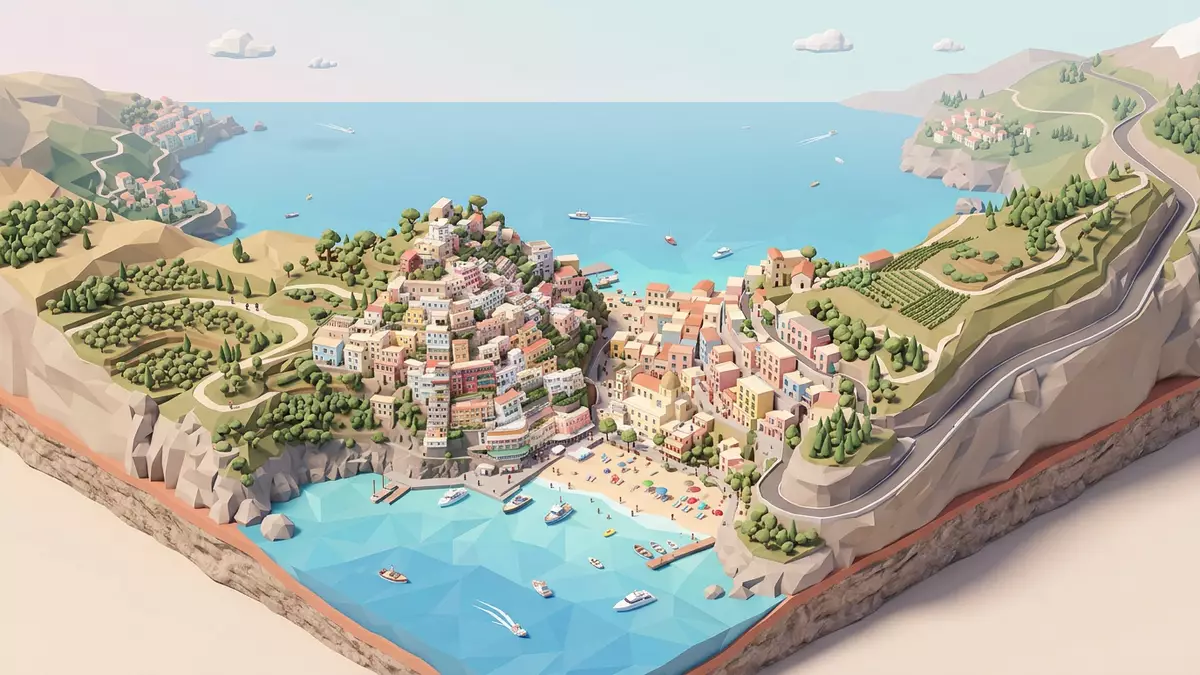
Positano is a coastal town in southern Italy where houses, lanes and stairways seem to pour down steep cliffs towards the Tyrrhenian Sea, creating a vertical village that feels carved into the rock. On the Amalfi Coast in Campania, it has medieval roots as a fishing community and later a role in regional maritime trade, and its white, pink and yellow houses frame the dome of Santa Maria Assunta at the centre of the settlement.
The vertical layout of Positano
Positano occupies a narrow enclave on the Amalfi Coast where the slopes of the Lattari Mountains drop sharply to the water, so the town rises almost vertically from the shoreline to the terraces high above the sea. The municipality is part of the Province of Salerno in Campania, and its territory climbs from low elevations near the waterfront to higher districts on the flanks of the mountains.town and comune on the Amalfi Coast Narrow lanes and flights of steps link levels that stack one above another, so everyday life unfolds on staircases, sloping alleyways and small terraces overlooking the water.vertical layout on steep limestone cliffs
Seen from the sea, Positano forms a cascade of pastel façades and tiled roofs, punctuated by the dome of the church and occasional towers, all set against the darker green of the Lattari Mountains behind. The lower part of the town gathers around the main beach, known as Spiaggia Grande, while further west another cluster of houses lies above the smaller Fornillo beach, reached on foot along a coastal path.downtown Positano and Fornillo quarters Above these waterfront districts, houses and small hotels stand on terraced platforms connected by stairways, with views that extend over the gulf towards nearby coastal towns and offshore islands.
History and the church of Santa Maria Assunta
The area of Positano has been settled since Roman times, when patrician families built seaside villas along this stretch of coast, including a villa near the site of the present church and gardens by the main beach.Roman settlement with seaside villas In the Middle Ages Positano developed as a small port within the orbit of Amalfi, sharing in maritime trade across the Mediterranean and gradually growing up the slopes around a Benedictine monastery dedicated to St Mary.medieval fishing port around a Benedictine monastery
Santa Maria Assunta, the collegiate church that dominates the town, stands close to Spiaggia Grande with its dome tiled in coloured majolica and a façade that looks onto the central piazza.church of Santa Maria Assunta near Spiaggia Grande Around it, baroque houses with sea-facing terraces date from the sixteenth to eighteenth centuries, reflecting eras when Positano’s fast ships traded with ports in the eastern Mediterranean. Over later centuries the town experienced phases of decline and emigration, particularly after the nineteenth century, yet its compact historic core with church, piazza and surrounding streets remains a clear focus of the settlement against the steep backdrop of the mountains.
Positano within the Amalfi Coast landscape
Positano lies on the western end of the Amalfi Coast, between Sorrento to the west and Amalfi further east, along a coastal road that traces the curves of the cliffs above the Tyrrhenian Sea.western end of the Amalfi Coast between Sorrento and Amalfi The coast forms part of a UNESCO World Heritage Site, recognised for its combination of steep limestone mountains, cultivated terraces and small towns that appear to cling to the rock between ridge and sea.UNESCO-listed Amalfi Coast world heritage site Positano’s setting shows this geography clearly: the town occupies a narrow valley and adjoining slopes where paths and staircases thread between houses, gardens and small patches of cultivation.
The shoreline at Positano consists of pebble beaches and small coves framed by stone quays, with boats drawn up on the sand and jetties reaching into the water. Behind, the Lattari Mountains rise in ridges and peaks, and terraced slopes around the town carry citrus trees and other Mediterranean vegetation. From many points in Positano there are views along the coast towards other villages and out across the gulf, where the open sea meets the base of the cliffs that have shaped settlement patterns all along this stretch of southern Italy.
Visiting Positano: what travellers from Western Europe should know
- Positano lies in Campania on the Amalfi Coast in southern Italy, on the coastal road between Sorrento and Amalfi, with road access along the cliffside and boat connections from neighbouring towns.
- The town climbs steeply from the waterfront, so moving between districts involves long flights of stone steps and sloping lanes, and many streets are only accessible on foot.
- Fornillo beach sits just west of Spiaggia Grande and is reached by a pedestrian path along the coast, while higher viewpoints are accessed by staircases that rise through residential terraces.
- The official language is Italian and the currency is the euro.
Searching for Positano on social platforms
These links open searches for Positano on each platform.
Frequently asked questions about Positano
Where is Positano located?
Positano is a town and municipality on the Amalfi Coast in Campania, in southern Italy, in the Province of Salerno.
What should visitors expect in Positano?
Visitors encounter a steep, compact town built on cliffs, with many stairways, pebble beaches, a central piazza and the dome of Santa Maria Assunta above the waterfront.
What makes Positano distinctive among coastal towns?
Positano’s distinctive character lies in its vertical layout on limestone cliffs, pastel houses cascading to the sea, and its position within the UNESCO-listed Amalfi Coast.


