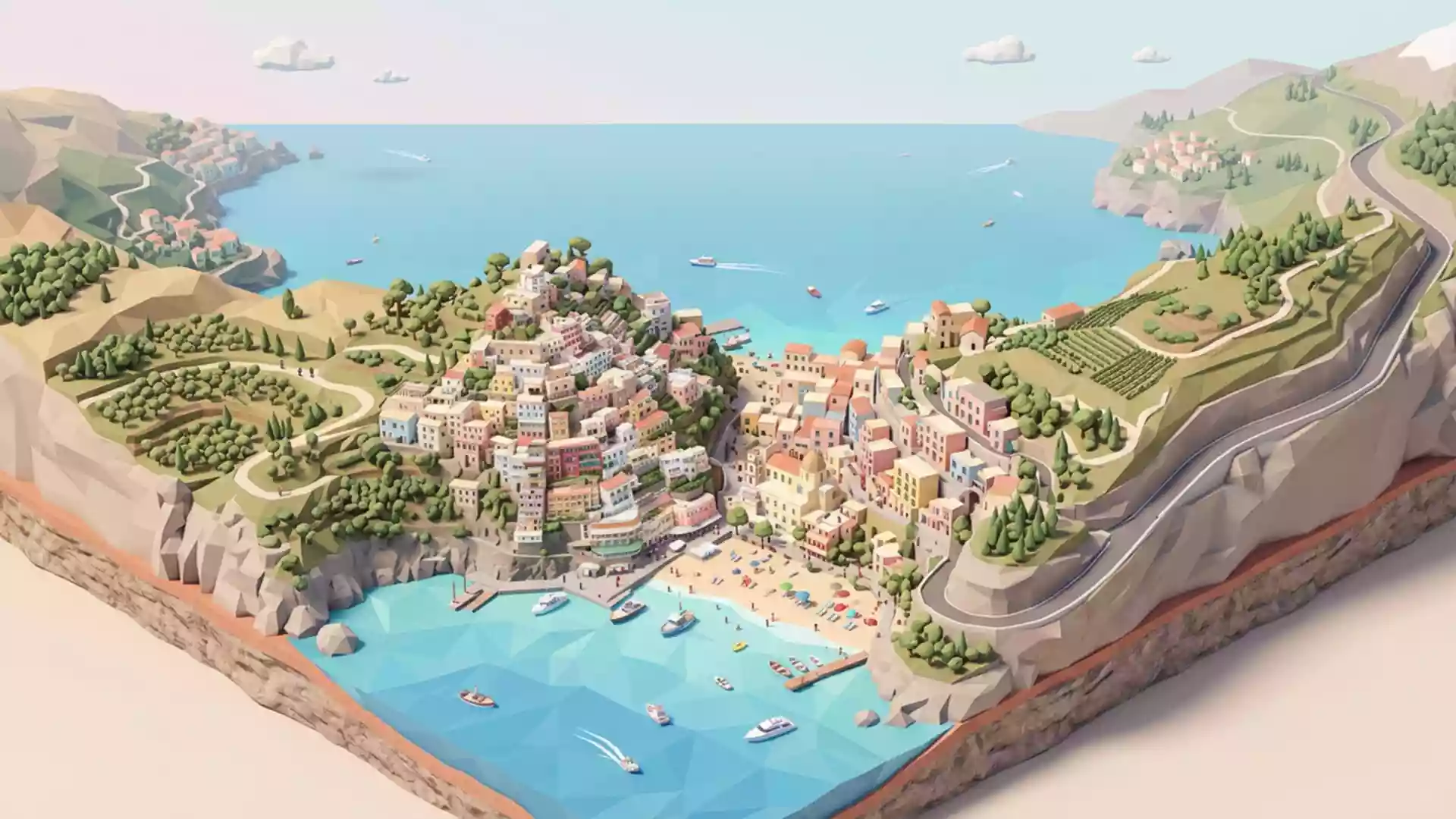
Positano’s cliffside village between church dome and sea
Published on 09/11/2026 at 08:58 | Editorial responsibility: Rafael Müller, Editor-in-Chief AD HOC NEWS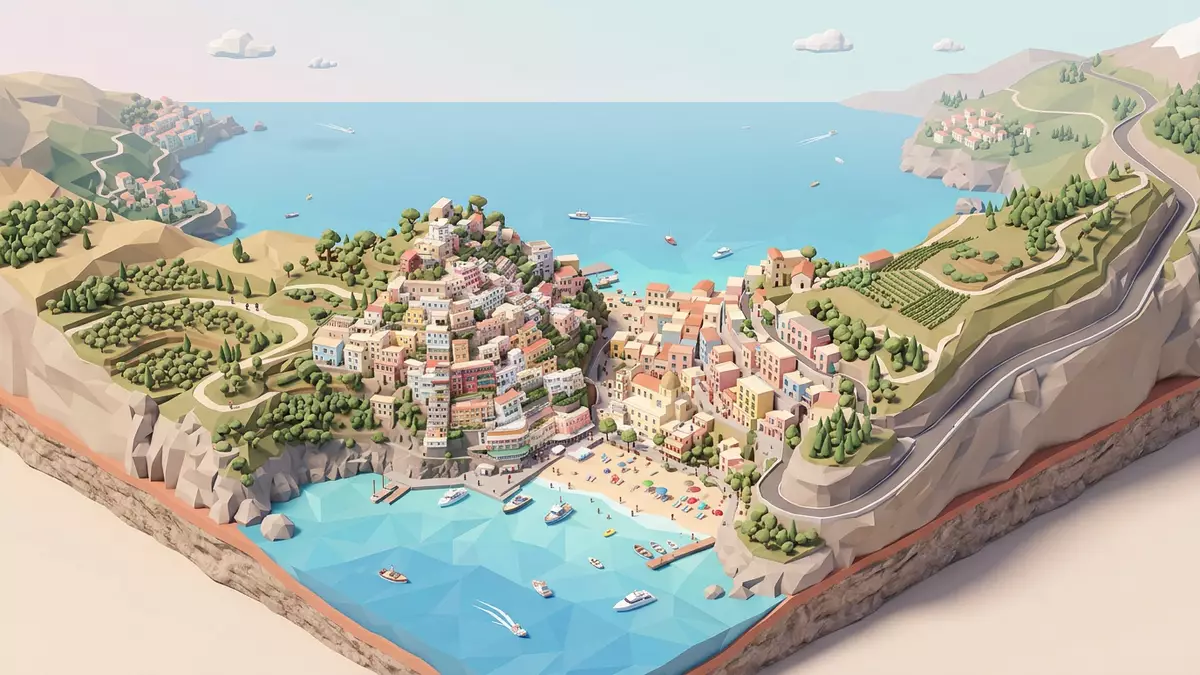
Positano on the Amalfi Coast in southern Italy is a cliffside village where pastel houses climb in terraces above the Tyrrhenian Sea and converge around the dome of Santa Maria Assunta. The settlement forms part of the Amalfi Coast in Campania, with a history that reaches back to Roman coastal villas and a medieval fishing community shaped along steep stairways and lanes. In Positano the vertical layout, the bright ceramics and the relationship between the main church and the sea define how the place is experienced.
Terraced houses on a vertical coastline
Positano rises almost vertically from the shoreline, with houses stacked along the cliffs in a dense pattern that follows the slope from the main beach to the upper quarters of the village.cascade of pastel houses The buildings are generally low to mid-rise, set on terraced platforms that give each group of dwellings a view towards the water while creating an intricate mesh of staircases and narrow passages between them. Many façades carry pale colours such as pink, ochre and white, with balconies, small gardens and external stair runs marking the transitions between levels.baroque residential houses
The settlement stands on the southern side of the Sorrentine Peninsula, above the Tyrrhenian Sea, and is bordered by gullies and ridges that guide streets and paths down towards the shore.territory of Positano Over centuries the houses and lanes have been adapted to this terrain, producing a pattern of steps, ramps and arches rather than broad level roads. In the lower part of Positano the main beach, Spiaggia Grande, lies directly beneath the houses, so that boats can be drawn onto the sand with the terraced village rising immediately behind them.Spiaggia Grande
Santa Maria Assunta and Positano’s Roman and medieval layers
At the centre of Positano, near the waterfront, stands the Church of Santa Maria Assunta, recognisable from its majolica-tiled dome above the surrounding roofs.majolica-tiled dome Documentary evidence links the church to a Benedictine abbey founded in the second half of the tenth century, later rededicated to the Virgin Mary when a Byzantine icon of the Madonna and Child arrived in Positano in the twelfth century.Benedictine abbey and icon The white and gold interior reflects late eighteenth-century restoration in a Neoclassical style, contrasting with the colourful ceramic surface of the dome above.
Positano’s Roman past appears in the remains of villas near the church, where fragments of walls and decorative elements testify to the area’s role as a coastal retreat during the Roman period.Roman villas near the church Archaeological work has identified a Roman villa close to the later church site, revealing mosaics and frescoes that link the village to wider patterns of leisure along the Amalfi coastline.Roman villa excavation In medieval times Positano became part of the territory of Amalfi, developing as a fishermen’s centre and fortified coastal town with watchtowers along the shore and defensive walls on the slopes.medieval fortifications and watchtowers
Sea, beaches and cliffside paths
Positano’s relationship with the Tyrrhenian Sea is direct, with the main settlement looking onto the water and paths running from the upper quarters to the beaches below. Spiaggia Grande forms the broadest curve of sand, backed by the village and the dome of Santa Maria Assunta, and acts as an access point for boats that link Positano with other parts of the Amalfi Coast.harbour and coastal boats A coastal path leads westwards to Fornillo beach, a smaller cove beneath cliffs that lie slightly apart from the main harbour, and further stretches of shore remain reachable only from the sea.Fornillo cove
The wider landscape around Positano is characterised by steep limestone formations and deep inlets, with roads and stairways tracing the contours between rock faces and cultivated terraces. Along the coast, watchtowers mark strategic points on headlands, and from the village slopes views open across the Tyrrhenian Sea towards other sections of the Amalfi Coast.vertical seaside village The combination of terraced dwellings, stepped lanes, church dome and coastal scenery gives Positano a distinct character within this stretch of Campania.
Visiting Positano: what travellers from Western Europe should know
- Positano lies on Italy’s Amalfi Coast in the region of Campania and can be reached by road along the coastal route or by boat connections on the Tyrrhenian Sea.
- The village is built on steep slopes, with long stairways and narrow lanes linking the upper streets to Spiaggia Grande and other waterfront areas, so walking involves frequent climbs and descents.
- Fornillo beach is reached along a coastal path from the main settlement, crossing beneath cliffs and offering views back towards the terraced houses above the sea.
- Italian is the official language and the currency is the euro.
Searching for Positano on social platforms
These links open searches for Positano on each platform.Frequently asked questions about Positano
Where is Positano in Italy?
Positano is a coastal village in Campania on the Amalfi Coast, set on the southern side of the Sorrentine Peninsula above the Tyrrhenian Sea.
What should travellers expect on a visit to Positano?
Travellers encounter steep stairways, terraced pastel houses, the dome of Santa Maria Assunta and beaches such as Spiaggia Grande beneath the village.
What makes Positano distinctive among Amalfi Coast towns?
Positano’s tightly packed cliffside layout, visible church dome, Roman villa remains and direct relationship between village and sea distinguish it along the Amalfi Coast.