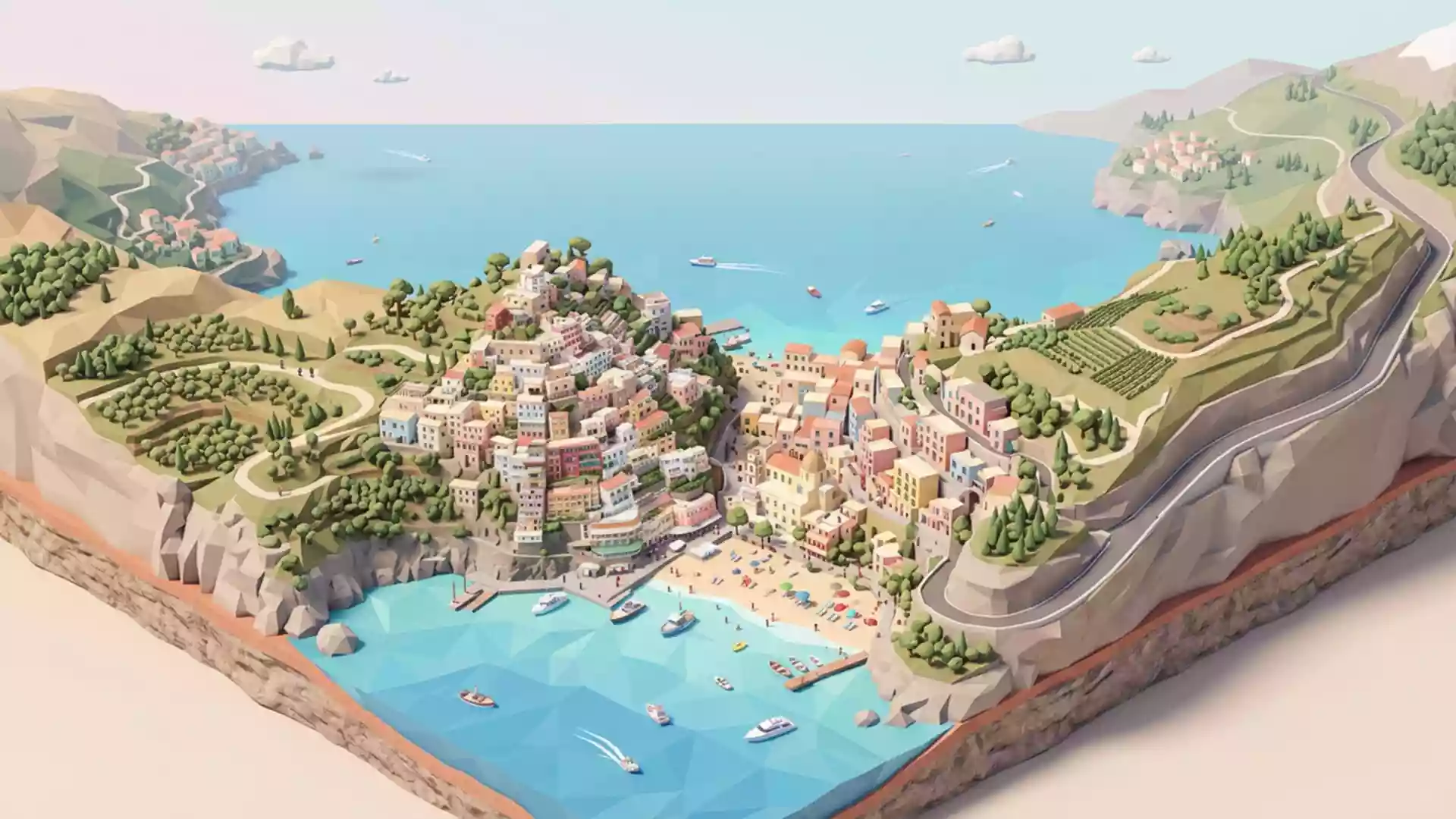
Positano, a vertical village above the Tyrrhenian Sea
Published on 09/09/2026 at 06:36 | Editorial responsibility: Rafael Müller, Editor-in-Chief AD HOC NEWS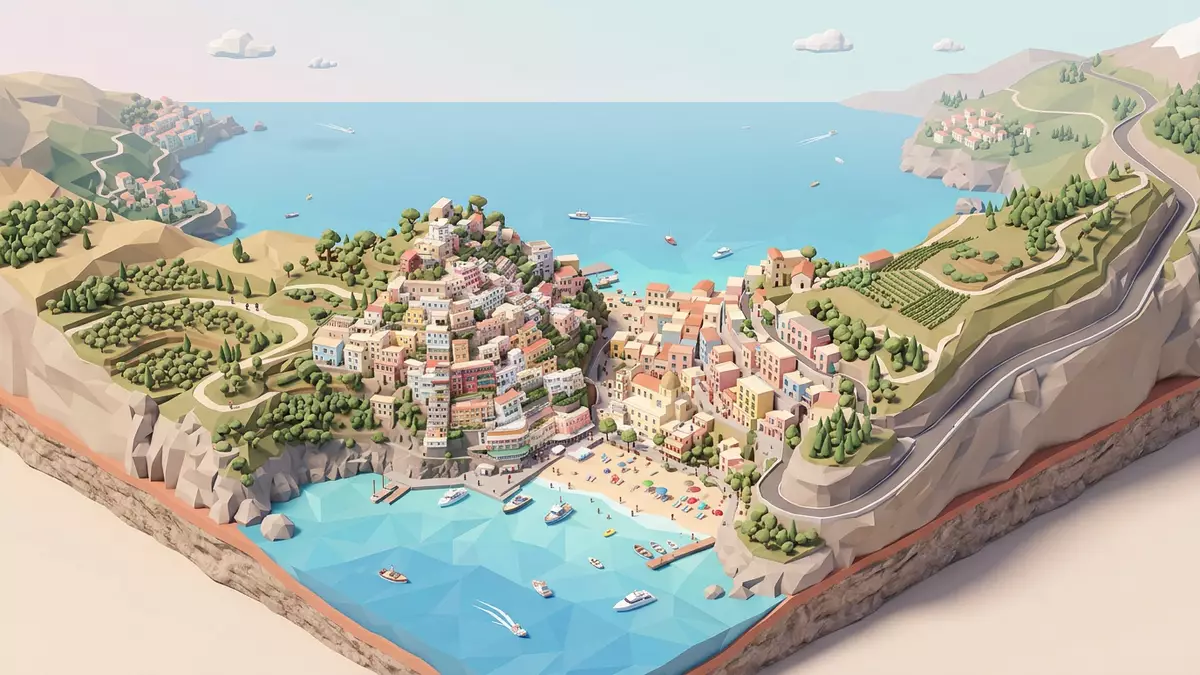
Positano is a coastal town in southern Italy where houses, lanes and stairways climb a steep cliff in a compact cascade above the Tyrrhenian Sea. Set on the Amalfi Coast in the Campania region, Positano combines a vertical urban layout with a beach at its foot and traces of a Roman villa beneath its main church, tying the present town to the first century BC.
A vertical town between cliff and sea
Positano occupies a narrow valley that opens directly onto the Tyrrhenian Sea, with the built-up area spread across limestone slopes rather than a broad plain.the valley in which Positano is located Streets in the historic centre often take the form of stepped lanes, so that many everyday routes involve climbing or descending stairways instead of following level roads.stairs serving as the primary streets
From the waterline, Positano rises in tiers of pastel-coloured houses, small hotels and terraces, creating a fan of buildings that face the sea and the main beach. The town lies within the Province of Salerno and is part of the Amalfi Coast, a stretch of Campania shoreline recognised for its dramatic cliffs and compact settlements.a town and comune on the Amalfi Coast in the Province of Salerno in Campania Above the waterfront, narrow passages connect small squares, church forecourts and viewpoints, with vegetation such as bougainvillea softening the stone and plaster surfaces.
Layers of history from Roman villa to fishing village
Long before the modern town took shape, the valley at Positano contained a substantial Roman villa constructed towards the end of the first century BC.a sumptuous roman villa designed for leisure time at the end of the 1st century BC The villa formed part of the Surrentum area, a coastal zone of Campania where affluent residents established properties intended for leisure along the Sorrentine peninsula.as part of the Surrentum area, modern Sorrento
Archaeological study indicates that the villa was damaged by the earthquake of 62 AD and later buried beneath pyroclastic material during the Vesuvius eruption of 79 AD, which affected several settlements around the Bay of Naples.destroyed by the Vesuvius eruption in 79 AD and damaged by the 62 AD earthquake Hypotheses about ownership connect the villa with Posides, a powerful freedman of Emperor Claudius, with the town’s name linked to “Posidetanum”, meaning the property of Posides.the villa of Posides and the derivation “Posidetanum” Over centuries, stone and decorative materials from the buried structure were gradually recovered, and written reports in the eighteenth century recorded frescoed rooms beneath the church of Santa Maria Assunta.Karl Weber’s 1758 report describing structures with frescoes and mosaic floors
Santa Maria Assunta and the Roman Archaeological Museum
In the present town, the Church of Santa Maria Assunta stands near the main seafront area with a distinctive dome above its body, forming a landmark that is visible from the beach and from terraces higher on the slope.the famous dome of the Chiesa di Santa Maria Assunta Beneath this church and neighbouring structures lies part of the ancient Roman villa, which has been investigated through formal excavations.
The Roman Archaeological Museum of Positano, known as MAR Positano, presents sections of the villa, including a triclinium where the walls carry Fourth Pompeian Style frescoes with perspective illusionism.the villa’s triclinium with Fourth Pompeian Style frescoes Excavation campaigns beginning in 2004 revealed these decorated spaces and helped establish the museum beneath the church, allowing visitors to see part of the ancient residence integrated into the fabric of the contemporary town.proper scientific excavation of the villa began in 2004
Visiting Positano: what travellers from Western Europe should know
- Positano lies on the Amalfi Coast in Campania, south of Naples and close to Sorrento, with road and sea links connecting it to other towns along this stretch of Italy.
- The historic centre is built on steep limestone slopes, so moving around involves frequent stairways and inclined lanes rather than long flat streets.
- Naples functions as the nearest major airport, while regional buses and seasonal ferries link coastal settlements including Positano along the Sorrentine and Amalfi coasts.
- The official language is Italian and the currency is the euro (EUR).
- Entry requirements depend on your nationality; UK travellers can check the FCDO travel advice at gov.uk/foreign-travel-advice, Irish travellers the Department of Foreign Affairs at ireland.ie.
Searching for Positano on social platforms
These links open searches for Positano on each platform.
Frequently asked questions about Positano
Where is Positano located?
Positano is a town and municipality on the Amalfi Coast in the Province of Salerno, within the Campania region of southern Italy.
What should visitors expect when walking around Positano?
The central area occupies steep slopes, so routes involve many stairways and inclined passages between houses, terraces and small squares rather than long level streets.
What makes Positano distinctive among coastal towns?
Positano combines a vertical layout of pastel-coloured buildings on limestone cliffs with a seafront church and an accessible Roman villa museum beneath it, linking everyday life to ancient architecture.