
Porto Venere, Liguria’s stone gateway to the Gulf of Poets
Published on 09/12/2026 at 12:04 | Editorial responsibility: Rafael Müller, Editor-in-Chief AD HOC NEWS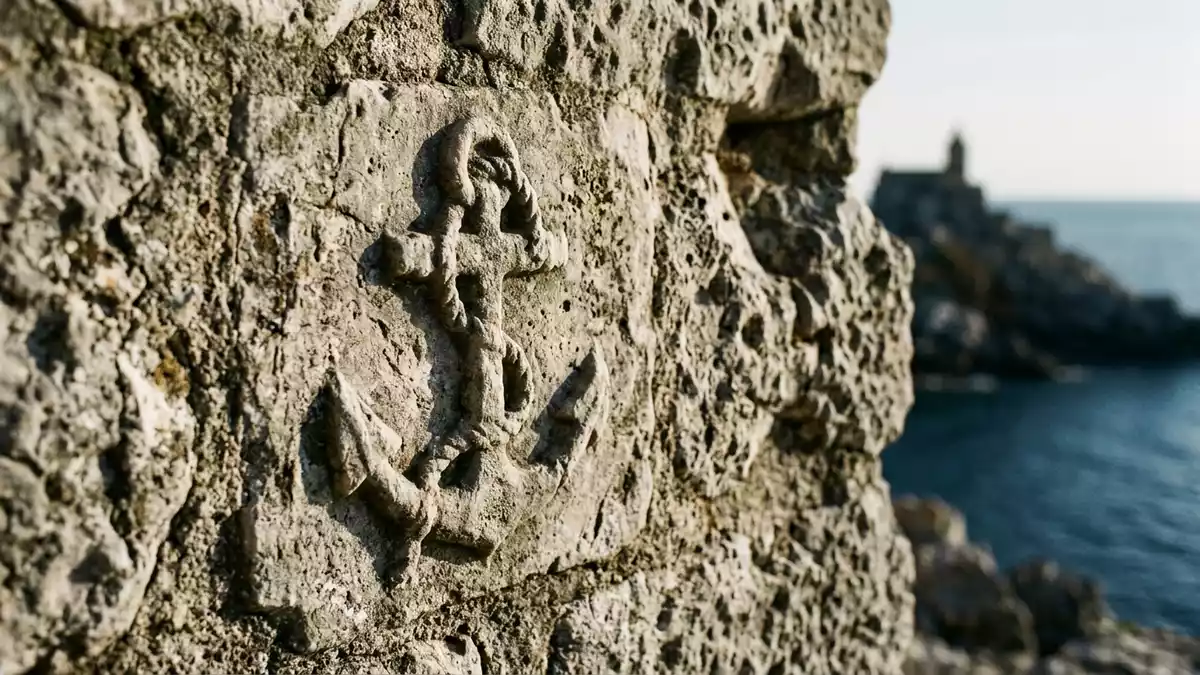
Porto Venere, known in German as Portovenere, is a compact coastal town on the Ligurian Sea where stone terraces, fort-houses and a cliff-top church face the wide curve of the Gulf of Poets. Its historic core belongs to a UNESCO World Heritage cultural landscape that links the town with Cinque Terre and the nearby islands of Palmaria, Tino and Tinetto, framing an intricate relationship between steep land and the sea that has endured for centuries. Ancient Portus Veneris, the predecessor of today’s Porto Venere, is thought to date from at least the middle of the first century BC, giving this small harbour a depth of history that belies its size.
From Portus Veneris to a fortified Ligurian harbour
The name Porto Venere recalls the Latin Portus Veneris, a harbour whose origins are thought to date from the middle of the first century BC when this stretch of coast was part of the wider Ligurian world.Ancient Portus Veneris lay on the promontory now occupied by the Church of San Pietro and developed into a fishing community recorded by the Roman emperor Antoninus Pius in a maritime diary in 161 AD.Roman times as a fishing community With the fall of the Roman Empire, Porto Venere became a base for the Byzantine fleet before being destroyed by Lombard forces in 643, marking a shift from imperial harbour to contested military outpost.
From the twelfth century Genoa shaped Porto Venere into a fortified maritime town, enclosing the harbour behind defensive walls and integrating a castle and towers into the rocky ridge above the waterfront.Genoese fortifications and walls The medieval street pattern still follows the line of the fort-houses along the shore, with tall, narrow buildings backing directly onto the sea and presenting a continuous stone and plaster front towards the harbour. Later the town formed part of the Kingdom of Sardinia and, from 1861, the Kingdom of Italy, but its core remained that layered sequence of Roman harbour, Byzantine base and Genoese stronghold on a short, steep promontory.
San Pietro and the Gulf of Poets
The most striking single feature of Porto Venere is the Church of San Pietro, a Roman Catholic church dedicated to Saint Peter set on the outer tip of the promontory at the entrance to the Gulf of Poets.San Pietro church facing the Gulf of Poets The building combines Romanesque and Gothic architectural elements, its stone fabric firmly anchored into the rock while its upper parts rise above the sea, forming a clear landmark visible from the harbour and from passing boats.Romanesque-Gothic church of San Pietro Where the cliff meets the church, the boundary between land and water is reduced to sharp edges and vertical surfaces.
Behind San Pietro the harbour of Porto Venere opens towards the wide bay that Italian literature calls the Gulf of Poets, a name tied to the presence of writers such as Lord Byron who spent time on this coast in the nineteenth century.Gulf of Poets and literary associations The harbour is framed on one side by the waterfront houses and on the other by the wooded slopes of Palmaria island, with boats crossing between them. Standing near San Pietro, the view takes in terraces, sea cliffs, islands and the distant line of Cinque Terre in a single sweep.
A UNESCO landscape of terraces, islands and villages
Porto Venere is part of a larger cultural landscape inscribed on the UNESCO World Heritage list in 1997 under the title “Portovenere, Cinque Terre, and the Islands (Palmaria, Tino and Tinetto)”.UNESCO listing for Portovenere and Cinque Terre This protected stretch of eastern Ligurian coast runs between Punta Mesco and Punta Persico, combining steep coastal slopes with centuries of human work in the form of stone-walled terraces for vine and olive cultivation. The designation recognises the way settlement, agriculture and maritime activity together have shaped the landscape around Porto Venere.
The three islands off Porto Venere – Palmaria, Tino and Tinetto – belong to the same inscription and extend the town’s setting into the bay.Palmaria, Tino and Tinetto islands Palmaria’s cliffs face the church and castle across a narrow channel, while the smaller islands of Tino and Tinetto lie further out, marked by traces of monastic life and coastal defence works. Taken together with the terrace bands above Cinque Terre’s villages and the harbour at Porto Venere, they form a continuous sequence of stone, cultivated slope and sea that has maintained its basic outline through shifting political borders from Roman times to the Kingdom of Italy.
Visiting Porto Venere: what travellers from Western Europe should know
- Porto Venere lies on the Ligurian coast in northern Italy, west of La Spezia, and is reached overland along the Gulf of Poets by road connections from the city and its railway station.
- The historic centre rises on a rocky promontory with cobbled alleys, stepped lanes and short but steep climbs between the harbour front, San Pietro church and the castle above.
- The official language is Italian and the currency is the euro.
Searching for Porto Venere on social platforms
These links open searches for Porto Venere on each platform.Frequently asked questions about Porto Venere
Where is Porto Venere and what kind of place is it?
Porto Venere is a small coastal town and comune on the Ligurian Sea in northern Italy, near La Spezia, combining a harbour, medieval fortifications and nearby islands.
What should visitors expect on a first walk through Porto Venere?
A first walk runs along the harbour past tall waterfront houses, then climbs through narrow alleys and steps towards the Church of San Pietro and the castle on the rocky ridge.
What makes Porto Venere distinctive among Ligurian coastal towns?
Porto Venere stands out through the combination of its cliff-top church facing the Gulf of Poets, its Genoese fort-houses and castle, and its inclusion in a UNESCO-listed coastal landscape.


