
Pont Alexandre III, Paris’s gilded gateway over the Seine
Published on 08/31/2026 at 15:10 | Editorial responsibility: Rafael Müller, Editor-in-Chief AD HOC NEWS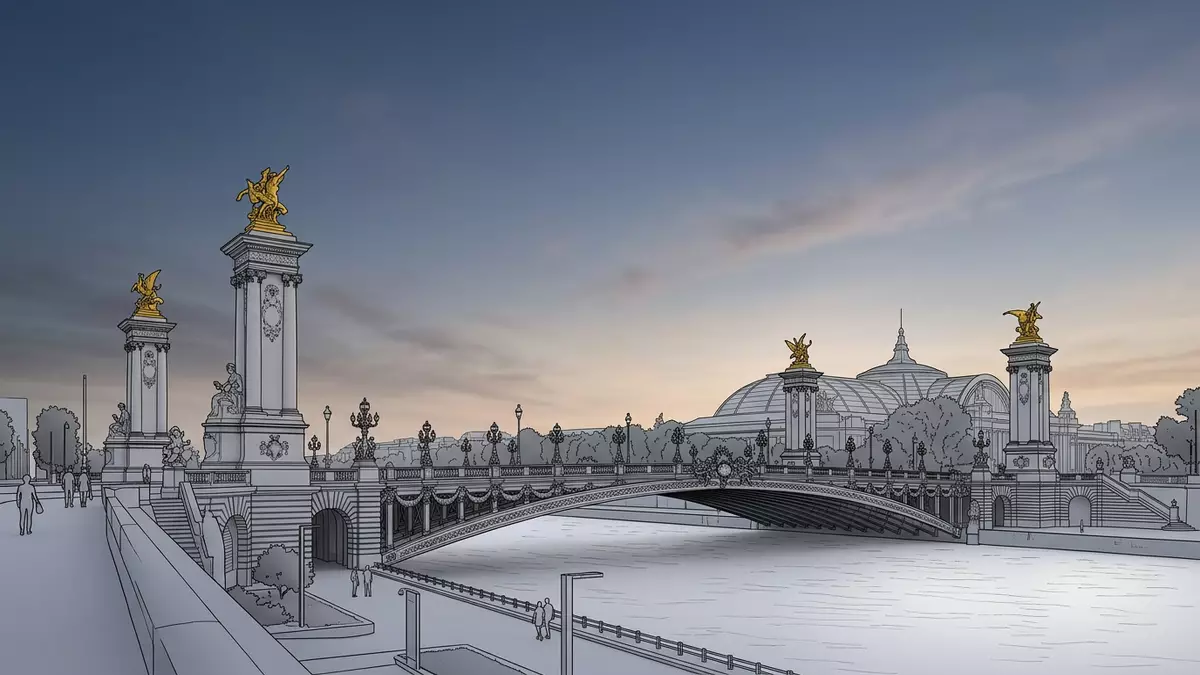
Pont Alexandre III is one of Paris’s most ornate river crossings, a low steel arch bridge from the Belle Époque that links the Grand Palais with Les Invalides across the Seine. Built in the late nineteenth century and inaugurated in 1900 for the Exposition Universelle, it takes its name from Tsar Alexander III of Russia and stands as a monument to Franco?Russian ties of that era.
A Belle Époque bridge between palaces and parade ground
The bridge spans the Seine between the Right Bank, where the Grand Palais and Petit Palais stand on Avenue Winston Churchill, and the Left Bank, where the Esplanade des Invalides leads towards the Hôtel des Invalides and Napoleon’s tomb.Pont Alexandre III connects these landmark ensembles and forms part of a composition of boulevards, squares and exhibition halls laid out for the 1900 World’s Fair.The nearby Grand Palais and Petit Palais also date from that fair
The structure itself is a deck arch bridge of metal resting on masonry abutments, with a single low span over the main channel that keeps the view open between the river and the façades of central Paris.Engineers Jean Résal and Amédée Alby designed the three-hinged metal arch in line with strict height limits intended to preserve sightlines towards the Champs?Élysées and Invalides. From the deck, the Eiffel Tower rises downstream, while upriver the historic stone spans of Pont de la Concorde and other crossings frame the water.
Gilded sculpture and Beaux?Arts detail
Pont Alexandre III belongs to the Beaux?Arts tradition, combining classical motifs, baroque exuberance and modern materials such as steel, glass and iron.Architects Joseph Cassien?Bernard and Gaston Cousin worked alongside Résal and Alby to give the bridge its sculptural character. Along the balustrades, bronze lamps in an Art Nouveau idiom line the roadway, while cherubs, nymphs and coats of arms decorate the sides above the river.
At each corner of the bridge stands a tall masonry pylon crowned by gilded bronze figures of winged horses, often referred to as “Fames”, which make Pont Alexandre III instantly recognisable on the skyline.These pylons carry allegorical groups representing arts, sciences, commerce and industry as well as shields bearing the arms of Paris and Saint Petersburg. On the sides of the pylons and along the bridge, sculptors carved scenes of French history and personifications of the Seine and the Neva, underscoring the bridge’s role as a symbolic link between France and Russia.
Alliance, World’s Fair and heritage status
The bridge is named for Alexander III, the Russian emperor associated with the Franco?Russian Alliance that took shape in the early 1890s.His son Nicholas II laid the foundation stone in October 1896, in the presence of French officials, and a bronze inscription on one of the pylons records the inauguration of the bridge by President Émile Loubet on 14 April 1900.The inauguration coincided with the opening of the 1900 Exposition Universelle
Pont Alexandre III forms part of the ensemble of the “Paris, Banks of the Seine” World Heritage site, which includes bridges, riverfronts and major monuments along the central stretch of the Seine.UNESCO’s listing highlights the bridge alongside the Grand and Petit Palais as legacies of universal exhibitions and it has been protected as a monument historique in France since the 1970s.This status reflects its architectural and historic importance within the Parisian river landscape
Visiting Pont Alexandre III: what travellers from Western Europe should know
- Pont Alexandre III crosses the Seine between the 7th and 8th arrondissements of Paris, linking Avenue Winston Churchill near the Grand Palais on the Right Bank with the Esplanade des Invalides on the Left Bank.
- The bridge carries both vehicles and pedestrians on a level deck; the approaches from either bank are gently sloped, and steps lead down to the river quays beneath.
- Paris is in France, where the official language is French and the currency is the euro.
Searching for Pont Alexandre III on social platforms
These links open searches for Pont Alexandre III on each platform.
Frequently asked questions about Pont Alexandre III
Where is Pont Alexandre III in Paris?
Pont Alexandre III crosses the Seine between the Grand Palais and Petit Palais on the Right Bank and the Esplanade des Invalides on the Left Bank, linking the 7th and 8th arrondissements.
What should visitors expect when crossing the bridge?
Visitors encounter a low metal arch above the river lined with Art Nouveau lamps, sculpted groups on the balustrades and four gilded pylons at the corners framing views towards central Paris.
What makes Pont Alexandre III distinctive among Paris bridges?
The combination of Belle Époque engineering, Beaux?Arts ornament, gilded bronze horses and its role within the 1900 World’s Fair layout gives Pont Alexandre III a highly decorated character among the city’s Seine crossings.


