
Pont Alexandre III, Paris: a Belle Époque bridge of light and sculpture
Published on 09/16/2026 at 08:12 | Editorial responsibility: Rafael Müller, Editor-in-Chief AD HOC NEWS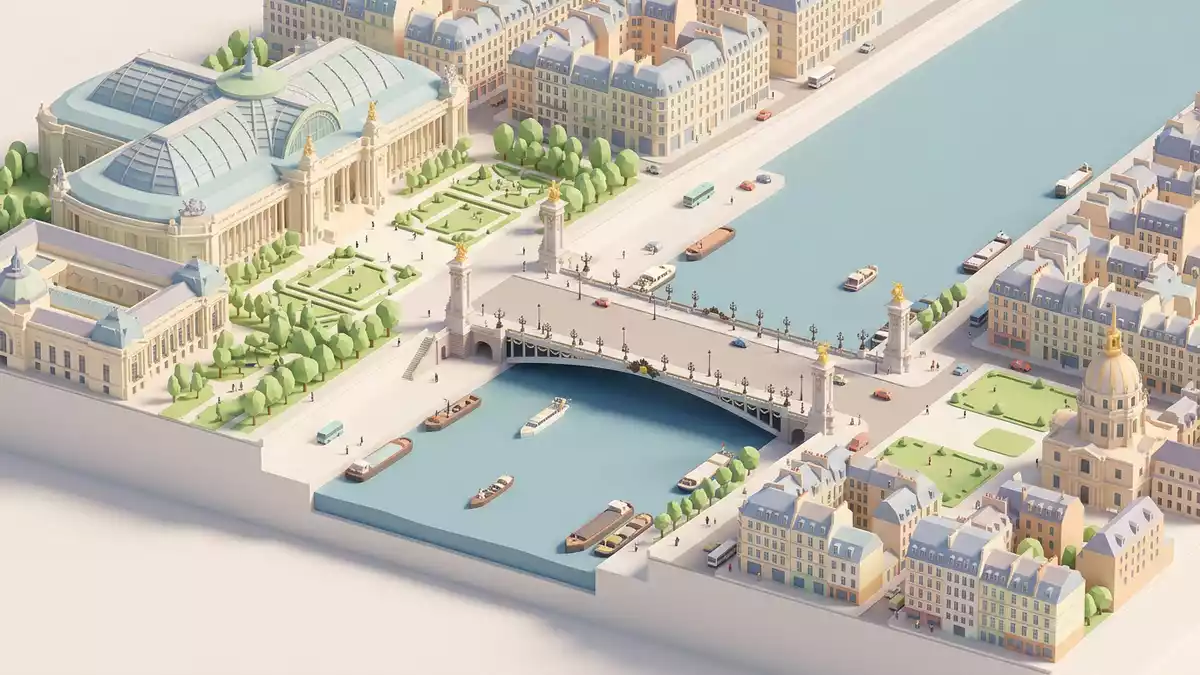
Pont Alexandre III is a Belle Époque bridge over the Seine whose low steel arch, gilded statues and lanterns turn a river crossing into an open-air gallery of Parisian sculpture. Built in the late nineteenth century and inaugurated in 1900, it anchors the grand axis between Les Invalides and the Champs-Élysées at the height of France’s Franco-Russian alliance.
A Belle Époque arch between Les Invalides and the Champs-Élysées
Pont Alexandre III carries road traffic and pedestrians across the Seine between the Esplanade des Invalides on the Left Bank and Avenue Winston Churchill on the Right Bank, within the 7th and 8th arrondissements of Paris.bridge across the Seine Standing on the deck, the dome of the Hôtel des Invalides rises on one side, while the glass roofs of the Grand Palais and Petit Palais form part of the ensemble on the opposite bank.connects the Esplanade des Invalides and Avenue Winston Churchill
The structure is based on a single cast steel arch resting on substantial foundations at each end, engineered to keep the bridge low enough not to obstruct river views or navigation.single steel arch, 107 metres long With a span of about 160 m (525 ft) in cast steel and an overall length of around 154 m (505 ft), it forms a broad, shallow curve just above the water, while the roadway and pavements spread across a generous width that accommodates both traffic and promenades.length and width of the bridge
A monument to the Franco-Russian alliance
The bridge takes its name from Tsar Alexander III of Russia, whose reign saw the formal Franco-Russian alliance of the 1890s that reshaped European diplomacy.named after Tsar Alexander III of Russia The alliance agreement in 1891–1892 between Alexander III and French President Sadi Carnot gave the project its political meaning, turning a piece of infrastructure into a diplomatic gesture in metal and stone.amitié franco-russe instaurée par l’alliance conclue en 1891
Alexander’s son, Emperor Nicholas II, laid the foundation stone of Pont Alexandre III in October 1896, marking the start of construction that ran from 1896 into the final years of the century.Nicholas II laid the foundation stone in October 1896 The bridge was inaugurated on 14 April 1900 by French President Émile Loubet at the opening of the Exposition Universelle, the World’s Fair that also saw the unveiling of the Grand Palais and the Petit Palais along the same Right Bank axis.inauguration on 14 April 1900 These dates fix Pont Alexandre III firmly within the Belle Époque, when Paris projected itself as a cosmopolitan capital through grand civic works.
Beaux-Arts engineering with Art Nouveau detail
Pont Alexandre III is often described as a Beaux-Arts bridge, combining classical composition with the exuberant decoration associated with France’s Belle Époque.constructed in the Beaux-Arts style Engineers Jean Résal and Amédée Alby designed the structural system, while architects Joseph Cassien-Bernard and Gaston Cousin shaped its decorative scheme, creating a collaboration between engineering and architectural ornament that defines the bridge’s character.engineers Jean Résal and Amédée Alby, architects Cassien-Bernard and Gaston Cousin
On the deck, ornate lanterns, cherubs and nymphs line the balustrades, while winged horses crown tall pylons at each corner, their gilding catching the light along the river.Art Nouveau lamps, cherubs, nymphs and winged horses Reliefs and coats of arms celebrate both France and Russia, weaving imperial emblems into the cast metal. The bridge’s decorative programme mixes Beaux-Arts classical figures with Art Nouveau curves, so that stone, steel and gilded bronze form a continuous sequence of sculpture from quay to quay.heritage designation and Art Nouveau architecture
Visiting Pont Alexandre III: what travellers from Western Europe should know
- Pont Alexandre III crosses the Seine between the Esplanade des Invalides and Avenue Winston Churchill, within central Paris and close to the Grand Palais and Petit Palais.
- The bridge’s approaches on both banks include broad pavements and ramps, but the deck itself is reached by steps from the quays for those walking at river level.
- The official language is French and the currency is the euro.
Searching for Pont Alexandre III on social platforms
These links open searches for Pont Alexandre III on each platform.Frequently asked questions about Pont Alexandre III
Where is Pont Alexandre III in Paris?
Pont Alexandre III spans the Seine between the Esplanade des Invalides on the Left Bank and Avenue Winston Churchill near the Champs-Élysées on the Right Bank.
What can visitors expect when crossing the bridge?
Visitors walk across a broad roadway flanked by pavements, passing ornate lanterns, sculpted nymphs and gilded winged horses, with open views to major Paris landmarks.
What makes Pont Alexandre III distinctive among Paris bridges?
Its combination of a low steel arch, Belle Époque Beaux-Arts and Art Nouveau decoration, and its role as a monument to the Franco-Russian alliance make Pont Alexandre III distinctive.


