Pont Alexandre III and Paris’s ornate river crossing
Published on 08/10/2026 at 15:03 | Editorial responsibility: Rafael Müller, Editor-in-Chief AD HOC NEWS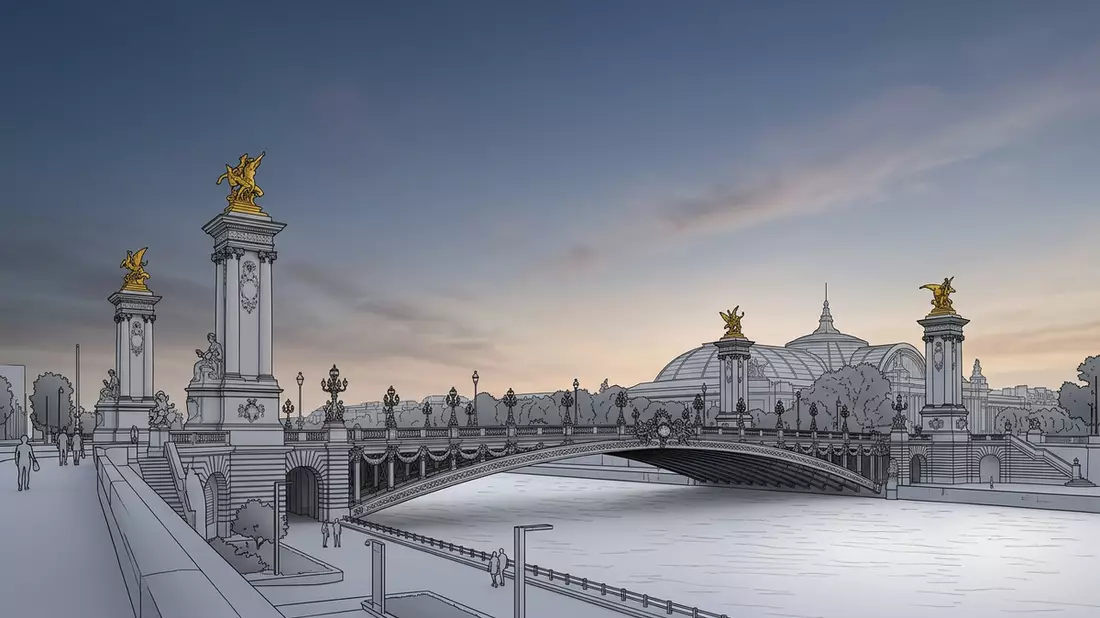
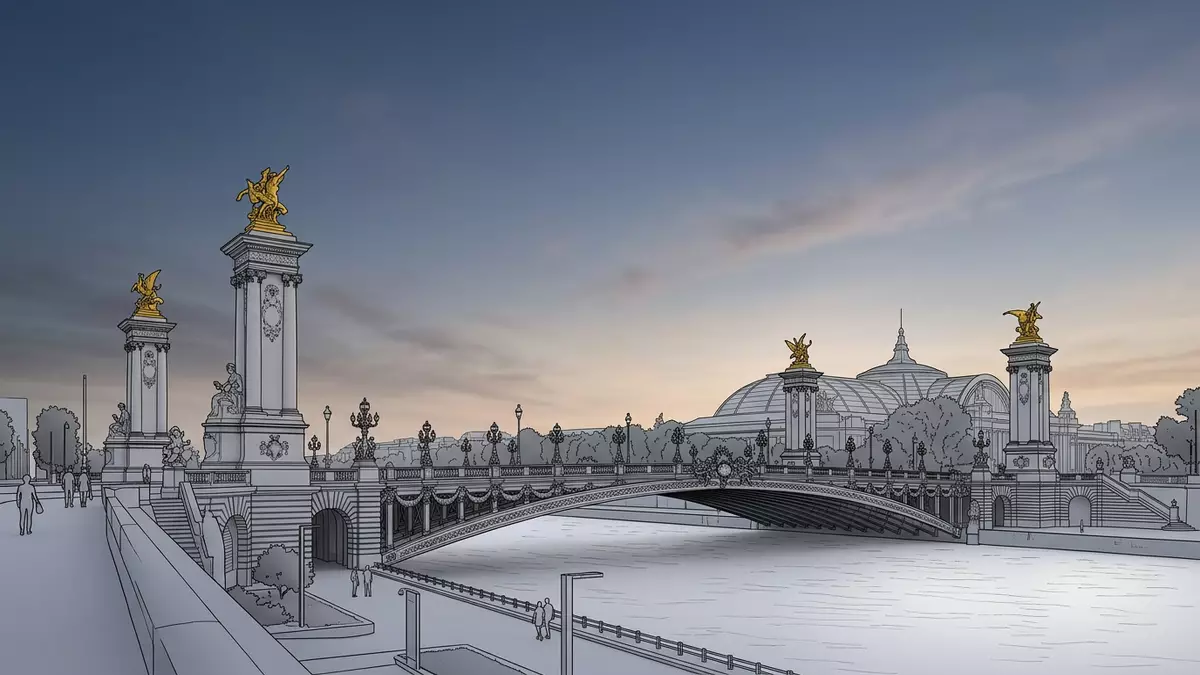
Pont Alexandre III crosses the Seine in Paris with a decorative profile that makes the bridge feel more like an outdoor monument than a simple link between banks. Completed for the Exposition Universelle of 1900, it carries the name of Alexander III of Russia and remains one of the city’s most recognisable bridge designs.
Gilded lamps and stone figures on the Seine
The bridge is a steel structure clad in stone, with a single span that keeps the silhouette low across the river. Along its deck stand gilded lampposts, sculpture groups and ornamental details that give Pont Alexandre III a dense, ceremonial appearance.
Four tall pylons rise at the ends of the bridge, each topped with a gilded figure of Pegasus. Bronze nymphs, cherubs and motifs of sea and river appear along the balustrades and at the approaches, making the crossing read as a sequence of designed elements rather than plain engineering.
A bridge from the Belle Époque
Pont Alexandre III belongs to the Belle Époque and to the late nineteenth-century confidence that shaped much of central Paris before 1900. It links the Champs-Élysées side with the Invalides quarter, and it sits among other public works associated with the Exposition Universelle.
The bridge also carries a diplomatic layer. France and Russia marked their alliance in the bridge’s naming, and the association remains part of its identity in Parisian history. Its ornate decoration, broad roadway and river setting keep it distinct from the more austere bridges upstream and downstream.
What stands out at ground level
On foot, Pont Alexandre III is best read in sections: the lamps, the sculptures, the metalwork and the open views towards the Seine embankments. The bridge offers a direct line across the water, but its surface is rich enough to reward a slower crossing.
From the deck, the river, the quays and the façades nearby form a familiar Parisian sequence. The bridge’s dark structural body sits beneath the ornament, so the eye moves between practical span and decorative surface in a single crossing.
Visiting Pont Alexandre III: what travellers from Western Europe should know
- The bridge is in central Paris on the Seine, within walking distance of the Invalides and the Champs-Élysées.
- Admission arrangements and opening hours are set by the site's operator and change with the season; the official website is the only binding source.
- For the best light on the sculpture and lamps, go near sunset or in the softer light of early morning.
- The crossing is level, but the approaches meet busy roads and river traffic areas, so take care when walking and cycling.
- French is the main language in the area, and card payment is common in nearby cafés and shops.
- Entry requirements depend on your nationality. UK travellers should check the FCDO travel advice at gov.uk/foreign-travel-advice; Irish travellers the Department of Foreign Affairs at ireland.ie; EU and EEA citizens their own national foreign ministry.
Searching for Pont Alexandre III on social platforms
These links open searches for Pont Alexandre III on each platform.
Frequently asked questions about Pont Alexandre III
Where is Pont Alexandre III?
It crosses the Seine in Paris, between the Champs-Élysées side and the Invalides area. The bridge sits in the centre of the city and is easy to reach on foot from nearby landmarks.
What can visitors expect there?
A pedestrian crossing with ornate lamps, sculpture groups and wide river views. It is a bridge to walk over, photograph and use as a route between two parts of central Paris.
What makes Pont Alexandre III distinctive?
Its Belle Époque decoration and ceremonial scale set it apart from many other Paris bridges. The combination of a low steel span, stone dressing and gilded sculpture gives it a formal, theatrical look.