
Pont Alexandre III, a low-arched gateway between Les Invalides and the Champs-Élysées
Published on 08/27/2026 at 13:51 | Editorial responsibility: Rafael Müller, Editor-in-Chief AD HOC NEWS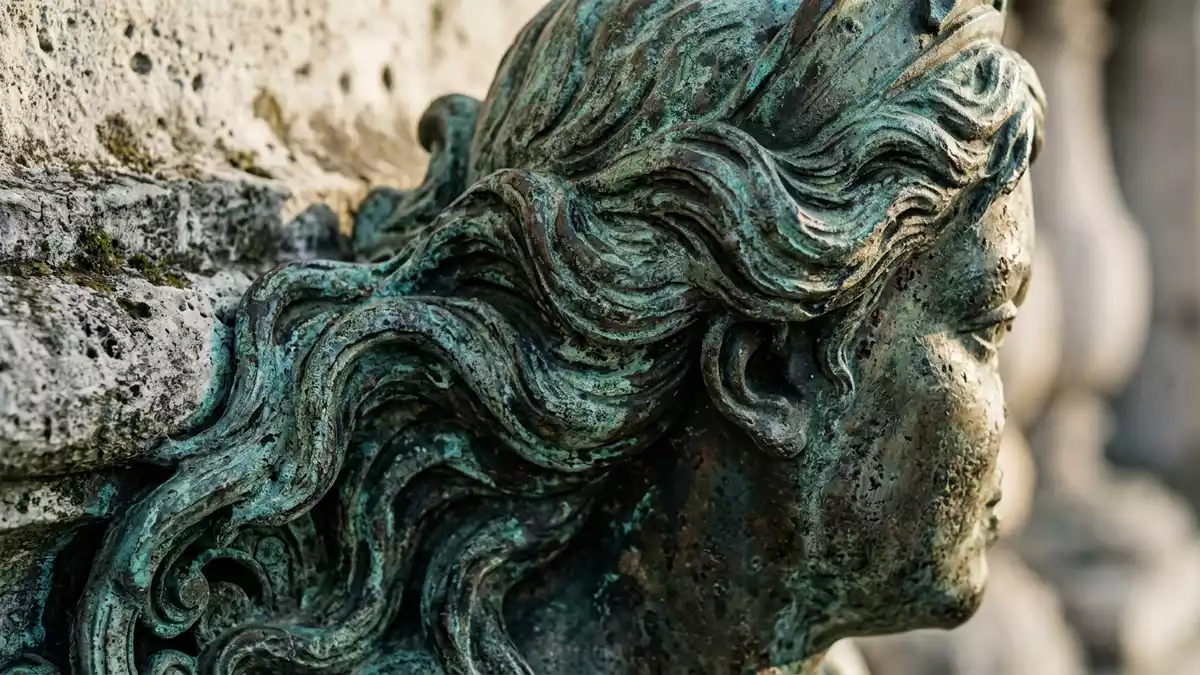
Pont Alexandre III stretches across the Seine with a single low arch, linking the lawns of Les Invalides to the tree-lined avenues that lead towards the Champs-Élysées and the Grand Palais. Conceived in the late nineteenth century and opened in 1900, it stands as a Beaux-Arts bridge whose structure and sculpture turn a river crossing into an open-air gallery.
A Belle Époque bridge over the Seine
Pont Alexandre III belongs to the Belle Époque phase of Parisian building, a period between 1871 and 1914 when monumental structures rose along the Seine for international exhibitions and national display.The bridge links Les Invalides with the right-bank avenues in a single sweep of metal and stone. Its metal arch spans the river at a low level, so that the carriageway runs close to the water instead of climbing high above it.
The bridge was built in the late 1890s and opened in 1900 for the Exposition Universelle, the world’s fair that also brought the Grand Palais and Petit Palais to this stretch of the Seine.Construction took place between the late 1890s and the opening year of 1900, timed so that visitors to the exhibition could cross easily between its different sites. Unlike many older bridges upriver, its deck is carried on a single long arch without piers breaking the flow of water.
Franco-Russian diplomacy in steel and stone
The bridge carries the name of Tsar Alexander III of Russia, reflecting the Franco-Russian Alliance agreed in the early 1890s between the Russian emperor and French president Sadi Carnot.The naming honours Alexander III and the alliance of 1891, embedding a diplomatic relationship into the city’s map. His son Nicholas II travelled to Paris to lay the foundation stone in October 1896, an act recorded on inscriptions at the bridge.
French engineers Jean Résal and Amédée Alby took responsibility for the structure, while Joseph Cassien-Bernard and Gaston Cousin shaped the bridge’s architectural and decorative appearance.The combination of Résal, Alby, Cassien-Bernard and Cousin gave Pont Alexandre III its blend of engineering and sculpture. Their work yielded a cast-steel bridge with a wide deck carrying both vehicles and pedestrians, framed by stone balustrades and monumental pylons at each corner.
Sculpture, lamps and a low skyline
Pont Alexandre III is as much a sculptural ensemble as a piece of infrastructure. Bronze lamps line the parapets, set on carved bases decorated with cherubs, shells and scrollwork that echo the Belle Époque taste for lavish detail.Art Nouveau lamps and sculpted figures occupy the balustrades, turning the bridge into a promenade of metalwork and stone carving. Along the sides, reliefs of nymphs and other figures appear amid the decorative panels.
At each of the four corners, stone pylons rise above the roadway, crowned by gilded statues of winged horses that catch the light from across the river.The bridge measures over 150 m in length and around 45 m in width, leaving ample room for wide pavements on either side of the carriageway. Standing midway along the deck, views extend along the Seine towards the glass roof of the Grand Palais, the dome of Les Invalides and the distant outline of the Eiffel Tower.
Visiting Pont Alexandre III: what travellers from Western Europe should know
- Pont Alexandre III crosses the Seine between the Esplanade des Invalides on the Left Bank and Avenue Winston Churchill on the Right Bank, a short walk from the Grand Palais and Petit Palais.
- The bridge surface is flat and broad, with pavements on both sides of the roadway; steps lead down from the embankments to riverside walks beneath the arches.
- Buses and cars use the carriageway, while pedestrians share the pavements with cyclists and photographers; care is needed when moving between the pavements and nearby crossings.
- The official language is French and the currency is the euro.
Searching for Pont Alexandre III on social platforms
These links open searches for Pont Alexandre III on each platform.
Frequently asked questions about Pont Alexandre III
Where is Pont Alexandre III in Paris?
Pont Alexandre III crosses the River Seine between the Esplanade des Invalides and Avenue Winston Churchill, linking the Left Bank with the Right Bank near the Grand Palais.
What can visitors expect when crossing Pont Alexandre III?
Visitors encounter a broad deck with separate pavements, elaborate bronze lamps, stone sculpture and open views along the river towards landmarks such as Les Invalides and the Eiffel Tower.
What makes Pont Alexandre III distinctive among Paris bridges?
Its single low arch, Beaux-Arts and Art Nouveau decoration, gilded winged-horse groups and direct alignment between Les Invalides and the Champs-Élysées distinguish Pont Alexandre III from many other bridges in Paris.


