
Pont Alexandre III, a gilded Belle Époque arch over the Seine
Published on 09/19/2026 at 19:31 | Editorial responsibility: Rafael Müller, Editor-in-Chief AD HOC NEWS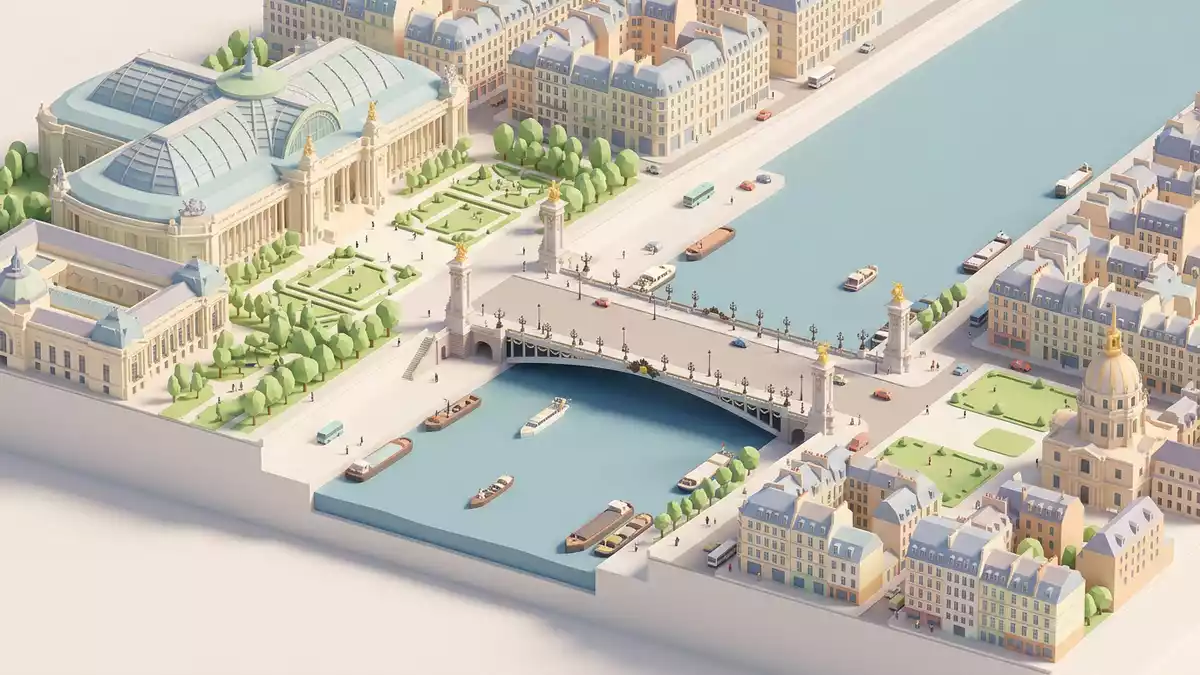
Pont Alexandre III is a steel arch bridge over the River Seine in Paris, completed and inaugurated in 1900 for the Exposition Universelle, the city’s great World’s Fair of that year.completed in 1900 It is named after Tsar Alexander III of Russia and commemorates the Franco-Russian alliance of the 1890s, giving a diplomatic relationship tangible form in the centre of the French capital.named after Tsar Alexander III
A low steel arch framed by gilded pylons
The main structural feature of Pont Alexandre III is a single long steel arch carrying the deck close to the water, designed so that the crossing sits low over the Seine while still allowing river traffic to pass beneath.steel arch bridge On each bank, tall masonry pylons rise above the roadway and are crowned with gilded winged horses, turning the ends of the bridge into vertical markers that stand out against the Parisian skyline.gilded winged horses
The span measures about 154 m (505 ft) in length and about 45 m (148 ft) in width, giving the bridge a broad deck that accommodates traffic and pedestrians side by side.length and width Sculptural groups and ornamental lamps line the parapets, while allegorical figures representing France and Russia, arts, sciences and other themes stand on the approach plinths, making the bridge as much an open-air sculpture gallery as an engineering work.allegorical sculpture
Belle Époque decoration and Franco-Russian symbolism
Pont Alexandre III belongs to the Beaux-Arts and Belle Époque world of late nineteenth-century Paris, where elaborate decoration and grand urban gestures were common in major public projects.Belle Époque décor The bridge’s balustrades carry Art Nouveau-style lamps, while cherubs, nymphs and classical figures cluster around the piers, tying the industrial steel arch to the ornamental language of the time.Art Nouveau lamps and cherubs
The dedication to Alexander III links the structure directly to the Franco-Russian alliance agreed during the 1890s, an arrangement that brought the French Third Republic and the Russian Empire into closer political and military cooperation.Franco-Russian alliance In October 1896, Tsar Nicholas II, Alexander’s son, laid the foundation stone of the bridge, and on 14 April 1900 President Émile Loubet inaugurated it in time for the opening of the Exposition Universelle, turning diplomatic ceremony into part of the bridge’s built history.foundation stone and inauguration dates
Linking Les Invalides with the Grand and Petit Palais
Pont Alexandre III connects the Esplanade des Invalides on the Left Bank with Avenue Winston Churchill on the Right Bank, creating a direct axis between the Hôtel des Invalides and the Grand Palais and Petit Palais exhibition buildings.link between Invalides and the palaces The alignment means that standing on the bridge brings several major Parisian monuments into view at once, with the dome of Les Invalides on one side and the glass roof of the Grand Palais on the other.
The bridge forms part of the ensemble of structures and spaces planned for the 1900 Exposition Universelle, which reshaped parts of the riverfront as Paris prepared to present itself to international visitors.urban ensemble of 1900 During the World’s Fair, tens of millions of people crossed the Seine here, and the route between the exhibition halls and the military complex of Les Invalides made Pont Alexandre III a central stage for Belle Époque Paris.World’s Fair visitors
Visiting Pont Alexandre III: what travellers from Western Europe should know
- Pont Alexandre III crosses the Seine between the Esplanade des Invalides in the 7th arrondissement and Avenue Winston Churchill in the 8th, a short walk from the Grand Palais and Petit Palais.
- The bridge deck is level and broad, with pavements on both sides and steps leading down to the river quays, where the masonry structure meets the embankment.
- The surrounding area contains several major landmarks within walking distance, including Les Invalides, the Champs-Élysées and the exhibition halls of the Grand Palais and Petit Palais.
- France’s official language is French and the currency is the euro.
Searching for Pont Alexandre III on social platforms
These links open searches for Pont Alexandre III on each platform.Frequently asked questions about Pont Alexandre III
Where is Pont Alexandre III in Paris?
Pont Alexandre III spans the River Seine between the Esplanade des Invalides on the Left Bank and Avenue Winston Churchill near the Grand Palais and Petit Palais on the Right Bank.
What should visitors expect when crossing Pont Alexandre III?
Visitors find a broad deck shared by traffic and pavements, lined with ornamental lamps, sculptures and tall gilded pylons, with views towards Les Invalides and the Champs-Élysées.
What makes Pont Alexandre III distinctive among Paris bridges?
Its combination of a low steel arch, rich Belle Époque decoration and dedicated commemoration of the Franco-Russian alliance gives Pont Alexandre III a rare mix of engineering, art and diplomatic symbolism.


