
Pompei and the Roman city preserved by Vesuvius
Published on 08/28/2026 at 10:30 | Editorial responsibility: Rafael Müller, Editor-in-Chief AD HOC NEWS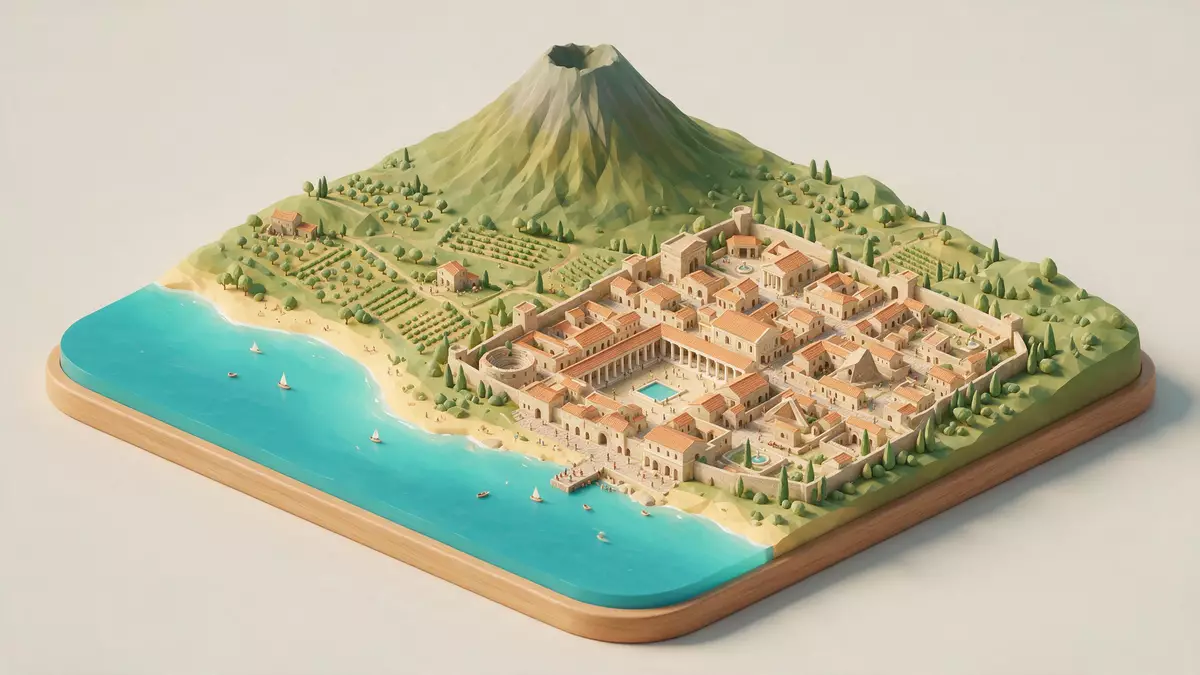
Pompei is the modern name of the ancient Roman city of Pompeii, a UNESCO World Heritage site in Campania, Italy. Its centre is defined by streets, public buildings and houses preserved beneath volcanic debris from Mount Vesuvius in 79 AD.
Pompei’s Roman cityscape
The archaeological area presents a broad urban plan rather than a single monument. Forums, baths, theatres, an amphitheatre and private houses survive across the excavated city, giving Pompei its distinctive spread of civic and domestic spaces.World Heritage site
Britannica describes the place as an ancient city in Campania, southeast of Naples, and notes the scale of the excavated remains. The modern town of Pompei lies beside the archaeological area, which keeps the ancient and modern names closely linked.ancient city in Campania
79 AD and the volcanic burial
The defining historical anchor is the eruption of Mount Vesuvius in 79 AD. That event buried the city under ash and other volcanic material, leaving walls, mosaics and streets sealed beneath the deposits for centuries.
The UNESCO dossier notes that the eruption engulfed Pompei and Herculaneum, and that excavation began in the mid-eighteenth century. That combination of destruction and preservation explains why the site reads as a complete Roman settlement rather than a ruin with only fragments left.the eruption in 79 AD
Buildings, walls and domestic space
Pompei is especially strong in its mixture of public and private fabric. The forum area, temples, bath complexes and theatres sit alongside houses with wall painting, courtyards and street fronts that still outline the daily life of a Roman town.public and private fabric
The UNESCO description highlights the breadth of the surviving urban landscape and the completeness of the archaeological picture. It also places Pompei among a group of Vesuvian sites, with Herculaneum and Torre Annunziata forming the wider World Heritage property.wider World Heritage property
Visiting Pompei: what travellers from Western Europe should know
- Pompei lies in Campania, southeast of Naples, beside the modern town of the same name. Rail links and road access connect the archaeological area with the Naples region.
- The site covers a large excavated Roman city, so the ground plan is extensive. Streets, uneven surfaces and open-air ruins make the terrain varied from one quarter to another.
- The official language is Italian and the currency is the euro.
- The archaeological area sits at the base of Mount Vesuvius, and the Vesuvian landscape forms part of the wider setting.
Searching for Pompei on social platforms
These links open searches for Pompei on each platform.
Frequently asked questions about Pompei
Where is Pompei?
Pompei is in Campania, in southern Italy, southeast of Naples. The archaeological area lies beside the modern town of Pompei.
What does a visit involve?
It means walking through an extensive Roman city with streets, houses and large public buildings. The scale of the remains makes the site feel urban rather than monument-like.
What makes Pompei distinctive?
The city was buried by Vesuvius in 79 AD and preserved beneath volcanic material. That burial left a unusually broad picture of Roman urban life in one place.


