
Pompei and the frozen Roman city beneath Vesuvius
Published on 09/08/2026 at 20:47 | Editorial responsibility: Rafael Müller, Editor-in-Chief AD HOC NEWS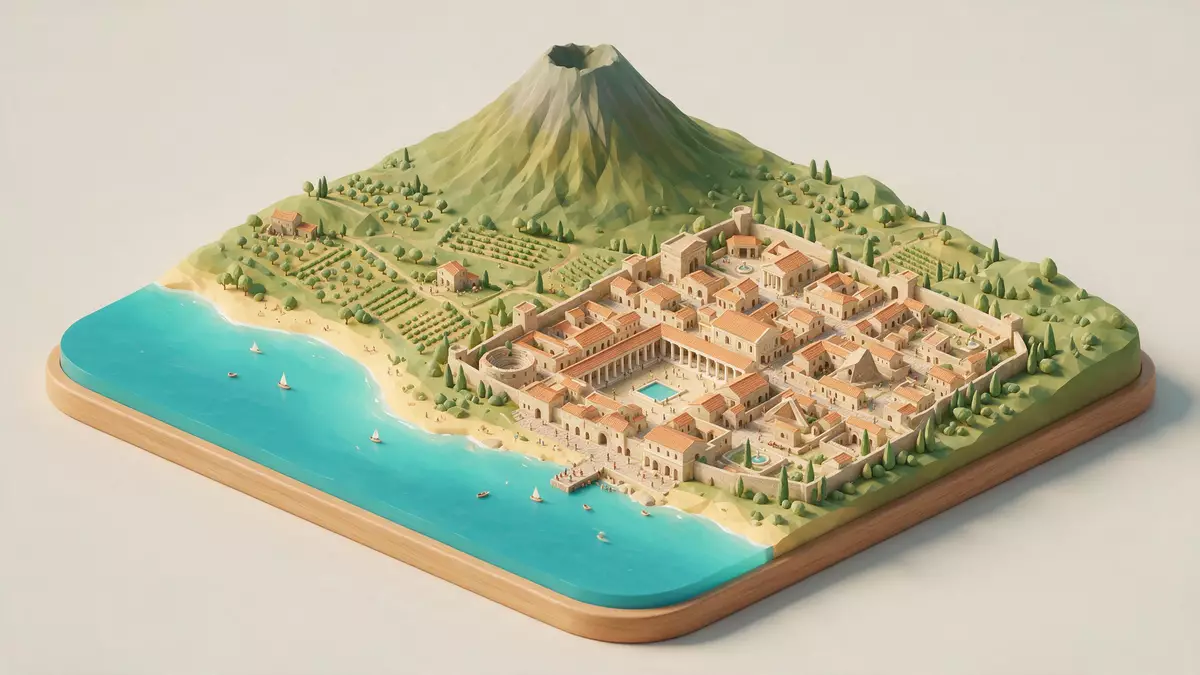
Pompei is best read as a buried Roman city beside the modern town of the same name in Campania, south-east of Naples. Its streets, houses and public buildings were sealed by the eruption of Mount Vesuvius in AD 79, and the place now belongs to the UNESCO-listed Archaeological Areas of Pompei, Herculaneum and Torre Annunziata.
Pompei’s streets and houses in Roman stone
The site presents a city plan rather than a single monument. Visitors move among paved streets, courtyards, temples, baths and domestic rooms, with wall paintings and mosaics among the most memorable surviving details.
The World Heritage property was inscribed in 1997 under the title Archaeological Areas of Pompei. The ancient city covers about 66 hectares, and the eruption that buried it remains the key historical event tied to the place.
Vesuvius, ash and the preserved city
Pompei sits on the volcanic plain below Mount Vesuvius, and the landscape gives the ruins their setting as much as their history. The city was covered by ash and lapilli in AD 79, leaving roofs, walls and street lines legible across a broad archaeological area.
The most famous survival is the sense of an urban whole rather than scattered remains. The site is linked with the eruption of 24 August AD 79 and with the Roman world of the first century, which is why the place carries such strong historical weight.
From excavation to archaeological park
Modern excavation began in the eighteenth century under King Charles III of Naples, and the work has made Pompei one of the best-known Roman sites in Europe. The archaeological park form is the place’s present life, with the ancient city treated as a protected cultural landscape rather than a ruin left to crumble.
A second anchor of the site is its association with the Archaeological Park of Pompeii and the long sequence of excavations that uncovered houses, roads and public buildings. The name Pompei also appears in the formal World Heritage title, which ties the modern town to the ancient city beneath it.
Visiting Pompei: what travellers from Western Europe should know
- Pompei lies in Campania, south-east of Naples. Rail travellers usually reach the area through Pompei or nearby stations on the Circumvesuviana line.
- The ground is uneven and paved in places, with raised kerbs, stone thresholds and long stretches of exposed street surface.
- The archaeological area is open-air, so shade changes from block to block and much of the route runs over stone and rubble.
- The site sits beside the modern town, with Vesuvius forming the dominant landscape feature beyond the ruins.
Searching for Pompei on social platforms
These links open searches for Pompei on each platform.
Frequently asked questions about Pompei
Where is Pompei?
Pompei is in Campania, in southern Italy, near Naples. The ancient city lies beside the modern town and below Mount Vesuvius.
What does a visit involve?
The site is an extensive archaeological landscape of streets, houses, baths and public buildings. Walking across it means moving over stone surfaces, thresholds and open-air remains.
What makes Pompei distinctive?
Pompei preserves an entire Roman city within a UNESCO World Heritage property. Its identity comes from the combination of urban layout, wall decoration and the historical moment of AD 79.


