
Plitvicka jezera: Croatia’s living cascade of lakes
Published on 09/19/2026 at 20:39 | Editorial responsibility: Rafael Müller, Editor-in-Chief AD HOC NEWS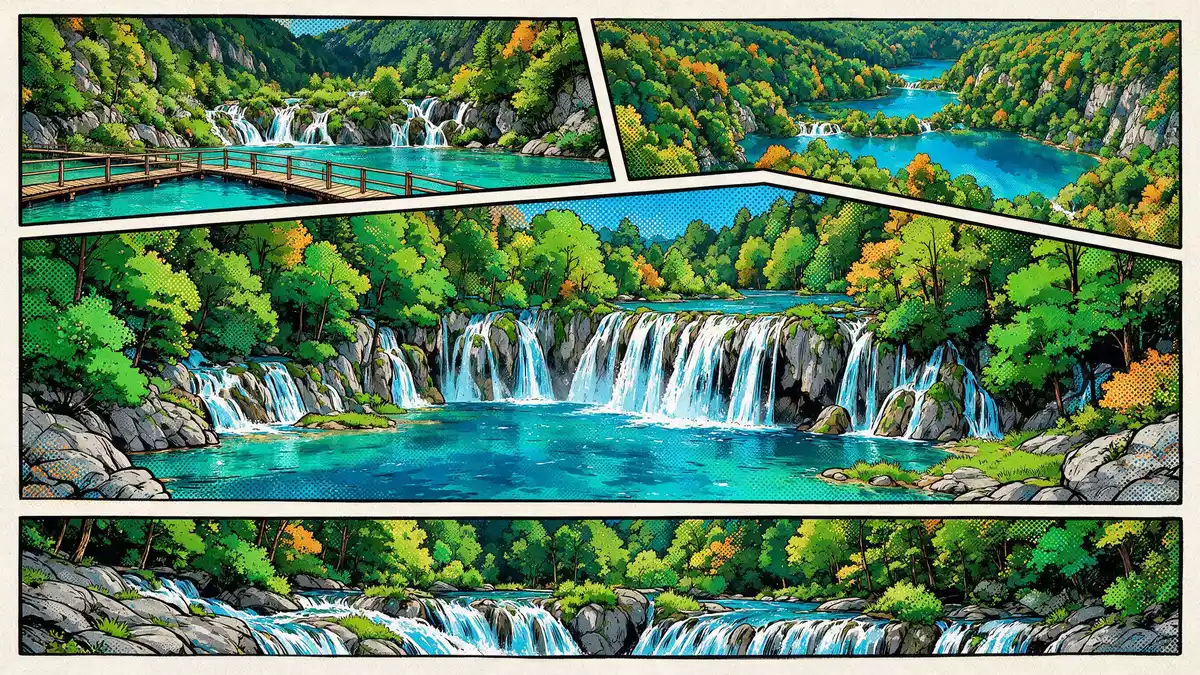
Plitvicka jezera in the Plitvice region of Croatia is a national park built around a chain of lakes and waterfalls that step down through a wooded valley, all shaped by pale tufa rock that is still growing and changing. Established as a protected area in 1949 and added to the UNESCO World Heritage List in 1979, it is recognised internationally for the way water, limestone and vegetation together build natural dams and terraces over time.oldest and largest national park
A stairway of lakes and waterfalls in karst rock
Plitvicka jezera forms part of a mountainous karst landscape in central Croatia, between the Mala Kapela and Li?ka Plješivica ranges, where water has carved deep valleys into limestone rock.mountainous region of Croatia Within this setting, a series of lakes steps down along the course of a river, linked by cascades and waterfalls that spill over tufa barriers formed by dissolved calcium carbonate.
The protected area covers just under 300 km² (about 115 sq mi), a broad expanse that includes forested slopes, river valleys and the lake basins themselves.protected area extends over 296.85 km² Within this area lies a recognised system of 16 named lakes, strung together by flowing water and surrounded by mixed woodland that climbs the enclosing hillsides.16 different lakes
Tufa terraces and a landscape on the UNESCO List
The standout feature of Plitvicka jezera is the way its lakes are held in place by living tufa barriers: porous rock built by mineral-rich water, microscopic organisms and plants that trap calcium carbonate and slowly raise natural dams.process of tufa formation As water spills over these barriers it creates curtains of falls and cascades, so the park’s appearance reflects both long geological processes and ongoing growth.
It was this active lake-building and the scenic sequence of lakes, caves and waterfalls that led to Plitvicka jezera being inscribed on the UNESCO World Heritage List on 26 October 1979.inscribed on the UNESCO World Heritage List The World Heritage designation highlights its outstanding natural beauty, the travertine dams and their constant biodynamic growth, and the way the park illustrates karst and freshwater ecosystem processes at a landscape scale.only natural heritage site in Croatia at the time
Paths, viewpoints and touring the lake system
Plitvicka jezera is laid out for visitors around the lake basins and river channels, with marked routes that follow boardwalks, forest paths and shoreline tracks. The park administration describes seven different programmes for touring the lakes and four hiking trails, each combining walking sections with boat or shuttle transport across parts of the system.seven different routes to tour the lake system
The main visitor facilities and entrances sit near the central lakes and are reached from the surrounding road network, which connects the park to other parts of Croatia’s Lika-Senj and Karlovac counties.falls within two counties From these entrances, wooden walkways run close to the water, crossing above streams and below waterfalls, while higher paths give views along the valley and down onto the terraces.
Visiting Plitvicka jezera: what travellers from Western Europe should know
- Plitvicka jezera lies in central Croatia, in the Lika-Senj and Karlovac counties, reached by road from cities on the Adriatic coast and from Zagreb, with park entrances signposted as Plitvice Lakes National Park.
- Walking the lake routes involves stretches of undulating path and boardwalk, sections beside and above water, and stairways linking different levels between the lower lakes and the upper basins.
- The wider protected area includes forested hillsides, so routes can involve short climbs and descents; footwear suited to uneven ground is important for exploring beyond the immediate lakeshore.
- The official language is Croatian and the currency is the euro.
- Entry requirements depend on your nationality; UK travellers can check the FCDO travel advice at gov.uk/foreign-travel-advice, Irish travellers the Department of Foreign Affairs at ireland.ie.
Searching for Plitvicka jezera on social platforms
These links open searches for Plitvicka jezera on each platform.
Frequently asked questions about Plitvicka jezera
Where is Plitvicka jezera?
Plitvicka jezera is in central Croatia, in the Plitvice area of Lika-Senj and Karlovac counties, within a protected national park landscape of lakes and forest.
What should visitors expect on a first visit?
A visit centres on walking marked routes beside and across a chain of lakes, with frequent views of waterfalls, tufa terraces and wooded slopes, linked by boardwalks, paths and short climbs.
What makes Plitvicka jezera distinctive among European landscapes?
Its distinction lies in the active growth of tufa barriers that shape a whole sequence of lakes and falls, recognised internationally by its inscription on the UNESCO World Heritage List in 1979.


