
Plaza Vieja in Havanna, a stone square of layered Cuban history
Published on 09/14/2026 at 22:34 | Editorial responsibility: Rafael Müller, Editor-in-Chief AD HOC NEWS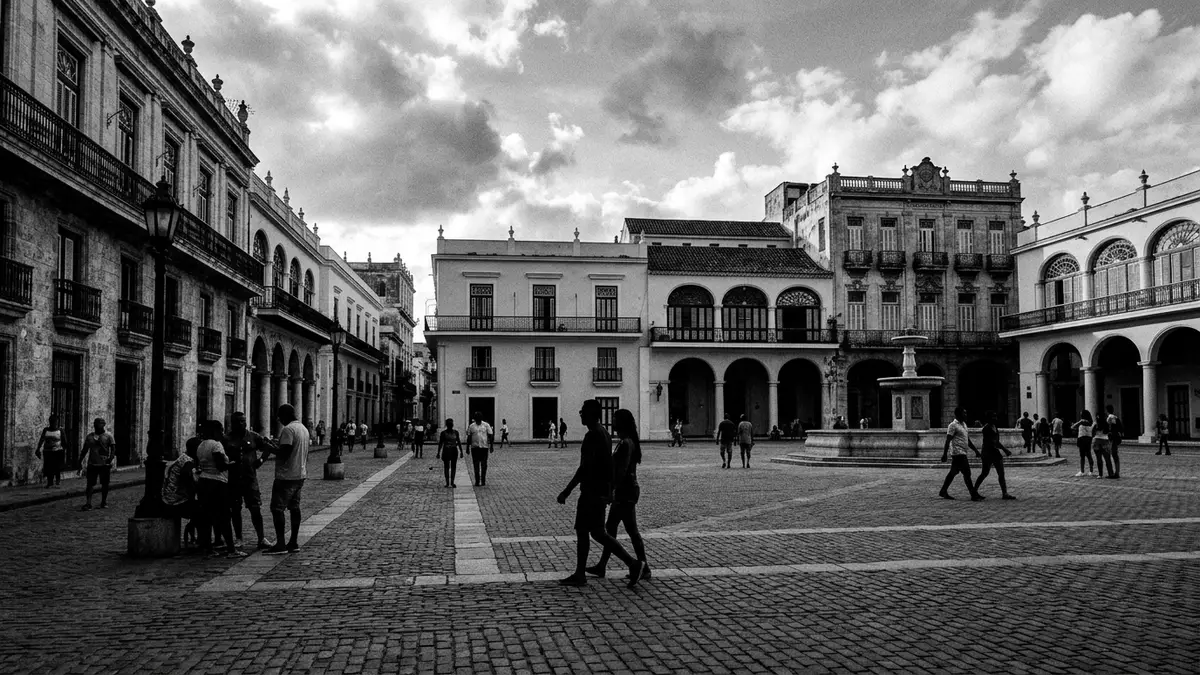
Plaza Vieja in Havanna is a historic stone square in La Habana Vieja, where Cuban architecture from different centuries lines a single paved space and turns it into a compact record of Havana’s past. Laid out in the sixteenth century as Plaza Nueva, it later took on its present name as other civic squares emerged nearby in the growing colonial port.
Plaza Vieja as a crafted stone stage
At Plaza Vieja the eye meets an open rectangular expanse of paving bordered by continuous building fronts, a deliberate stage-like void framed by façades in Cuban baroque and other historic styles.Colonial square in Old Havana The ground surface is finished in stone slabs that emphasise the square’s role as a civic floor, uninterrupted by permanent structures in its centre and leaving space for movement and gathering. Around this central area, low plinths, steps and shaded edges mark gentle transitions between the paving and the buildings that rise above it.
The buildings surrounding Plaza Vieja display stuccoed walls, balconies and colonnades that define the perimeter and set a rhythm of solids and voids along each side.Plaza Vieja in Old Havana Some facades are painted in light colours that catch the Caribbean sun, while others show bare masonry and carved details. Arcaded ground floors create sheltered walkways at the edges of the square, and upper-storey balconies project over the paving, giving residents and visitors elevated views across the interior. Together, these architectural elements turn the space into a stone theatre surrounded by tiers of openings and vantage points.
Centuries of Havana history around an open space
Plaza Vieja traces its origin to 1559, when it was laid out as Plaza Nueva as part of an early phase of civic planning in Havana under Spanish colonial rule.Laid out in 1559 The square sits within La Habana Vieja, the historic quarter that later became part of the UNESCO World Heritage listing “Old Havana and its Fortification System”, reflecting the area’s importance as a preserved colonial urban ensemble.Old Havana and its Fortification System Its evolution from an early civic space into what is now known as Plaza Vieja mirrors the wider development of Havana from fortified port to capital city.
Over the centuries Plaza Vieja has been used for a range of public functions that correspond to changing urban needs: military drills in its first decades, market trading in later periods and assorted civic gatherings that took advantage of the open stone surface.Founded in 1559 as Plaza Nueva In the twentieth century, interventions on the site replaced some historic features, including the original fountain, before restoration projects in the late 1990s brought back a central water feature and re-established the square’s role within the historic core of the city.restorations beginning in the late 1990s Standing on the paving today means standing on a surface that has carried Havana’s civic life across several centuries, even as individual buildings and details have changed.
Architectural variety on the edges of the square
The perimeter of Plaza Vieja showcases a notable variety of architectural styles, with Cuban baroque mansions sharing the edges with later structures showing art nouveau influences.architecturally eclectic square Many of the buildings rise three or more storeys, with ground floors adapted to public uses and upper levels retaining residential layouts that recall the square’s historic role as a place where local elites observed civic events from above. The facades incorporate pilasters, cornices and ornamental ironwork that add fine-grained texture to the square’s edges, rewarding close inspection as much as broad views.
Among the structures flanking Plaza Vieja, one stands out as Edificio Gómez Vila, a building that has become a familiar vertical marker at the edge of the square.Edificio Gómez Vila Nearby, a stone fountain occupies a defined area within the paving, recalling earlier water features that once marked the centre of the square while leaving most of the surface free.replica of the original Carrara marble fountain Around the edges, arcades and doorways lead into cafés, galleries and other interior spaces, so that the architectural variety continues inward from the facades. For a traveller, this mix of building types and details makes Plaza Vieja a concentrated sample of Havana’s built heritage within a walkable frame.
Visiting Plaza Vieja: what travellers from Western Europe should know
- Plaza Vieja lies within La Habana Vieja, the historic quarter of Havana on the western side of the bay, and is reached on foot along the narrow streets that connect the main colonial plazas.
- The square itself is level and paved with stone, but the surrounding approaches include cobbled sections and occasional steps at entrances and colonnades, which may require careful footing.
- Plaza Vieja is part of La Habana Vieja, where Spanish is the official language and the currency is the Cuban peso.
- Nearby landmarks include other historic squares such as the Plaza de Armas and Plaza de San Francisco, which can be combined with Plaza Vieja in a single walking route through Old Havana.
- Entry requirements depend on your nationality; UK travellers can check the FCDO travel advice at gov.uk/foreign-travel-advice, Irish travellers the Department of Foreign Affairs at ireland.ie.
Searching for Plaza Vieja on social platforms
These links open searches for Plaza Vieja on each platform.
Frequently asked questions about Plaza Vieja
Where is Plaza Vieja located in Havanna?
Plaza Vieja is located in La Habana Vieja, the historic quarter of Havana, Cuba, within the area recognised as Old Havana and its Fortification System.
What should a visitor expect when stepping into Plaza Vieja?
A visitor finds a level stone square framed by historic facades, arcades and balconies, with a central paved surface that reflects centuries of civic use.
What makes Plaza Vieja distinctive among Havana’s squares?
Plaza Vieja stands out for its combination of sixteenth-century origins, architectural variety around its edges and its setting within the protected colonial core of Havana.


