
Plaza Vieja and the layered square of Old Havana
Published on 09/15/2026 at 12:50 | Editorial responsibility: Rafael Müller, Editor-in-Chief AD HOC NEWS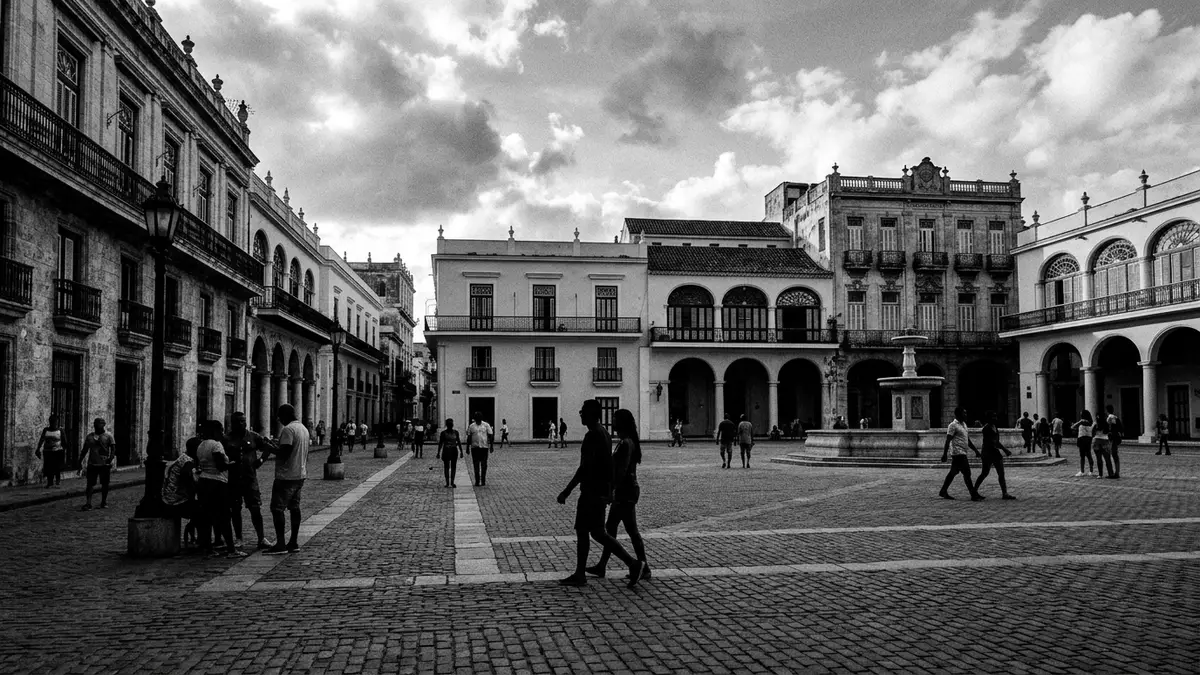
Plaza Vieja in Havanna is an open stone square in Old Havana, where facades from several centuries frame a single civic space. Laid out in 1559 as Plaza Nueva, it remains one of the clearest traces of the city’s early colonial plan.
Plaza Vieja and its changing names
The square began as Plaza Nueva and later took the name Plaza Vieja, the label that distinguishes it from newer market spaces elsewhere in the city. Its name alone signals a place that survived long after Havana’s first period of expansion.Plaza Vieja, Havana
Plaza Vieja stands within La Habana Vieja, the historic core of the capital, which forms part of the UNESCO-listed urban ensemble known as Old Havana and its Fortification System. The square is part of that larger colonial fabric, yet its own enclosure remains distinct and easy to read from the pavement outward.UNESCO-listed urban ensemble
Architecture around an open civic room
What gives Plaza Vieja its character is the ring of buildings around it. Baroque, neoclassical and later fronts sit beside one another, with balconies, arcades and varied window rhythms creating a dense perimeter around the square.baroque, neoclassical and later fronts
The surrounding buildings span the seventeenth, eighteenth, nineteenth and early twentieth centuries. That range gives the square its layered appearance without breaking its basic form as one broad open space.seventeenth to twentieth centuries
From market space to urban landmark
Plaza Vieja has served several public roles over the centuries, including market activity, processions and gatherings. The square’s open centre and enclosing facades preserve the feel of a place that worked as both setting and stage for city life.market activity and gatherings
In the nineteenth century, the name Plaza Vieja separated the square from newer commercial areas, but the older form remained visible in the plaza itself. That combination of old ground plan and changing uses is central to its appeal as an urban space.the name Plaza Vieja
Visiting Plaza Vieja: what travellers from Western Europe should know
- Plaza Vieja lies in Habana Vieja, within the historic centre of Havanna. It is reached on foot through the old quarter, with the square opening out from surrounding streets.
- The place is a level paved square, so the main impression comes from the perimeter rather than from height or terrain. The enclosing buildings create a clear urban room.
- Its setting belongs to a dense colonial district with narrow streets and varied facades. Nearby buildings show later additions alongside older colonial fabric.
- The official language is Spanish and the currency is the Cuban peso.
- Entry requirements depend on your nationality; UK travellers can check the FCDO travel advice at gov.uk/foreign-travel-advice, Irish travellers the Department of Foreign Affairs at ireland.ie.
Searching for Plaza Vieja on social platforms
These links open searches for Plaza Vieja on each platform.
Frequently asked questions about Plaza Vieja
Where is Plaza Vieja?
Plaza Vieja is in Habana Vieja, the old centre of Havanna in Cuba. It sits within the city’s historic colonial grid.
What should be expected on a visit?
The square presents a paved open space surrounded by historic buildings. The main experience is the architecture around the edges and the scale of the square itself.
What makes Plaza Vieja distinctive?
Its mixture of colonial and later facades around a single open civic room gives it a layered appearance. The square also carries the shift from Plaza Nueva to Plaza Vieja in its name.


