Plaza de España gains event rules on 16 October
Published on 10/31/2026 at 12:48 | Editorial responsibility: Rafael Müller, Editor-in-Chief AD HOC NEWSEvent rules move towards approval
- Seville City Council approved the first Plaza de España event-use ordinance on 16 October 2026.
- The draft limits most event occupations to 45 days and requires one month of public use between them.
- Aníbal González designed the monument for the 1929 Ibero-American Exposition.
- Plaza de España stands beside María Luisa Park on Avenida de Isabel la Católica in Seville.
Plaza de España in Seville entered a new consultation phase on 16 October 2026, when the city gave initial approval to an event-use ordinance for the monument and its adjoining access roads. The proposal is the first specific framework for temporary public and private activities at the landmark, including festivals, concerts and performing-arts events.
The decision concerns the monument itself rather than a city-wide programme. It also gives travellers a current access point to watch: the rules have been approved initially, but they are not yet the final regulation.
Seville approves a first framework for Plaza de España events
The Junta de Gobierno of Seville approved the draft after an earlier step by the city’s Urban Planning and Environment authority on 6 October 2026. The municipal authority says the text will now be published for 30 working days of public consultation, during which objections, suggestions and claims may be submitted. Final approval belongs to the full city council.
The proposed framework covers the monument and Avenida de Isabel la Católica and Avenida de Rodríguez de Casso when public or private bodies seek to organise temporary activities. Its stated scope includes public events, cultural and educational activities, festivals, concerts and shows linked to music and the performing arts. The city presents the rules as a way to balance public use with protection of the listed monument, safety, accessibility and the daily life of the surrounding area. The initial ordinance approval is recorded by Seville’s Urban Planning and Environment authority.
Aníbal González design places the rules beside 1929 heritage
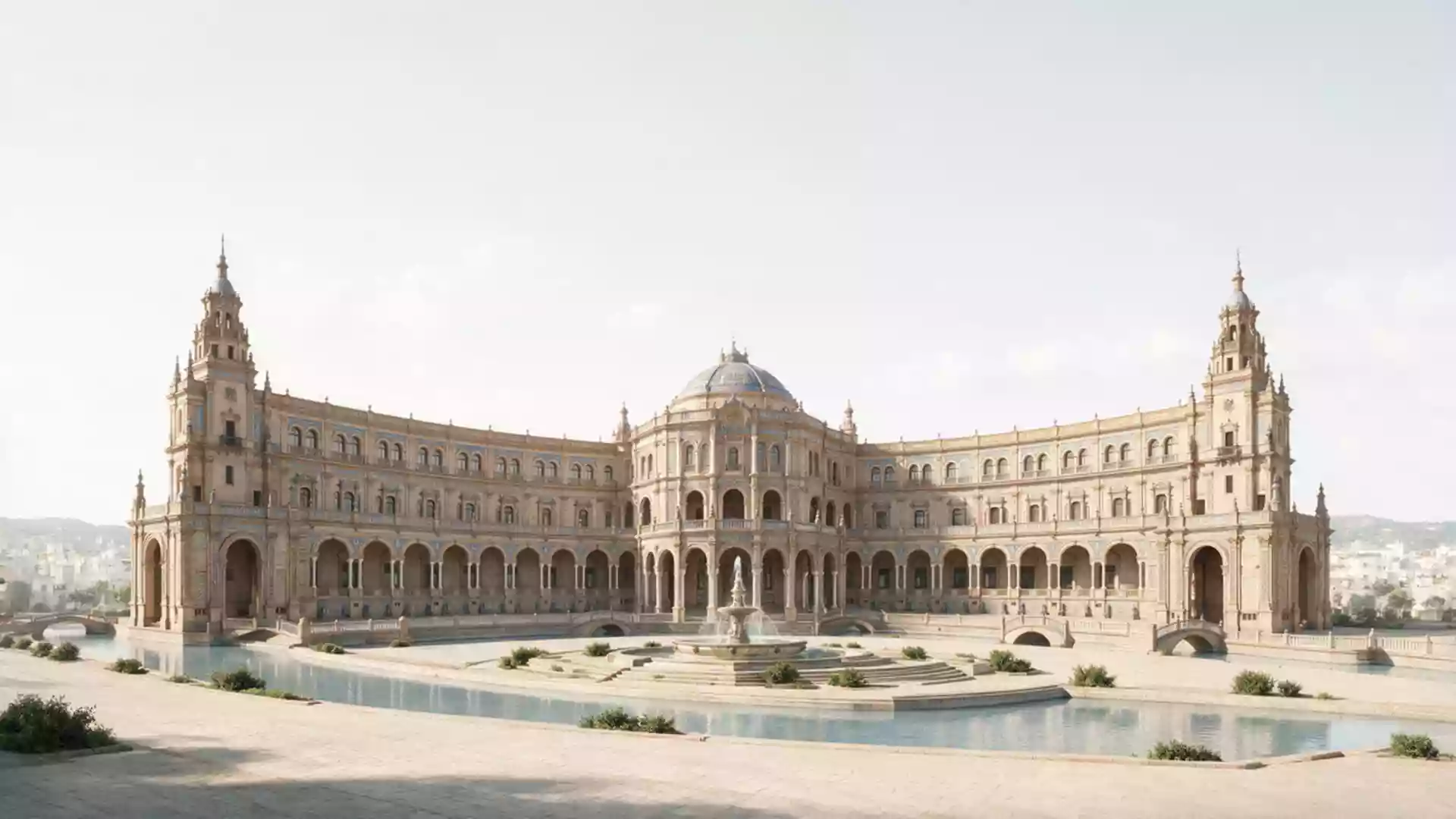
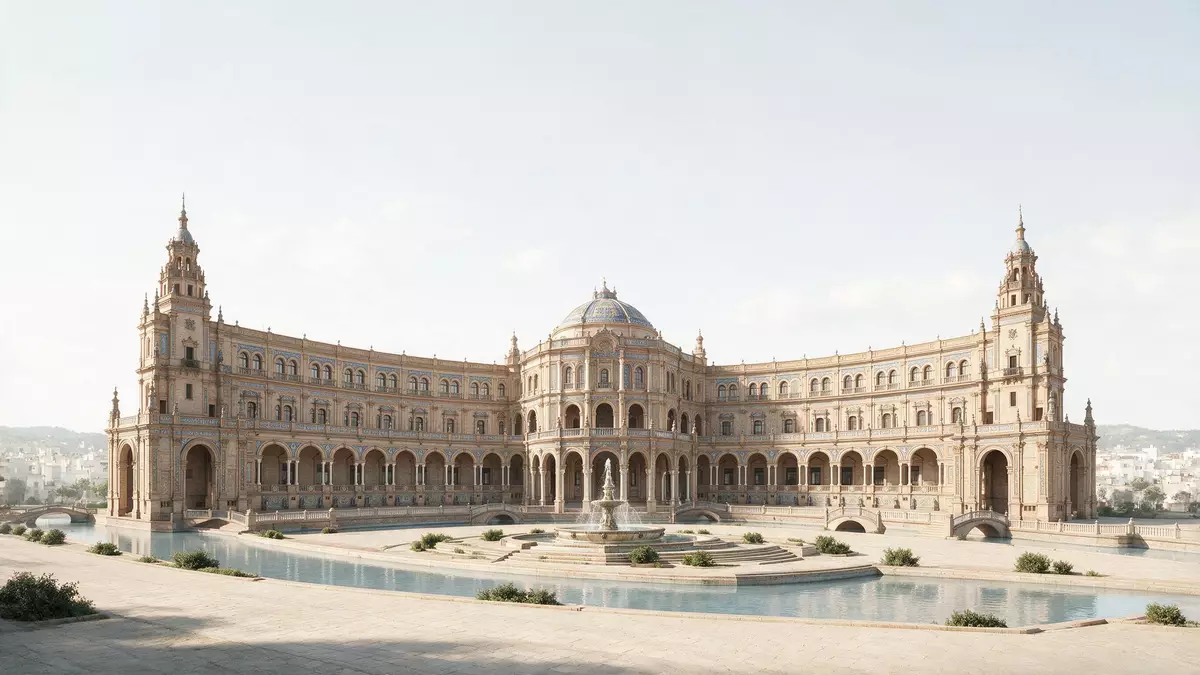
The timing matters because the proposal applies to a building designed for a major international exposition. Aníbal González designed the complex, built between 1914 and 1928 for the Ibero-American Exposition of 1929. The official Seville tourism service describes its semicircular building, central open space and canal as the defining elements of the composition.
The monument’s surrounding setting is María Luisa Park, while its architecture combines brick, ceramic tiles, glazed benches and wrought iron. Forty-eight tiled provincial benches line the building, and four bridges cross the canal. Those fixed features explain why temporary installations are treated as a conservation and access issue rather than simply as event logistics. The official monument guide identifies the architect, construction period and principal elements.
What the draft means for future event access
The municipal draft sets a general maximum of 45 calendar days of occupation per event and promoter each year, counting construction, the activity and dismantling. Specially complex events may receive up to 15 additional days for construction and dismantling, while linked events using the same structures may reach a combined 60-day limit. After an occupation, the affected space must remain free and open to common use for at least one continuous month.
Promoters would also have to provide preventive conservation plans and documents dealing with matters such as safety, mobility, evacuation, accessibility and waste. The regulation is therefore aimed at the conditions under which events may use the site, not at introducing a new daily admission system. The initial approval still has to pass the consultation and final-approval stages before it can take effect.
Visiting Plaza de España: what travellers from Western Europe should know
- The current news point is the initial ordinance approval of 16 October 2026 for temporary events at Plaza de España and its adjoining access avenues.
- The draft does not announce a general closure for visitors; its practical effect is to regulate future event occupations, including a one-month open-use interval after an occupation.
- The monument is beside María Luisa Park on Avenida de Isabel la Católica in Seville, with Avenida de Rodríguez de Casso also covered by the draft.
- The site includes a semicircular building, a canal, four bridges and 48 tiled provincial benches, so event structures can affect the central space and routes around it.
- Spanish is the official language for this visit, and Spain uses the euro.
Searching for Plaza de España on social platforms
These links open searches for Plaza de España on each platform.
Frequently asked questions about Plaza de España
What changed at Plaza de España on 16 October 2026?
Seville gave initial approval to the first specific ordinance regulating temporary events at the monument and its adjoining access avenues. The draft is now subject to 30 working days of public consultation before final approval.
How long can events occupy Plaza de España?
The draft sets a general annual limit of 45 calendar days per event and promoter, including construction and dismantling. Complex cases may receive additional construction time, subject to the proposed rules.
Where is Plaza de España and how do you get there?
Plaza de España stands beside María Luisa Park on Avenida de Isabel la Católica in Seville. The monument is part of the city’s 1929 exposition landscape and is reached within the park setting.