
Playa de la Concha and San Sebastian’s shell-shaped bay
Published on 09/23/2026 at 19:33 | Editorial responsibility: Rafael Müller, Editor-in-Chief AD HOC NEWS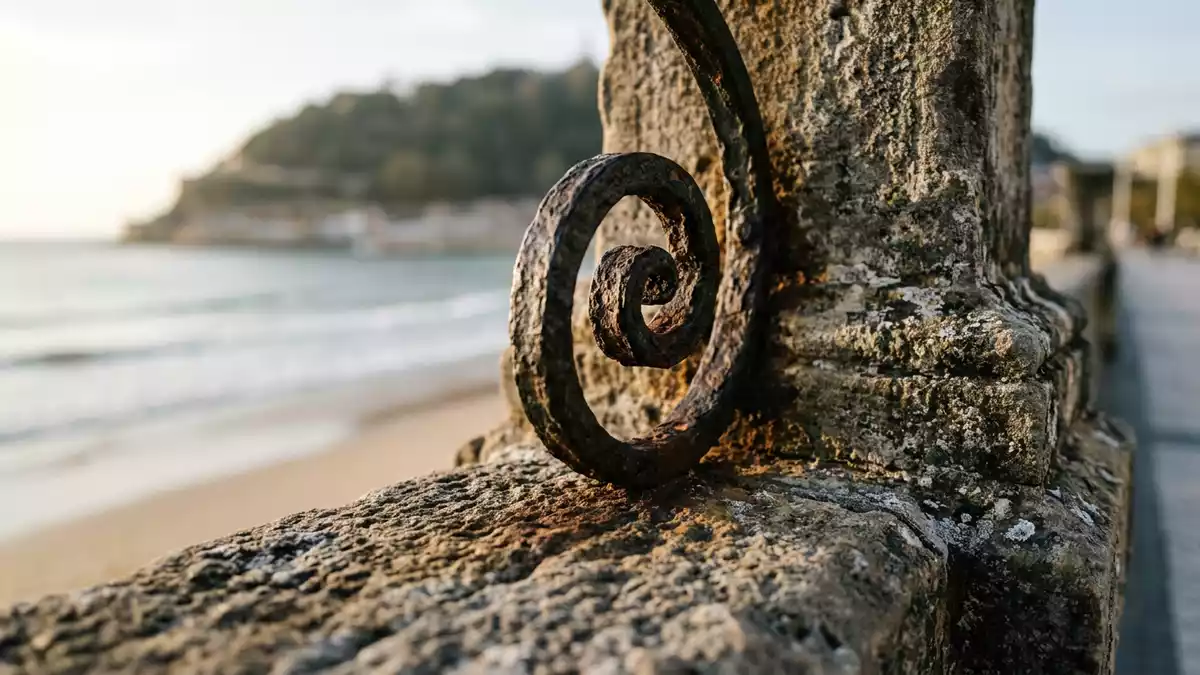
Playa de la Concha follows a broad curve beside San Sebastian, joining fine sand, an ornamental promenade and the sheltered waters of La Concha Bay. The beach measures about 1,350 metres in length and lies directly within the city, with Santa Clara Island offshore.
Playa de la Concha: a beach shaped by the bay
Playa de la Concha occupies the central stretch of La Concha Bay on Spain’s Cantabrian coast. Its name refers to the shell-like outline of the bay, whose curved shoreline opens towards the sea between Monte Igueldo and Monte Urgull.
The beach is sandy and urban, with the city’s streets and buildings close behind it. Its average width is about 40 metres, while the beach area is recorded at roughly 54,000 square metres. Beach of La Concha details The broad sweep gives Playa de la Concha a clear relationship with the bay, rather than presenting it as an isolated strip of coast.
The promenade, railing and landmarks beside the sand
The Paseo de La Concha runs alongside the beach, with the sea on one side and San Sebastian’s elegant urban frontage on the other. Its white railing is among the city’s recognisable public works and was created by architect Juan Rafael Alday.
Along the promenade stand distinctive lamp posts, beach access points and the La Perla complex. The route also passes views towards Miramar Palace and Santa Clara Island. Walking and cycling are part of the promenade’s everyday use, while the sand provides a separate route beside the water. The Concha promenade At low tide, the shoreline connects visually and physically with the direction of Ondarreta and the rocky passage at Pico del Loro.
From nineteenth-century seaside fashion to San Sebastian
Playa de la Concha became associated with seaside bathing in the nineteenth century. Queen Isabel II helped make the beach fashionable in 1845 after visiting San Sebastian for sea bathing, followed by members of the court and aristocratic society.
This period shaped the city’s identity as a resort, leaving a setting where a public beach, grand hotels, palaces and a formal promenade stand close together. Miramar Palace overlooks the bay, while the former casino building at the eastern end of the beach serves as San Sebastian’s City Hall. La Concha’s nineteenth-century history The beach therefore carries both a coastal function and a visible record of the city’s development as a European seaside destination.
Visiting Playa de la Concha: what travellers from Western Europe should know
- Playa de la Concha is in central San Sebastian, beside La Concha Bay. The beach lies west of the River Urumea and is reached through the city’s streets and the Paseo de La Concha.
- The shoreline is sandy, while the route towards Ondarreta includes the rocky Pico del Loro passage. Tides change the appearance and continuity of the beach.
- Santa Clara Island lies opposite the beach in the bay. It has a lighthouse, paths and a small beach that can be affected by the tide.
- The official languages are Spanish and Basque, and the currency is the euro.
Searching for Playa de la Concha on social platforms
These links open searches for Playa de la Concha on each platform.Frequently asked questions about Playa de la Concha
Where is Playa de la Concha?
Playa de la Concha is in central San Sebastian, in the Basque Country of northern Spain. It occupies the main sandy shoreline of La Concha Bay.
What can visitors expect at the beach?
Visitors find fine sand, a formal seaside promenade, urban buildings, beach access points and views across the bay. Tides alter the visible width and continuity of the shore.
What makes Playa de la Concha distinctive?
Its curved beach, white railing, nineteenth-century resort setting and view towards Santa Clara Island combine within one urban bay. The beach is both a place beside the sea and a central part of San Sebastian’s cityscape.


