
Place de la Concorde, where Paris opens to the sky
Published on 09/19/2026 at 21:45 | Editorial responsibility: Rafael Müller, Editor-in-Chief AD HOC NEWS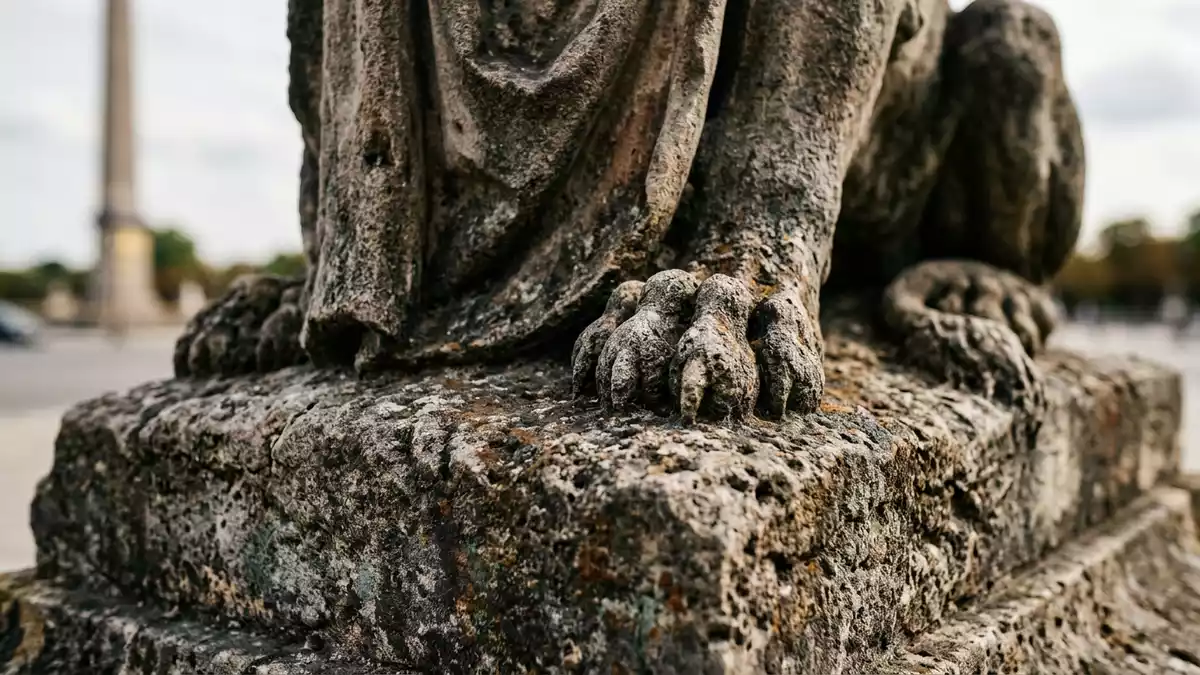
Place de la Concorde is the great ceremonial square that opens the centre of Paris to the sky, framed by long vistas and dominated by an ancient Egyptian obelisk raised in the nineteenth century. Laid out in the eighteenth century as a royal square for Louis XV and renamed several times during the French Revolution and its aftermath, it concentrates centuries of French history in a single expanse of stone and water.
An eighteenth-century stage between gardens and avenue
Place de la Concorde occupies a pivotal site between the Tuileries Garden to the east and the Champs-Élysées to the west, marking a transition from formal palace grounds to the long processional avenue that leads towards the Arc de Triomphe.between the Champs-Élysées to the west and the Tuileries Gardens to the east The square’s octagonal plan and ordered geometry were set out in the mid-eighteenth century by the royal architect Ange-Jacques Gabriel, working for King Louis XV in the classical idiom of the period.built in classical style by the king's first architect, Jacques Ange Gabriel
When first established, the square was known as Place Louis XV and centred on an equestrian statue of the king, set up in the 1760s once the new public space was ready to receive it.named Place Louis XV, with an equestrian statue of the King Prestigious buildings soon rose along its northern side, including the Hôtel de Crillon, whose façades help define the edge of the square and tie it architecturally to the surrounding district.surrounded by prestigious hotels, including the famous Hôtel de Crillon
From revolutionary executions to a symbolic “Concorde”
The French Revolution brought violent change to Place Louis XV. The statue of Louis XV was torn down, a new figure of Liberty was erected, and the square was renamed Place de la Révolution as power shifted away from the monarchy.the statue was torn down and the square was renamed Place de la Révolution A guillotine stood at its centre, and among those executed here in 1793 were King Louis XVI, Marie Antoinette, the revolutionary leader Maximilien Robespierre and other figures now inseparable from accounts of the Revolution.site of public executions including Louis XVI, Marie Antoinette and Maximilien Robespierre
In 1795, after the most turbulent phase of the Revolution, the square was given the name Place de la Concorde as a deliberate expression of national reconciliation under the Directory government.renamed Place de la Concorde under the Directory as a symbolic gesture of reconciliation The name did not hold immediately; over the following decades it alternated with royal titles such as Place Louis XV and Place Louis XVI, as well as Place de la Charte in 1830, before Place de la Concorde was definitively confirmed under the July Monarchy and became the enduring designation used in Paris.its name changed several times before finally settling on Place de la Concorde
Obelisk, fountains and city statues: the nineteenth-century ensemble
The vast space visitors encounter at Place de la Concorde today is largely the result of a nineteenth-century redesign by the architect Jacques Ignace Hittorff, who reworked the square between the 1830s and 1840s.redesigned by Jacques Ignace Hittorff between 1833 and 1846 At its centre stands the Luxor Obelisk, a granite monument more than 3,000 years old, offered to France in the early nineteenth century by Mehemet Ali, the Ottoman viceroy of Egypt, and erected in the square in the 1830s.the famous Luxor Obelisk, presented to Charles X in 1831 by Mehemet Ali The obelisk’s hieroglyphs and tapered form rise above the traffic and frame a direct line of sight along the Champs-Élysées.
Hittorff’s scheme added two large fountains, the Fontaine des Mers and the Fontaine des Fleuves, whose basins, sculpted figures and water jets create focal points on either side of the obelisk.installed two monumental fountains, the Fontaine des Mers and the Fontaine des Fleuves Around the perimeter, eight statues represent major French cities, placing Paris in dialogue with other urban centres within a single sculptural ensemble and giving the square a civic character that extends beyond its royal and revolutionary past.statues representing French cities placed around the square
Visiting Place de la Concorde: what travellers from Western Europe should know
- Place de la Concorde lies on the right bank of the Seine at the western end of the Tuileries Garden, with the Champs-Élysées beginning from its northern side.
- The square itself is level and open, paved over a broad area, with crossings leading over multi-lane roads that separate it from the surrounding gardens and river embankment.
- Metro stations called Concorde and Tuileries serve the area, bringing visitors directly to the edges of the square from other parts of Paris.
- The official language is French and the currency is the euro.
Searching for Place de la Concorde on social platforms
These links open searches for Place de la Concorde on each platform.
Frequently asked questions about Place de la Concorde
Where is Place de la Concorde in Paris?
Place de la Concorde stands on the right bank of the Seine between the Tuileries Garden and the Champs-Élysées, at the western edge of central Paris.
What can travellers expect when visiting Place de la Concorde?
Travellers encounter a broad open square with historic monuments including the Luxor Obelisk, large fountains and city statues, framed by major avenues and formal gardens.
What makes Place de la Concorde distinctive among Parisian squares?
Its combination of eighteenth-century layout, revolutionary history and the nineteenth-century obelisk and fountains gives Place de la Concorde a rare blend of royal, political and civic symbolism.


