
Place de la Concorde, where Paris opens to the sky
Published on 09/16/2026 at 21:32 | Editorial responsibility: Rafael Müller, Editor-in-Chief AD HOC NEWS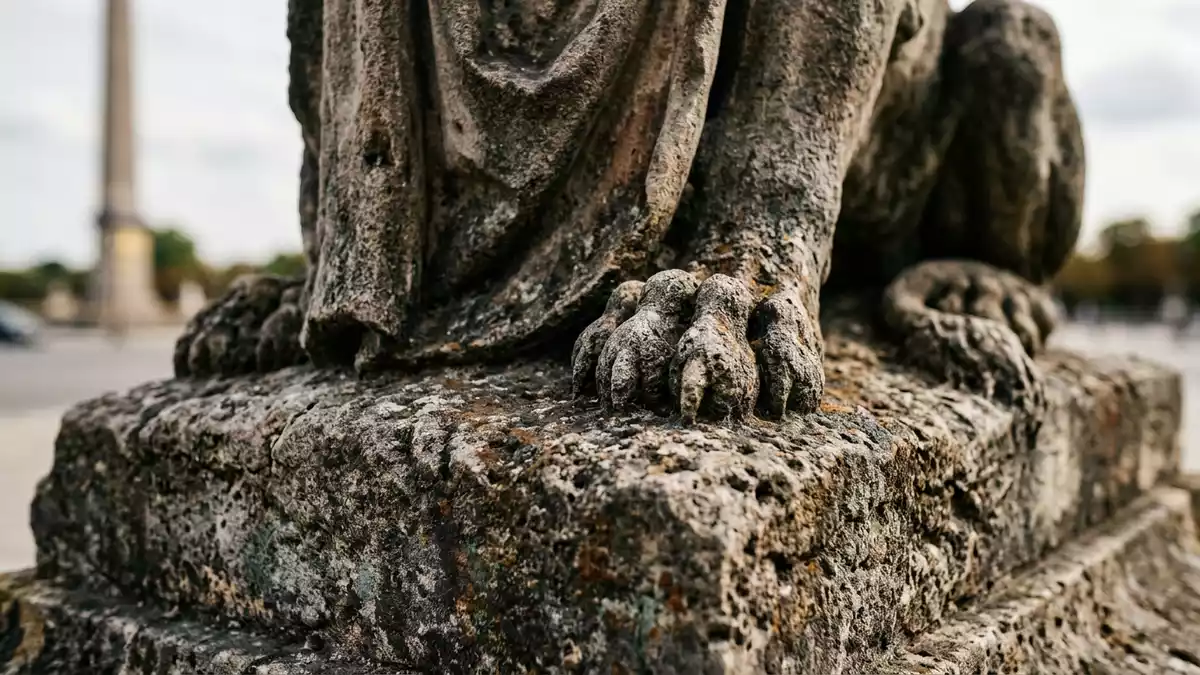
Place de la Concorde is the largest public square in Paris, a broad expanse of stone and traffic set between the Tuileries Garden and the start of the Champs-Élysées, with the Seine flowing just to the south.public square in central Paris It was laid out in the eighteenth century as Place Louis XV and later became one of the starkest stages of the French Revolution, before receiving its present conciliatory name, Place de la Concorde, in 1795.received its current name in 1795
An eighteenth-century square with a revolutionary past
The origins of Place de la Concorde lie in the reign of Louis XV, when a monumental statue of the king on horseback prompted the creation of a formal square around it in the mid-eighteenth century.created between 1755 and 1775 The king’s first architect, Ange-Jacques Gabriel, gave the space its octagonal outline and framed it with classical facades and balustrades that still line the northern side.octagon between the Champs-Élysées and the Tuileries
During the French Revolution, the statue of Louis XV was removed and the square was renamed Place de la Révolution, a change that marked a shift from royal celebration to political confrontation.renamed Place de la Révolution A guillotine was installed at its centre, and figures including Louis XVI and Marie Antoinette were executed here in 1793, making the square a site closely associated with the Reign of Terror in the late eighteenth century.execution of Louis XVI and Marie Antoinette
Luxor Obelisk, fountains and stone figures
The most striking object in Place de la Concorde is the Luxor Obelisk, an ancient Egyptian monolith carved from granite and covered in hieroglyphs, which was presented to France in the nineteenth century and erected on the square.Luxor Obelisk presented to Charles X Rising to about 23 m (75 ft), it stands on a pedestal in the middle of the square and has become one of the clearest visual markers of the junction between central Paris and the grand axis of the Champs-Élysées.23-metre-high obelisk
In the 1830s and 1840s, the architect Jacques Ignace Hittorff reworked the layout of Place de la Concorde under the July Monarchy, adding two monumental fountains and a ring of allegorical statues that give the open space a more structured rhythm.redesigned by Jacques Ignace Hittorff The Fontaine des Mers and the Fontaine des Fleuves flank the obelisk along the square’s central line, their basins edged with sculpted figures representing maritime themes and river landscapes, while seated stone personifications of French cities occupy the corners of the octagon.Fontaine des Mers and Fontaine des Fleuves
Place de la Concorde in the Paris cityscape
Place de la Concorde anchors one end of the historical axis that runs west from the Louvre, through the Tuileries Garden and across the square towards the Champs-Élysées and the Arc de Triomphe, making it a key hinge between royal Paris and the nineteenth-century boulevards.between the Tuileries Gardens and the Champs-Élysées To the south, the bridge known as Pont de la Concorde spans the Seine, linking the square to the Assemblée Nationale and the Left Bank, so that the space sits at the crossing of axes both ceremonial and political.link with Pont de la Concorde
On the northern side, the symmetrical facades of the Hôtel de la Marine and the Hôtel de Crillon, with their colonnades and balconies, form an architectural backdrop to the moving lines of vehicles and pedestrians that circulate around the obelisk and fountains.surrounded by prestigious hotels The sheer scale of the paved surface, combined with its low structures and open views to the river and the avenues, gives Place de la Concorde an unusually horizontal character compared with many Parisian squares enclosed by taller buildings.
Visiting Place de la Concorde: what travellers from Western Europe should know
- Place de la Concorde lies in central Paris on the right bank of the Seine, between the western end of the Tuileries Garden and the eastern beginning of the Champs-Élysées.
- Several main roads converge on the square and traffic circulates around its perimeter, so crossing between the river, the garden and the avenues involves negotiating broad carriageways and marked pedestrian routes.
- The square’s surface is largely level and paved, with kerbs, steps and ramps around the fountains and statues, and long open stretches between the central monuments and the surrounding pavements.
- The official language is French and the currency is the euro.
Searching for Place de la Concorde on social platforms
These links open searches for Place de la Concorde on each platform.
Frequently asked questions about Place de la Concorde
Where is Place de la Concorde in Paris?
Place de la Concorde is on the right bank of the Seine between the Tuileries Garden and the eastern end of the Champs-Élysées, with Pont de la Concorde leading south across the river.
What should visitors expect when they reach the square?
Visitors encounter a broad paved expanse with the Luxor Obelisk, two large fountains, allegorical statues and heavy traffic circulating around the octagonal layout.
What makes Place de la Concorde distinctive among Paris squares?
Its combination of eighteenth-century planning, the Egyptian obelisk, nineteenth-century fountains and its role during the French Revolution give Place de la Concorde an unusual mix of open urban space and dense historical associations.


