
Place de la Concorde, an octagonal stage of Parisian history
Published on 08/27/2026 at 18:34 | Editorial responsibility: Rafael Müller, Editor-in-Chief AD HOC NEWS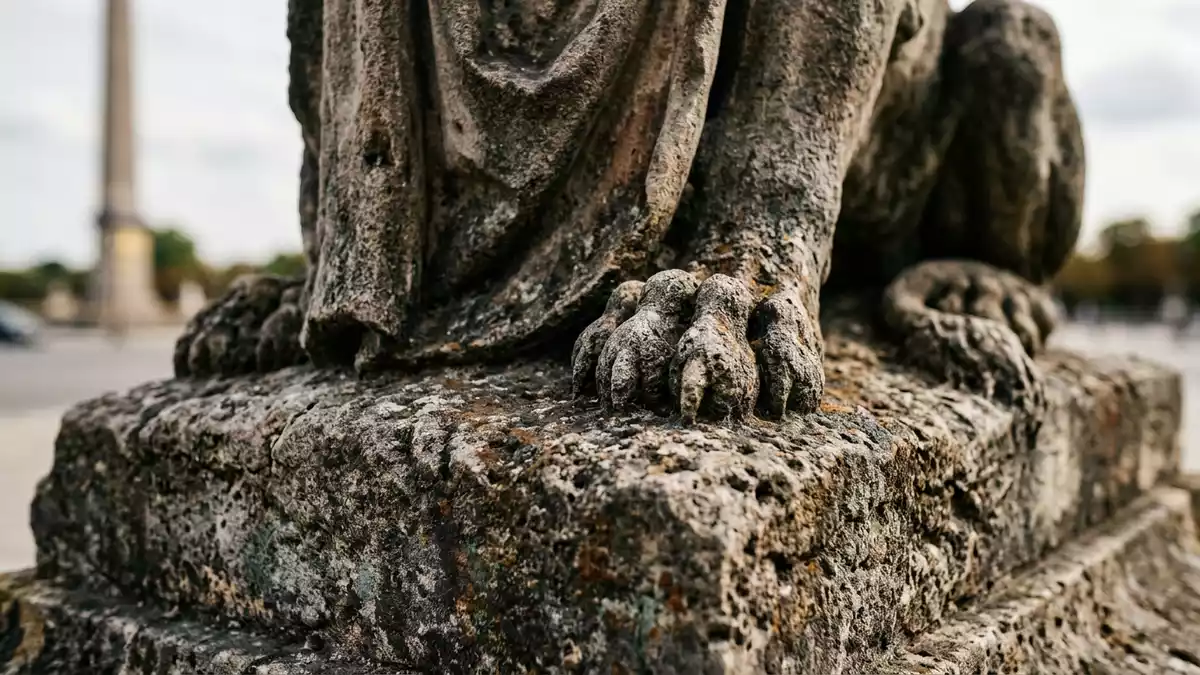
Place de la Concorde is the great octagonal square that opens Paris between the Champs-Elysées and the Tuileries Garden, a broad stone stage where royal celebration, revolutionary violence and nineteenth-century urban design occupy the same ground. Created in the eighteenth century and reshaped in the nineteenth, it places the Luxor Obelisk between monumental fountains, statues of French cities and long views across the Seine.
An eighteenth-century royal square turned revolutionary scaffold
The origins of Place de la Concorde lie in the reign of Louis XV, when Ange-Jacques Gabriel, the king’s principal architect, designed a vast octagonal space at the edge of the Tuileries in the 1750s.the design of the square is attributed to Ange-Jacques Gabriel The square was laid out to frame an equestrian statue of Louis XV, giving the monarch a formal urban setting that completed the east–west axis from the Louvre towards the then rural Champs-Elysées.public square in central Paris Its geometry, with angled sides and balustraded terraces, created wide perspectives while holding the space together as a single composition.
During the French Revolution the same square became a place of execution, when the statue of Louis XV was removed and a guillotine installed near the centre of the space.a guillotine was installed at the center of the square Louis XVI, Marie Antoinette and Maximilien Robespierre were among the figures beheaded here, and the square took the name Place de la Révolution.the square was temporarily renamed Place de la Révolution In 1795, after the most violent phase of the Revolution, it received the name Place de la Concorde, marking an official wish for reconciliation while keeping the same urban form.the square was baptized Place de la Concorde in 1795
Nineteenth-century redesign: obelisk, fountains and city statues
The appearance visitors recognise today largely dates from the work of Jacques Ignace Hittorff, a German-born architect who reworked the square in the nineteenth century while respecting Gabriel’s original outline.Hittorff completely revamped the square between 1833 and 1846 Between the 1830s and 1840s he added terraces, ornamental balustrades and a regular arrangement of streetlamps that define the perimeter and reinforce the axial views towards the Champs-Elysées, the Tuileries and the Seine.das heutige Aussehen erhielt der Platz zwischen 1836 und 1840 In the centre stands the Luxor Obelisk, an ancient Egyptian monument of red granite offered by Egypt and erected on the square in the 1830s, its hieroglyphs rising above the traffic and framing the sky between the facades on the north side.this 3,000-year-old ancient Egyptian monument stands 23 meters high
On either side of the obelisk Hittorff placed two monumental fountains, richly carved and arranged in symmetry along the main axis of the square.its two monumental fountains One celebrates rivers and inland waterways, the other maritime themes, combining figures, basins and sculpted details in dark cast metal and stone. Around the outer corners of the octagon stand eight statues representing major French cities such as Lyon, Marseille, Bordeaux and Lille, each set on a high pedestal and facing inwards across the square.statues representing eight cities in France They, together with the formal facades of the Hôtel de Crillon and the Hôtel de la Marine, make Place de la Concorde a catalogue of nineteenth-century French civic imagery.
A stone hinge between river, avenue and garden
Geographically, Place de la Concorde occupies a crucial site in Paris on the right bank of the Seine, linking river, boulevard and garden in a single open expanse.situated on the right bank of the Seine between the Tuileries Gardens and the western terminus of the Champs-Élysées To the west, the Champs-Elysées runs from the square towards the Arc de Triomphe; to the east, the gravel walks and trees of the Tuileries Garden lead towards the Louvre. Along the south side the Pont de la Concorde crosses the Seine to the Assemblée Nationale, while to the north formal buildings and the Rue Royale connect the square with the Madeleine district.located on the right bank, in the 8th district The square itself covers several hectares, with broad carriageways, wide pavements and island-like central spaces around the obelisk and fountains.the octagonal Place de la Concorde is the largest square in Paris
The octagonal plan means that approaching Place de la Concorde from any side brings a slightly different alignment of monuments into view: from the Champs-Elysées the obelisk and fountains frame the Louvre; from the Tuileries the same central features line up with the triumphal avenue; from the river the statues of the cities stand between the water and the long facades on the north side.la place a été dessinée ... sous la forme d'un octogone At street level, the combination of heavy traffic routes and generous pedestrian islands makes the square feel both like a thoroughfare and a vantage point, where the wider urban landscape of Paris can be read in a single sweep.
Visiting Place de la Concorde: what travellers from Western Europe should know
- Place de la Concorde stands between the eastern end of the Champs-Elysées and the Tuileries Garden in central Paris, on the right bank of the River Seine.
- The square is a large open expanse with broad paved surfaces and multi-lane roads, so reaching the central obelisk and fountains involves crossing wide carriageways at designated points.
- Concorde station on Line 1 of the Paris Métro lies just to the north of the square, giving direct rail access along the main east–west axis of the city.
- The official language is French and the currency is the euro.
Searching for Place de la Concorde on social platforms
These links open searches for Place de la Concorde on each platform.
Frequently asked questions about Place de la Concorde
Where is Place de la Concorde in Paris?
Place de la Concorde lies on the right bank of the River Seine between the Champs-Elysées and the Tuileries Garden, in the 8th arrondissement of Paris.
What should visitors expect when they reach Place de la Concorde?
Visitors find a very large octagonal square with the Luxor Obelisk, two monumental fountains, statues of French cities and wide views towards the Louvre and the Arc de Triomphe.
What makes Place de la Concorde distinctive among Parisian squares?
It combines eighteenth-century royal planning, its role as a major execution site in the French Revolution and a nineteenth-century redesign that introduced the Egyptian obelisk, fountains and city statues into one urban space.


