
Pingyao Gucheng and the city preserved in brick
Published on 09/23/2026 at 21:06 | Editorial responsibility: Rafael Müller, Editor-in-Chief AD HOC NEWS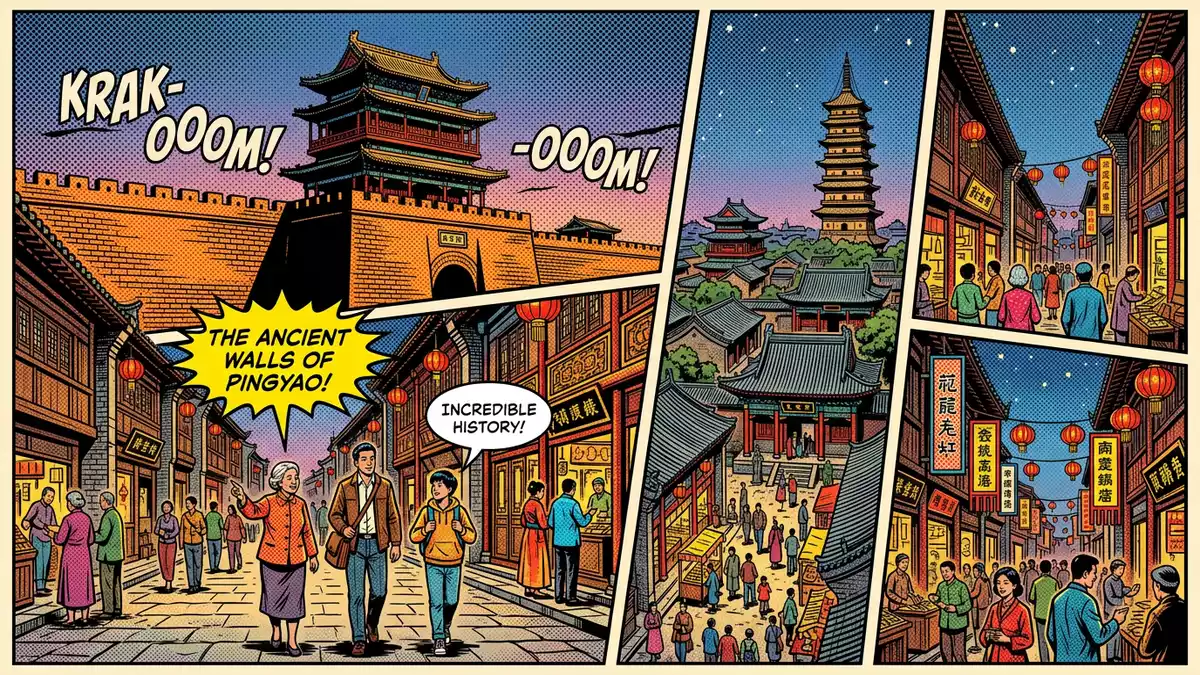
Pingyao Gucheng is a walled historic city in Shanxi Province, China, where streets, residences, temples and commercial buildings remain within a traditional urban enclosure. The visible city belongs largely to the Ming and Qing periods, while its documented history reaches back more than two thousand years.
Pingyao Gucheng inside its ancient walls
Brick walls define the settlement, enclosing a network of streets and lanes arranged around courtyards, shops and religious buildings. The walls, gate structures and watchtowers form a continuous architectural setting rather than a single isolated monument. UNESCO lists the Ancient City of Ping Yao as a traditional Han Chinese city founded in the fourteenth century.
The city’s appearance comes from the relationship between defensive masonry and low-rise urban buildings. Timber, brick and earthen materials appear across courtyard houses, temples, shopfronts and government buildings. The streets retain the scale of a county town, with enclosed compounds opening onto narrow commercial routes.
Ming and Qing streets, courtyards and temples
Pingyao’s principal historic character dates from the Ming dynasty, which ruled China from 1368 to 1644, and the Qing dynasty, which followed until 1911. These periods shaped the surviving street plan, domestic architecture and civic buildings. The city was inscribed on the UNESCO World Heritage List in 1997.
Courtyard residences place rooms around enclosed open spaces, while temples preserve religious sculpture, timberwork and painted decoration. Shops and workshops line the commercial streets, where façades, signs and covered entrances form a dense sequence of buildings. The arrangement records daily life as well as formal architecture.
Pingyao’s banking history in the old city
Pingyao became an important centre of Chinese finance during the nineteenth and early twentieth centuries. Its commercial buildings include former institutions associated with piaohao, private draft banks that handled remittances across China. Banking history is therefore visible in the same streets as homes, temples and county offices.
The city’s heritage combines urban planning with economic history. Its walls mark a defended settlement, while the streets inside them show the organisation of trade, administration, worship and domestic life. The result is a historic townscape rather than a collection of separate ruins. A UNESCO conservation description records Pingyao’s banking buildings and its five centuries of evolving urban form within Imperial China.
Visiting Pingyao Gucheng: what travellers from Western Europe should know
- Pingyao Gucheng lies in Pingyao County, Jinzhong City, in central Shanxi Province. Rail services connect Pingyao with the wider Shanxi region, while the historic city is explored on foot.
- The old city contains narrow lanes, masonry gateways and uneven historic surfaces. Wall walks and temple compounds include steps.
- The surrounding heritage area includes Shuanglin Temple and Zhenguo Temple, which form part of the wider cultural landscape associated with Pingyao.
- The official language is Mandarin Chinese and the currency is the Chinese yuan.
- Entry requirements depend on your nationality; UK travellers can check the FCDO travel advice at gov.uk/foreign-travel-advice, Irish travellers the Department of Foreign Affairs at ireland.ie.
Searching for Pingyao Gucheng on social platforms
These links open searches for Pingyao Gucheng on each platform.Frequently asked questions about Pingyao Gucheng
Where is Pingyao Gucheng?
Pingyao Gucheng is in Pingyao County, Jinzhong City, Shanxi Province, in central China. The historic city lies within a walled urban area.
What can visitors expect to see?
Visitors encounter brick walls, gates, courtyard houses, temples, shops and former banking buildings. The historic streets preserve the arrangement of a traditional county town.
What makes Pingyao Gucheng distinctive?
Its distinctive character comes from the combination of Ming and Qing urban planning, defensive walls and commercial buildings linked to nineteenth-century Chinese banking. The city was inscribed as a UNESCO World Heritage Site in 1997.


