
Phra Borom Maha Ratcha Wang in Bangkok’s royal core
Published on 09/04/2026 at 17:28 | Editorial responsibility: Rafael Müller, Editor-in-Chief AD HOC NEWS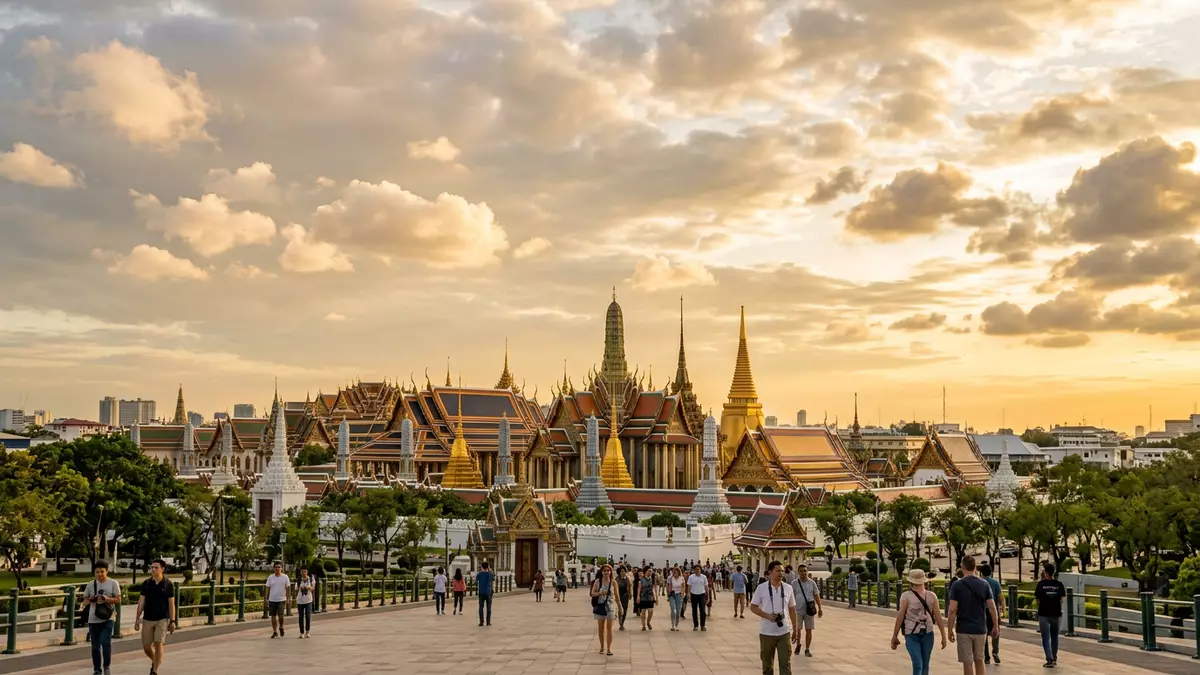
Phra Borom Maha Ratcha Wang is Bangkok’s great royal complex, a walled ensemble of halls, courtyards and shrines on the bank of the Chao Phraya River. Its core dates to 1782 under King Phutthayotfa Chulalok, also known as Rama I, of the Chakri dynasty.
A royal complex of courts and halls
The palace reads as several linked precincts rather than one building. Its courts include the Temple of the Emerald Buddha, the Outer Court, the Middle Court and the Inner Court, each with a distinct role in royal life. The ensemble also carries the architectural mix that came with later additions, especially under King Chulalongkorn, or Rama V. Chakri dynasty
Its walls enclose throne halls, pavilions, gardens and office buildings, all arranged within a roughly rectangular plan. The result is not a single facade but a dense royal landscape, with Thai roofs, European forms and ceremonial spaces sitting side by side.
Rama I, Rama V and a layered royal history
The palace began with Rama I, who moved the capital from Thonburi to Bangkok and ordered construction on 6 May 1782. The Temple of the Emerald Buddha belongs to the same founding moment, and the whole compound became the seat of kingship for Siam and later Thailand. 6 May 1782
Under Rama V, the complex gained major new buildings, including the Chakri Maha Prasat group and Boromphiman, where Neo-Renaissance and Thai features meet. That layering gives the site its visual strength: older halls, later royal residences and ceremonial pavilions remain in the same enclosure.
Wat Phra Kaew inside the palace walls
Wat Phra Kaew, formally the Temple of the Emerald Buddha, is the palace’s royal chapel and one of its most important components. It was built in 1783 and stands apart from the living quarters of the kings, with cloisters, gates and richly decorated buildings around the sacred image.
The chapel anchors the spiritual side of the compound, while the surrounding halls express court ritual and dynastic continuity. The contrast between devotional buildings and administrative spaces is part of what makes the place legible at a glance. Temple of the Emerald Buddha
Visiting Phra Borom Maha Ratcha Wang: what travellers from Western Europe should know
- The palace stands in Phra Nakhon, at the heart of Bangkok, close to the Chao Phraya River. Access is straightforward by road and by river transport, with the riverfront district acting as the main reference area.
- The complex is spread across many courts, gates and connected halls. Much of the experience lies in moving through layered spaces rather than viewing one isolated monument.
- The grounds contain both Thai and European architectural forms. Rooflines, throne halls, cloisters and garden sections appear in one enclosed royal setting.
- The Temple of the Emerald Buddha is part of the same compound. That means the site combines a royal residence, a ceremonial centre and a sacred precinct in one place.
Searching for Phra Borom Maha Ratcha Wang on social platforms
These links open searches for Phra Borom Maha Ratcha Wang on each platform.
Frequently asked questions about Phra Borom Maha Ratcha Wang
Where is Phra Borom Maha Ratcha Wang?
It stands in central Bangkok, in Phra Nakhon, beside the Chao Phraya River. The palace complex occupies a historic riverfront position within the old royal quarter.
What should visitors expect?
A visit brings together courtyards, throne halls, pavilions and the Temple of the Emerald Buddha. The setting is formal and layered, with royal and sacred spaces enclosed within the same walls.
What makes it distinctive?
Its combination of the Chakri dynasty’s royal history, the 1782 foundation and the later Neo-Renaissance additions gives the complex its character. The mixture of Thai and European architecture is visible across the courts and halls.


