
Paseo de la Reforma and Mexico City’s imperial boulevard
Published on 08/29/2026 at 18:20 | Editorial responsibility: Rafael Müller, Editor-in-Chief AD HOC NEWS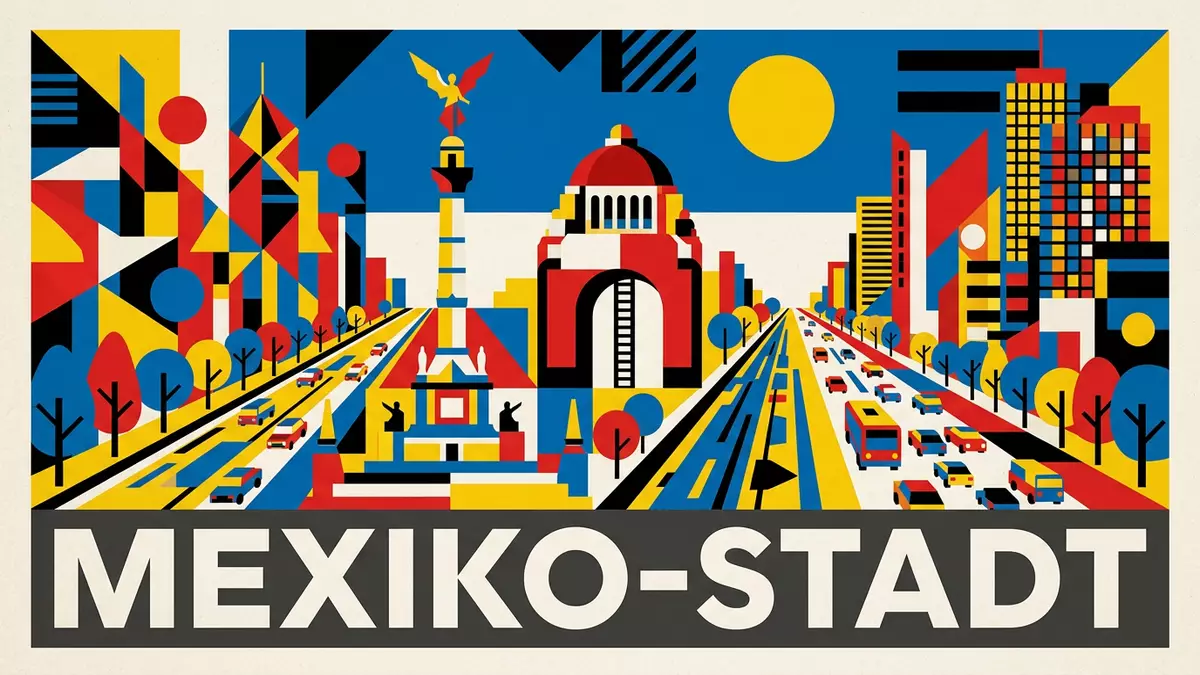
Paseo de la Reforma is a broad boulevard in Mexiko-Stadt, laid out in the 1860s under Maximilian I. Its long line of roundabouts and monuments gives it a clear urban profile, anchored by the Second Mexican Empire and the liberal memory that followed.
Imperial origins along a republican avenue
The boulevard began under Emperor Maximilian and is closely tied to Ferdinand von Rosenzweig, who worked on the project during the Second Mexican Empire. The route later took the name Paseo de la Reforma, and the name itself places the avenue inside the reform era associated with Benito Juárez.
Its early identity was imperial, but its public face is now shaped by a different political vocabulary. The avenue therefore reads as a street of succession: empire, republic, commemoration.
Monuments, roundabouts and a long civic stage
The avenue is marked by major monuments set in its roundabouts, including the Monumento a la Independencia and the Ángel de la Independencia. Those landmarks give Paseo de la Reforma a sequence of fixed points rather than a single isolated centre.
Other named figures appear along the boulevard too, such as Cuauhtémoc and Christopher Columbus. The street becomes a corridor of public memory, with each monument introducing another historical reference into the city plan.Paseo de la Emperatriz
Architecture and urban form in the centre of the city
Paseo de la Reforma cuts diagonally across Mexiko-Stadt and is known for its broad scale. The avenue is also associated with European boulevard models, especially Paris and Vienna, which places it within a wider nineteenth-century city-making tradition.
Its form is urban rather than monumental in the narrow sense, because the monuments sit inside a working boulevard. That combination of traffic route, ceremonial axis and public promenade gives the place its lasting character.
Visiting Paseo de la Reforma: what travellers from Western Europe should know
- The boulevard runs through central Mexiko-Stadt and links districts on a diagonal line. It is reached by the city’s metro, buses and taxis, with major landmarks clustered along its length.
- The avenue is broad and exposed, with long straight sections and large roundabouts. The scale matters most on foot, where crossings and medians shape movement across the street.
- Many of the best-known monuments stand in traffic circles rather than in enclosed squares. That makes the boulevard easy to read from a distance and harder to take in as a single view.
- The official language is Spanish and the currency is the Mexican peso.
- Entry requirements depend on your nationality; UK travellers can check the FCDO travel advice at gov.uk/foreign-travel-advice, Irish travellers the Department of Foreign Affairs at ireland.ie.
Searching for Paseo de la Reforma on social platforms
These links open searches for Paseo de la Reforma on each platform.
Frequently asked questions about Paseo de la Reforma
Where is Paseo de la Reforma?
It is a major boulevard in Mexiko-Stadt, cutting diagonally through the city. Its route is lined with monuments, traffic circles and several prominent landmarks.
What should visitors expect there?
Expect a wide urban avenue rather than a compact historic street. The most memorable features are its scale, its roundabouts and the monuments placed along it.
What makes it distinctive?
Its identity comes from the mix of imperial origin, republican renaming and public monuments. The boulevard also connects the city’s urban form with nineteenth-century European boulevard planning.


