
Parque Nacional Volcan Masaya and its lava-filled caldera
Published on 09/16/2026 at 08:39 | Editorial responsibility: Rafael Müller, Editor-in-Chief AD HOC NEWS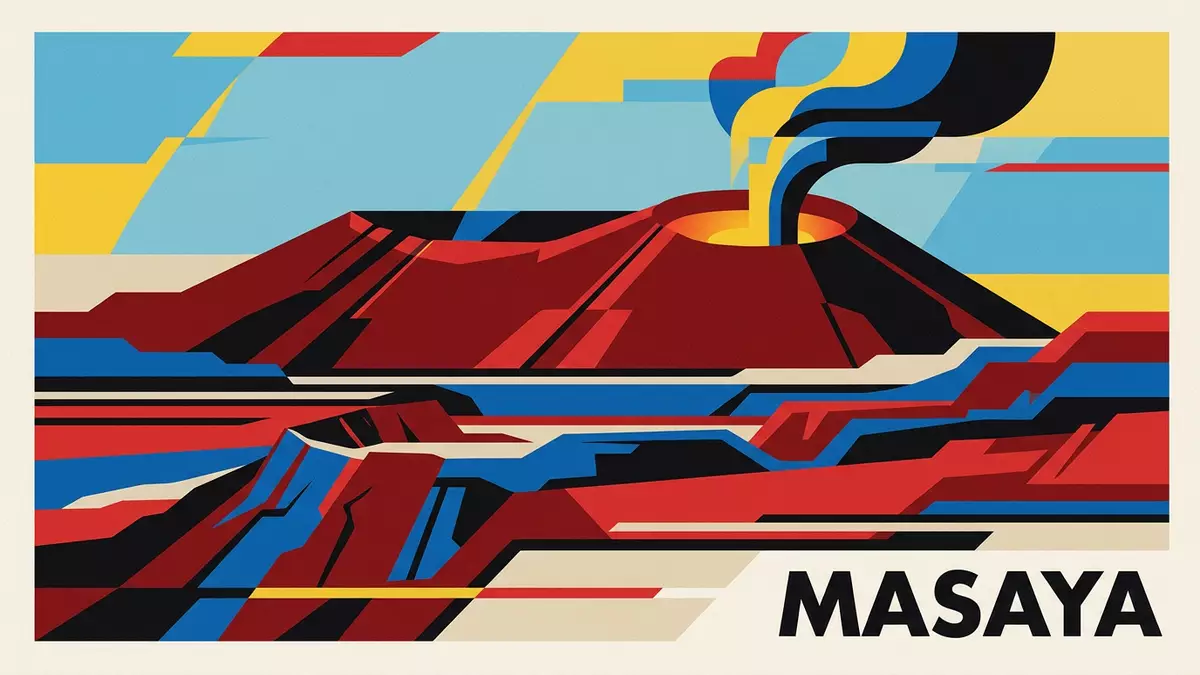
Parque Nacional Volcan Masaya in western Nicaragua is a national park built around an active volcanic caldera, where lava, ash and crater lakes form a stark volcanic landscape. Established as Nicaragua’s first national park in 1979, it protects the Masaya volcanic complex between Masaya and Managua and gives visitors unusually close access to an active crater and its surrounding lava fields.
A caldera of two volcanoes and five craters
Parque Nacional Volcan Masaya centres on the Masaya caldera, a broad volcanic depression south of Managua that contains two volcanoes and multiple craters. The caldera covers about 54 km² (21 sq mi), forming a broken plateau of old lava flows, cinder cones and ash plains that frame the main volcanic features.The park has an area of 54 km² Within this caldera lie the volcanoes Masaya and Nindirí, together associated with five craters, including the active Santiago crater that draws many visitors.two volcanoes and five craters
The park’s terrain is varied but consistently volcanic. Older lava fields solidified into dark, jagged rock, crossed by rough tracks and roads that climb towards the crater area. In places the caldera floor drops to reveal a scenic crater lagoon, Laguna de Masaya, backed by steep slopes of volcanic rock and scrub vegetation. Across the plateau, low cinder cones rise from the lava and ash, marking past eruptions and adding to the layered character of the landscape.an ancient volcanic caldera with cones and a crater lake
Masaya volcano and the active Santiago crater
Masaya volcano itself is a caldera-forming volcano whose activity has shaped this part of Nicaragua for centuries. It rises above the surrounding countryside near Masaya, with its flanks covered by lava flows from historic eruptions.Masaya is a caldera located in Masaya, Nicaragua The active Santiago crater sits on the volcano and has a long record of degassing and eruptions that continue to alter its interior.
In the crater area the ground is formed by compacted ash and volcanic rock, cut by roads and short trails that lead to viewpoints over the crater and towards the wider caldera. Guard rails and marked paths define the accessible edges, while beyond them the crater walls drop to the active vent. At times a lava lake is visible within Santiago, glowing beneath a shifting surface of gas, although its visibility can change with rockfalls and eruptive phases.the lava lake in Santiago and changes after a landslide Around the main crater, smaller vents, fumaroles and dark lava deposits testify to different eruptions and give the site a layered volcanic character.
Nicaragua’s first national park and its protected landscape
Parque Nacional Volcan Masaya holds a particular place in Nicaragua’s conservation history as the country’s first national park. In May 1979 the Masaya area was formally declared a national park by Decree N° 79, recognising the caldera and its lava-covered interior as a protected area.Masaya became Nicaragua’s first national park in 1979 Later management plans set the protected area’s surface at around 5,469 ha, including the caldera interior and its distinctive volcanic landforms.the management plan describes a protected area of about 5,469 ha
The park’s legal boundaries follow the natural outline of the Masaya caldera, taking in the volcanoes Masaya and Nindirí, the lava fields within the caldera rim and the slopes above Laguna de Masaya.the decree defines the park by the caldera’s limits Within that area, vegetation grows on the older lava and ash deposits, forming belts of dry forest and scrub that contrast with bare rock nearer recent flows. The combination of active crater, crater lagoon, lava tunnels and forested slopes gives Parque Nacional Volcan Masaya an unusual range of volcanic features within a relatively compact protected area.
Visiting Parque Nacional Volcan Masaya: what travellers from Western Europe should know
- Parque Nacional Volcan Masaya lies in the department of Masaya in western Nicaragua, south-east of Managua, with the park entrance on the Carretera a Masaya near the KM23 marker.
- The approach into the crater area follows paved roads across old lava fields, where short paths and steps climb over uneven volcanic rock and compacted ash.
- The official language is Spanish and the currency is the Nicaraguan córdoba.
- Entry requirements depend on your nationality; UK travellers can check the FCDO travel advice at gov.uk/foreign-travel-advice, Irish travellers the Department of Foreign Affairs at ireland.ie.
Searching for Parque Nacional Volcan Masaya on social platforms
These links open searches for Parque Nacional Volcan Masaya on each platform.
Frequently asked questions about Parque Nacional Volcan Masaya
Where is Parque Nacional Volcan Masaya located?
Parque Nacional Volcan Masaya is in the department of Masaya in western Nicaragua, south of Managua, with its entrance reached via the Carretera a Masaya near KM23.
What should visitors expect on a visit?
Visitors encounter an active volcanic landscape, including paved approaches over lava fields, short paths on ash and rock, viewpoints above the Santiago crater and views towards Laguna de Masaya.
What makes Parque Nacional Volcan Masaya distinctive?
The park combines Nicaragua’s first national park status with a compact caldera landscape of two volcanoes, five craters, lava fields and a crater lagoon, all within a defined protected area.


