
Parque Nacional Tortuguero: canals, rainforest and turtles
Published on 08/26/2026 at 15:23 | Editorial responsibility: Rafael Müller, Editor-in-Chief AD HOC NEWS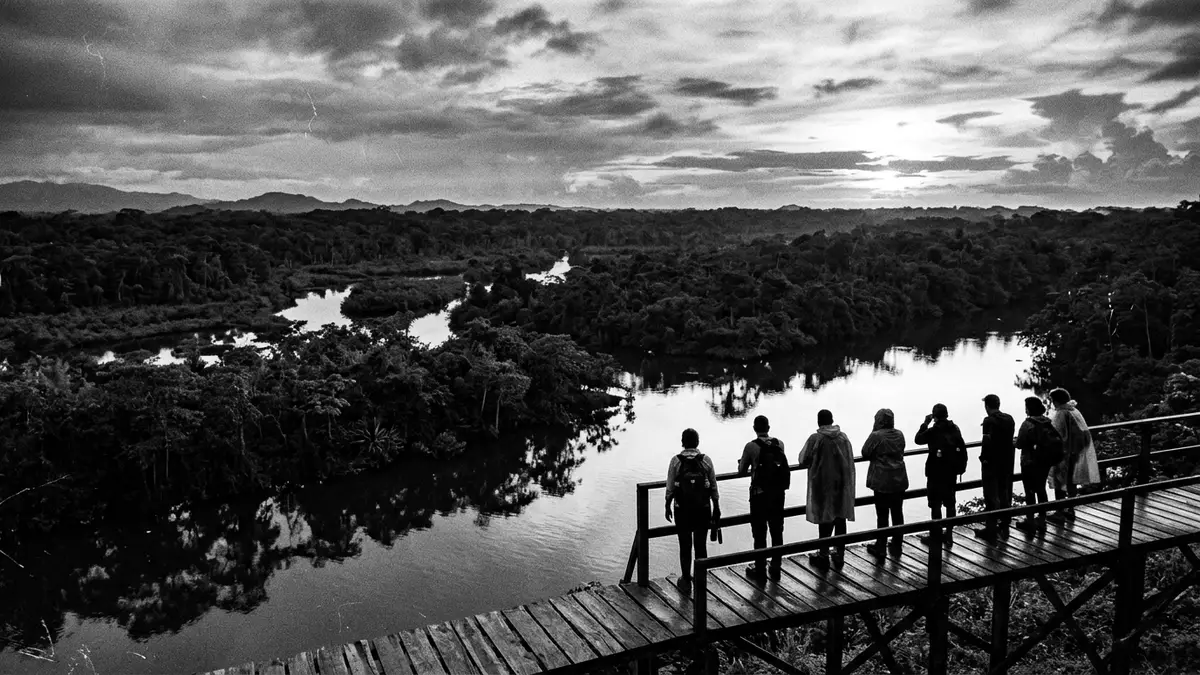
Parque Nacional Tortuguero on Costa Rica’s northeastern Caribbean coast is a protected mosaic of canals, rainforest and long Caribbean beaches around the small settlement of Tortuguero in Limón Province. Established as a national park in 1970, it safeguards a roadless wetland landscape that is internationally recognised for sea turtle nesting and lowland tropical forest conservation.
Waterbound rainforest and protected coastline
Parque Nacional Tortuguero spans tropical lowland rainforest, freshwater canals, lagoons, swamps and coastal sands along the Caribbean shore of Costa Rica. The protected area lies within the Tortuguero Conservation Area, with the park forming a large block of low-lying terrain that reaches inland towards Cerro Tortuguero and out over marine zones in the Caribbean Sea.Tortuguero Conservation Area The park’s limits have been expanded several times since its declaration as a national park on 24 September 1970, increasing its extent from over 64,000 hectares to more than 76,000 hectares of protected land and water.expanded several times since 1970
The coastline fronting Parque Nacional Tortuguero holds lengthy beaches on the Caribbean Sea where several species of marine turtles come ashore to nest. Green sea turtles, hawksbill turtles and leatherback turtles all use these sands, making the area one of the principal nesting sites for green sea turtles in the Western Hemisphere.nesting beach in the Western Hemisphere Inland from the beach, tropical rainforest grows on slightly higher ground, interlaced with rivers and natural canals that drain towards the sea.
A canal network reached only by boat or plane
One of the defining features of Parque Nacional Tortuguero is its intricate network of navigable freshwater canals and lagoons, which weave through forest and wetlands behind the coastal dunes. These waterways form the primary access routes into the park, serving both local transport and guided boat excursions through the rainforest.intricate network of navigable freshwater canals The terrain is extremely swampy in many sectors, and there are no public roads into the area, so visitors and residents rely on small boats and domestic aircraft rather than cars.
The village of Tortuguero sits between the Caribbean Sea and an inland canal within the park, acting as a base for canal tours, guided walks and visits to the turtle nesting beach.village of Tortuguero To reach Tortuguero by water from the interior of Costa Rica, one approach follows roads to river ports such as La Pavona on the Río La Suerte, where riverboats continue along canals to the park. Light aircraft connect Tortuguero with other airstrips in Costa Rica, landing near the village and shortening the journey over the wetlands.
Conservation history and wildlife diversity
Parque Nacional Tortuguero grew out of conservation efforts in the mid twentieth century to protect nesting marine turtles and associated ecosystems along Costa Rica’s Caribbean coast. It was formally declared a national park by Decree 1235-A in 1970, later ratified by Law 5680 of 1975, which defined the area as an intangible zone without extractive activities such as hunting or logging.ratified by Law 5680 of 1975 These legal steps followed earlier designations as a protective zone in the 1960s, gradually building a framework for long-term conservation.
The park’s canals and forests support a wide range of wildlife, including mammals such as monkeys and jaguars, numerous amphibians and reptiles, and hundreds of bird species in the lowland rainforest and wetland habitats.wide range of wildlife The name Tortuguero, shared by the park and the adjacent village, derives from the Spanish “tortuga” and is associated with the long history of turtle nesting on the beaches.derives from the Spanish “tortuga” Alongside the marine life, visitors travelling through the canals encounter tropical vegetation, including palms and broadleaf rainforest trees, mirrored in the still water and broken by occasional clearings and river junctions.
Visiting Parque Nacional Tortuguero: what travellers from Western Europe should know
- Parque Nacional Tortuguero lies in northeastern Costa Rica’s Limón Province on the Caribbean coast and is reached either by riverboat along inland canals or by domestic flight to Tortuguero.
- The terrain is low-lying, humid and swampy, with many sections accessible only by boat; walking routes near Tortuguero include earth paths where surfaces can be soft or muddy.
- The surrounding region uses Spanish as the official language and the national currency is the Costa Rican colón.
- Entry requirements depend on your nationality; UK travellers can check the FCDO travel advice at gov.uk/foreign-travel-advice, Irish travellers the Department of Foreign Affairs at ireland.ie.
Searching for Parque Nacional Tortuguero on social platforms
These links open searches for Parque Nacional Tortuguero on each platform.
Frequently asked questions about Parque Nacional Tortuguero
Where is Parque Nacional Tortuguero located?
Parque Nacional Tortuguero is in Limón Province on Costa Rica’s northeastern Caribbean coast, surrounding the village of Tortuguero and extending over canals, rainforest and coastline.
What should visitors expect on a visit to Parque Nacional Tortuguero?
Visitors encounter a roadless wetland landscape reached by boat or plane, with canal excursions, rainforest trails near Tortuguero and long Caribbean beaches used by nesting marine turtles.
What makes Parque Nacional Tortuguero distinctive among Costa Rica’s protected areas?
Parque Nacional Tortuguero combines a large lowland rainforest and canal system with major marine turtle nesting beaches, all protected under national park status dating back to 1970.


