
Parque Nacional Torres del Paine and the granite mountains of Patagonia
Published on 09/14/2026 at 22:17 | Editorial responsibility: Rafael Müller, Editor-in-Chief AD HOC NEWS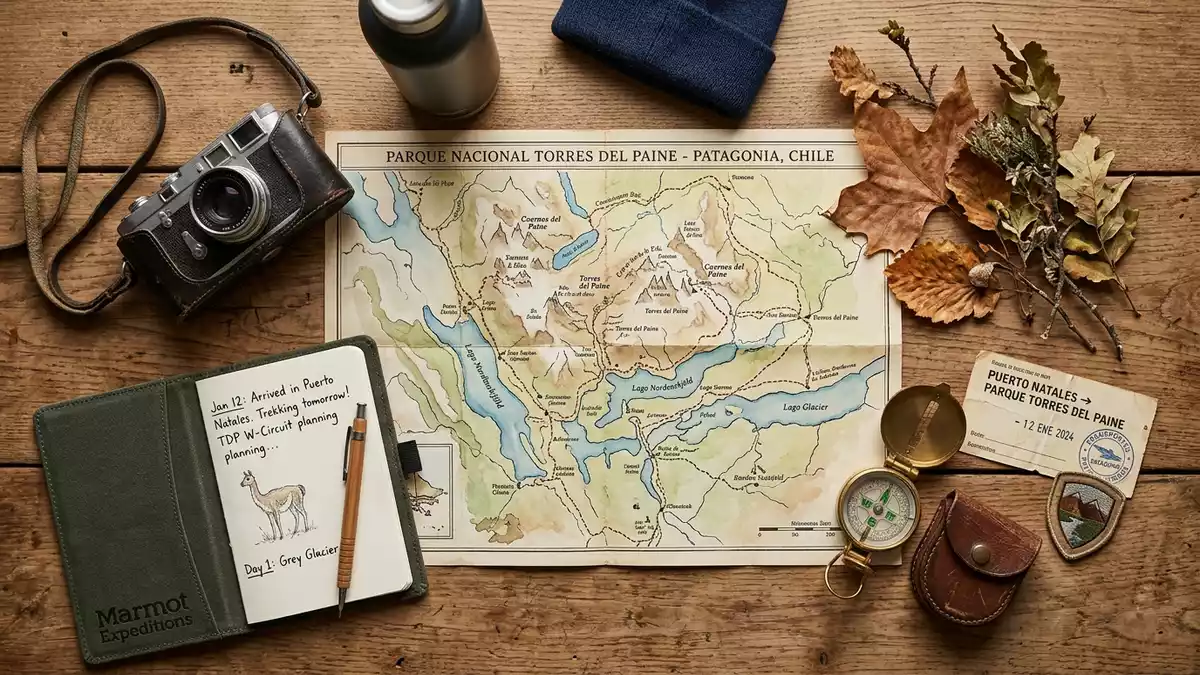
Parque Nacional Torres del Paine in southern Chile is a national park where granite mountains, glacial valleys and Patagonian steppe are enclosed within a single protected landscape. Created as a national park in 1959 in the Magallanes Region, it sits north of Puerto Natales and forms the terrestrial core of the Torres del Paine Biosphere Reserve designated by UNESCO in 1978.
Granite towers and a compact mountain massif
The defining feature of Parque Nacional Torres del Paine is the Paine Massif, a compact mountain group that rises abruptly between the Andes and the Patagonian steppe in the Province of Última Esperanza. The massif’s best?known peaks are the eponymous towers, three steep rock summits that stand close together above a system of glacial valleys and lakes.The cordillera Paine is described as an independent mountain system, with granite forming its lower walls and sedimentary rock in its upper sections.
Geologists identify the Paine Massif as a granite intrusion that reached its present form millions of years ago, creating steep faces and buttresses that contrast with the gentler slopes of the surrounding ranges.The intrusion is dated to around 12 million years, and includes peaks such as Paine Grande, the highest summit in the group, along with the Cuernos del Paine and the three towers themselves.Grinding glaciers and granite peaks share the same compact range, with smaller glaciers clinging to cirques and ledges.
Glaciers, lakes and the Southern Patagonian Ice Field
Parque Nacional Torres del Paine stands along the edge of the Southern Patagonian Ice Field, an extensive body of ice that feeds many of the park’s glaciers and lakes.The ice field is recognised as the world’s second?largest contiguous extra?polar ice mass, and its outlet glaciers descend into valleys within and around the park. Glacier Grey is one of the largest of these outlet glaciers, terminating in a lake of the same name where floating icebergs are a persistent feature of the water surface.Lago Grey is described as a glacially fed lake, part of a wider system of watercourses.
Several sizeable lakes lie around the base of the Paine Massif, each aligned with particular valleys and glaciers. Lago Pehoé occupies a central position at the foot of the Cuernos, distinguished by clear water that can take on a turquoise hue under certain conditions.Lago Pehoé, Nordenskjöld, Sarmiento and Grey form the four major lakes described in geographic accounts of the park, linked by rivers including the Río Paine. Glacial flour carried by meltwater influences the colour of the lakes, an effect noted in satellite observations where some bodies of water appear pale or milky.Freshwater lakes rich with glacial dust sit among ridges, valleys and outwash plains shaped by ice.
Steppe, forest and a protected Patagonian landscape
Beyond the immediate slopes of the Paine Massif, Parque Nacional Torres del Paine includes broad stretches of Patagonian steppe and a series of other vegetation zones. Descriptions of the park’s ecology note wind?bent grasses in the plains, pre?Andean scrub on plateaus, old?growth deciduous forests in sheltered valleys and sparse high?altitude vegetation on exposed slopes.Four distinct vegetation zones are set out in summaries of the park’s habitats, reflecting the transition from mountains to steppe.
Parque Nacional Torres del Paine was created by decree of the Chilean Ministry of Agriculture on 13 May 1959, consolidating earlier protected areas into a single national park.The official record of its creation notes its location in the Region of Magallanes and Chilean Antarctica, in the commune of Torres del Paine. In 1978 UNESCO recognised the wider Torres del Paine Biosphere Reserve under the Man and the Biosphere Programme, with the national park forming the reserve’s core area.The biosphere reserve designation highlights ridges, glaciers, rivers and lagoons within a landscape that moves from mountains into open plains.
Visiting Parque Nacional Torres del Paine: what travellers from Western Europe should know
- Parque Nacional Torres del Paine lies in the Magallanes Region of southern Chile, with the main road access from Puerto Natales, the nearest significant town to the park.
- The park’s terrain ranges from level steppe to steep mountain slopes, with many routes involving long sections on foot across uneven ground and exposed areas affected by Patagonian wind.
- Major lakes such as Lago Pehoé and Lago Grey sit within the park boundaries, and several viewpoints are reached by paths that include stretches of loose rock or glacier?carved moraine.
- The official language is Spanish and the currency is the Chilean peso. Entry requirements depend on your nationality; UK travellers can check the FCDO travel advice at gov.uk/foreign-travel-advice, Irish travellers the Department of Foreign Affairs at ireland.ie.
Searching for Parque Nacional Torres del Paine on social platforms
These links open searches for Parque Nacional Torres del Paine on each platform.Frequently asked questions about Parque Nacional Torres del Paine
Where is Parque Nacional Torres del Paine?
Parque Nacional Torres del Paine is in the Magallanes Region of southern Chile, in the Province of Última Esperanza, north of the town of Puerto Natales.
What can visitors expect on a visit?
Visitors encounter a combination of sharp granite peaks, glacial valleys, large lakes and open steppe, with many viewpoints reached by paths across varied and sometimes steep terrain.
What makes Parque Nacional Torres del Paine distinctive?
The park’s distinctive character lies in the Paine Massif, a compact granite mountain group set against Patagonian steppe, and its connection to the Southern Patagonian Ice Field through major outlet glaciers and lakes.


