Parque Nacional Manuel Antonio: rainforest, beaches and islands near Quepos
Published on 09/09/2026 at 21:01 | Editorial responsibility: Rafael Müller, Editor-in-Chief AD HOC NEWS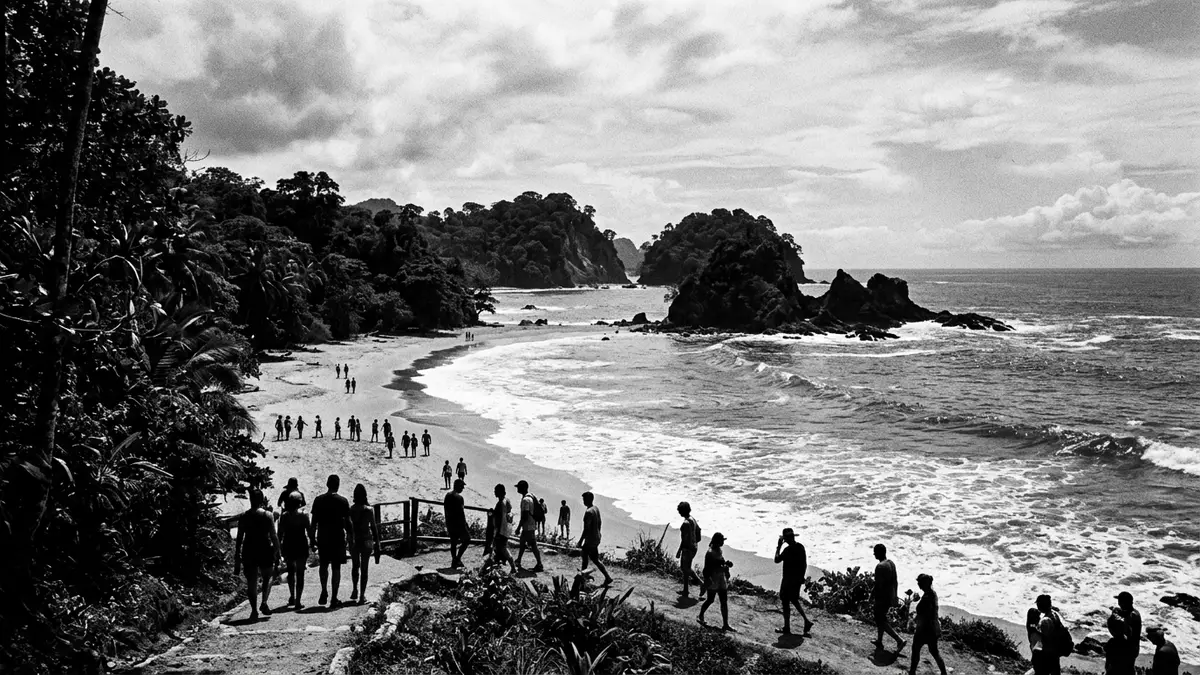
Parque Nacional Manuel Antonio on Costa Rica’s central Pacific coast brings rainforest, bright sand beaches and offshore islands together in a compact protected area near Quepos. Established as a national park in 1972, it protects both land and sea on the Puntarenas shoreline while remaining small enough to feel tangible and immediate.
A small coastal park with land and sea under protection
Parque Nacional Manuel Antonio lies just south of Quepos in Costa Rica’s Puntarenas province, on the country’s central Pacific coast where forested hills descend towards the ocean and rocky headlands frame the shore.just south of the city of Quepos The park forms part of the Central Pacific Conservation Area and is reached by a road from Quepos that runs towards the seaside village of Manuel Antonio before ending near the park entrance.Central Pacific Conservation Area
Although Manuel Antonio is one of Costa Rica’s smaller national parks in terms of land area, it combines terrestrial and marine zones in a single unit. The protected land covers around 1,983 ha, while the surrounding protected waters extend over tens of thousands of hectares, giving the park a total protected area of more than 27,000 ha across land and sea.land and water area The park boundary brings together forested hillsides, coastal lowland, beaches and nearby islets, making the relationship between shoreline and offshore waters central to its character.
From rainforest ridges to pale sand beaches
Within its relatively compact terrestrial area, Parque Nacional Manuel Antonio packs in varied terrain: coastal forest, secondary woodland, patches of mangrove and low cliffs that drop towards the Pacific. Inland slopes carry tropical vegetation, with trees forming a dense canopy and vines and epiphytes occupying the space between trunks. Trails generally follow natural contours, sometimes climbing to viewpoints over the coastline where the meeting of forest and sea is visible in a single sweep.
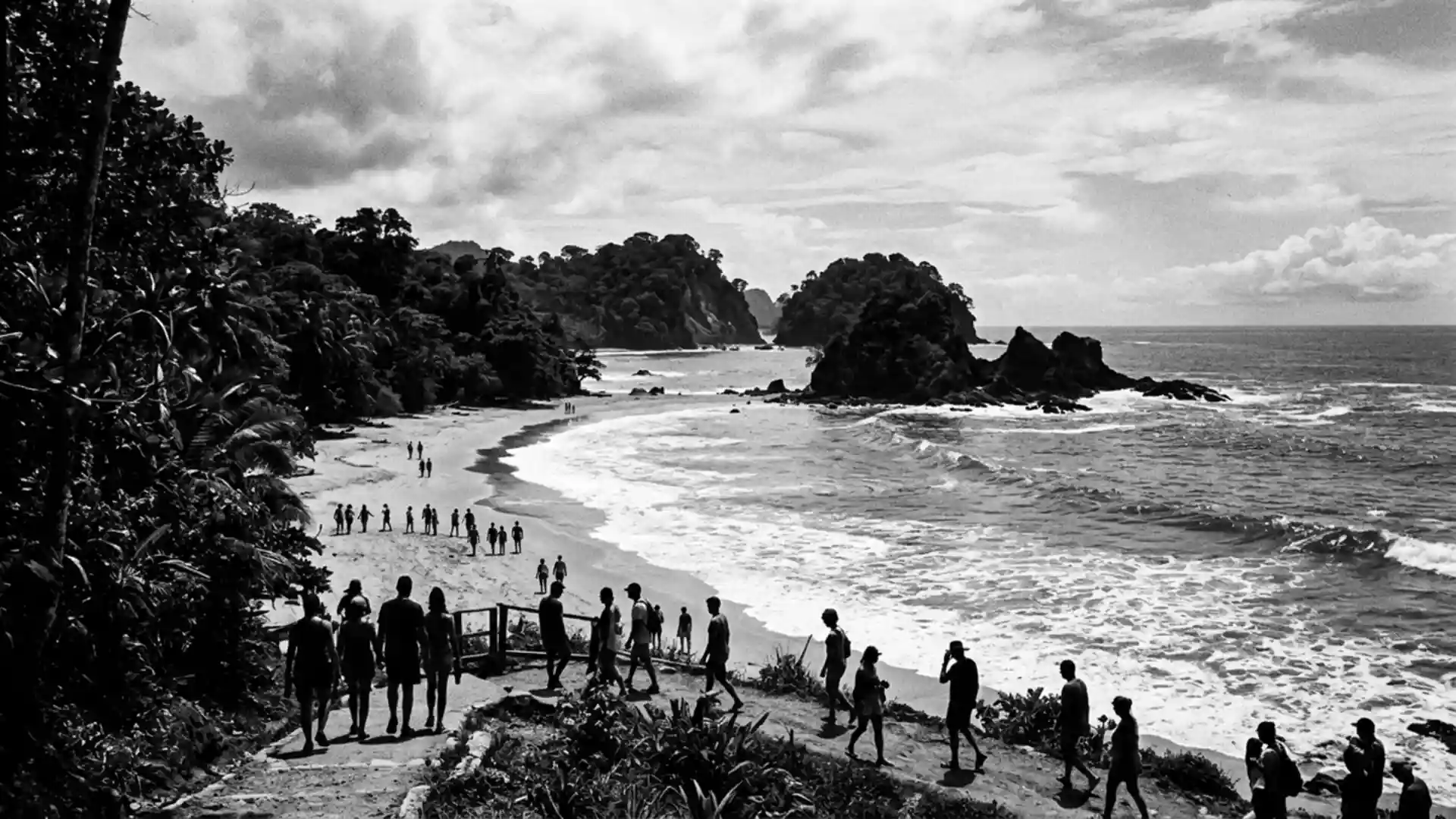
One of the park’s defining experiences is its series of pale sand beaches tucked between rocky promontories. Inlets curve gently between forested points, with sand backed directly by vegetation and the edges of the shore marked by dark, weathered rock. A short walk from the entrance brings visitors from humid forest to open beachfront, where offshore you see the park’s small islands rising from the water. These islands appear as forested lumps of rock, separated from the mainland by narrow channels of sea, and belong to the park’s marine protected zone, linking the coastal scenery to the broader ocean environment.islas y playas dentro del parque
Biodiversity and a park created in the 1970s
Parque Nacional Manuel Antonio is part of Costa Rica’s system of protected areas managed by SINAC, the National System of Conservation Areas.Sistema Nacional de Áreas de Conservación The park was established in 1972, during a period when Costa Rica was formalising conservation policies and creating national parks to safeguard its varied ecosystems.Established 15 November 1972 Manuel Antonio’s protected status covers rainforest habitats, coastal vegetation and marine environments, including coral patches, rocky seabeds and nearshore waters frequented by marine life.
Although the park’s area is modest compared with some other Costa Rican reserves, it holds a dense concentration of wildlife within its boundaries. Forest sections provide habitat for mammals such as monkeys and sloths, while birds use the park’s varied structure from canopy to shore. Reptiles and amphibians occupy both forest and edge habitats, and the combination of land and sea introduces marine species into the wider mosaic. The proximity of beaches to forest, and islands to mainland, means that different habitats sit within short walking distances of one another, a practical expression of the park’s compact scale.
Visiting Parque Nacional Manuel Antonio: what travellers from Western Europe should know
- Parque Nacional Manuel Antonio lies on Costa Rica’s central Pacific coast in Puntarenas province, just south of Quepos. Road access runs from Quepos along Route 618 towards the seaside settlement of Manuel Antonio and on to the park entrance.Route 618 from Quepos
- Terrain inside the park alternates between forest paths, sections with roots and uneven ground, and stretches of beach sand. Some routes include modest gradients or stairways where trails climb to viewpoints over the coast.
- The official language is Spanish and the currency is the Costa Rican colón.
- Entry requirements depend on your nationality; UK travellers can check the FCDO travel advice at gov.uk/foreign-travel-advice, Irish travellers the Department of Foreign Affairs at ireland.ie.
Searching for Parque Nacional Manuel Antonio on social platforms
These links open searches for Parque Nacional Manuel Antonio on each platform.Frequently asked questions about Parque Nacional Manuel Antonio
Where is Parque Nacional Manuel Antonio located?
Parque Nacional Manuel Antonio is on Costa Rica’s central Pacific coast in Puntarenas province, just south of Quepos and near the village of Manuel Antonio.
What can visitors expect on a visit to the park?
Visitors encounter rainforest trails, coastal viewpoints, pale sand beaches backed by vegetation and offshore islands that form part of the park’s marine protected area.
What makes Parque Nacional Manuel Antonio distinctive among Costa Rica’s parks?
Its combination of land and sea protection, compact scale, beaches within walking distance of forest and establishment as a national park in 1972 give it a distinct coastal character.