
Parque nacional del Teide and the volcanic heart of Teneriffa
Published on 09/08/2026 at 16:36 | Editorial responsibility: Rafael Müller, Editor-in-Chief AD HOC NEWS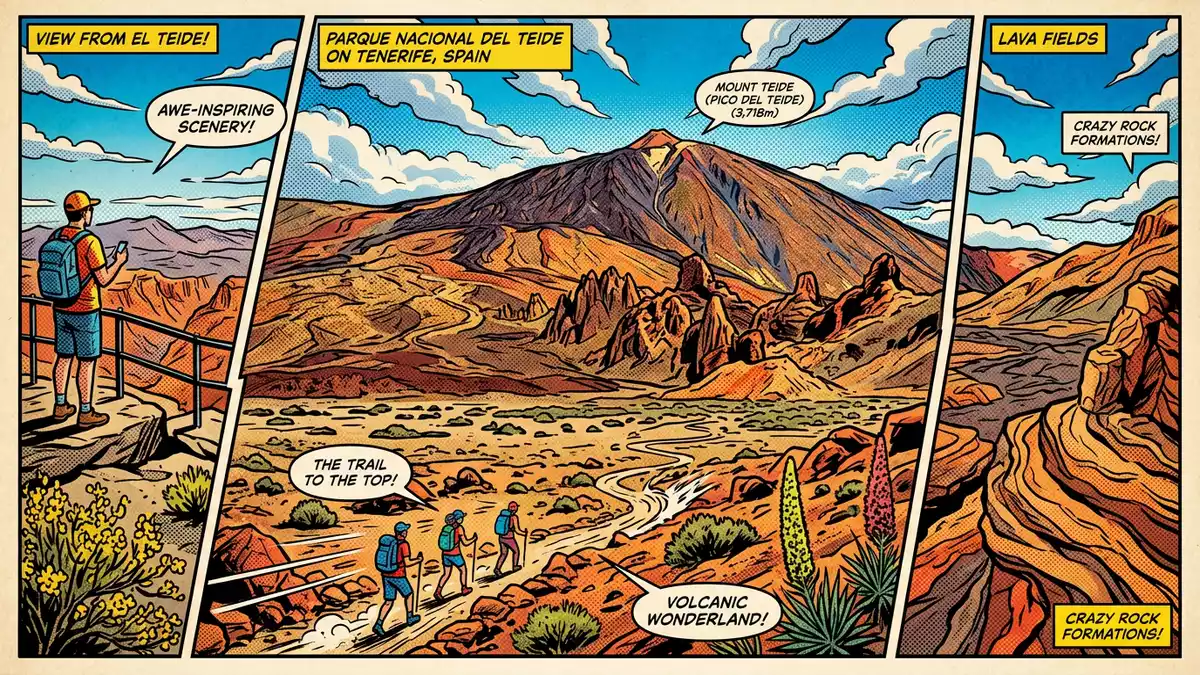
Parque nacional del Teide on Teneriffa is a high-altitude landscape built around the volcanic bulk of Teide, rising above a broad caldera in the centre of the island. The park was created as a national park in 1954, protecting the summit area of Tenerife as part of Spain’s network of mountain and volcanic reserves.
A high volcanic plateau around Spain’s highest peak
Parque nacional del Teide occupies the upper slopes and summit area of Tenerife, with the volcano forming a dominant landmark above the island’s interior. The protected area covers around 18,990 hectares in the municipality of La Orotava, setting aside an extensive plateau and surrounding cones within the Canary Islands.The park has an area of 18,990 hectares The broader Teide-Pico Viejo stratovolcano rises to 3,718 m (12,198 ft) above sea level, making it the highest peak on Spanish soil and a defining elevation within the archipelago.Teide-Pico Viejo reaches 3,718 m above sea level
This volcanic structure stands thousands of metres above the Atlantic Ocean floor, forming one of the tallest continuous volcanic edifices on Earth when measured from the seabed. Around the summit and upper slopes, the landscape presents lava flows, craters and older domes, all concentrated within a single protected bowl of mountains and ridges.The park represents a rich assemblage of volcanic features and landscapes The caldera of Las Cañadas encloses much of this scene, with cliffs forming a natural rim and the central cone of Teide rising above them.
From national park to UNESCO World Heritage site
Teide was officially declared a national park on 22 January 1954, placing its high mountain landscapes under formal protection as part of Spain’s national park system.Declared by decree on 22 January 1954 Subsequent changes in Spanish environmental law led to a reclassification in 1981 and an enlargement of the park in 1999, giving it its present extent on Tenerife’s summit plateau.Later reclassification and enlargement dates are recorded for the park Through these decisions, Parque nacional del Teide became the largest and oldest of the Canary Islands’ national parks, with its boundaries reflecting the main volcanic structures.
In 2007 Teide National Park was inscribed on the UNESCO World Heritage List as a natural site, recognised for the outstanding scenery created by the stratovolcano and its surrounding caldera.Teide National Park was inscribed on the World Heritage List in 2007 The inscription highlights both the height of Teide-Pico Viejo and the variety of volcanic forms within the protected area, from dark basaltic flows to lighter-coloured domes and tuff layers. As part of Spain’s network of national parks, Teide also carries other protection designations, including Natura 2000 status within the European Union, reinforcing its role as a conservation landscape on Tenerife.The park is listed with Natura 2000 and World Heritage protections
Rock, flora and light on the Las Cañadas plateau
Most visits to Parque nacional del Teide centre on the wide plateau of Las Cañadas, a high basin ringed by cliffs and studded with smaller volcanic cones. Here the ground is made up of solidified lava, volcanic ash and scattered boulders, creating a terrain of rough rock under a strong Atlantic sky.The park is described as a natural area dominated by the volcano and lava flows The colours of the rock range from deep black through reds and browns to pale yellows, reflecting different eruptions and lava compositions across the caldera.
Within this volcanic setting, the park supports a range of plant species adapted to altitude and strong light, including endemic shrubs and seasonal flowering plants recorded in regional conservation documents.The park extends from Canary Island pine forest to the summit of Teide Lower down, Canary Island pine woods mark the transition between the cultivated zones of Tenerife and the protected high slopes, while above them the terrain becomes more open and stony. Across the plateau, viewpoints and marked paths make it possible to see the Teide cone from different angles, with the high summit rising above the Las Cañadas rim and casting long shadows across the lava fields.
Visiting Parque nacional del Teide: what travellers from Western Europe should know
- Parque nacional del Teide lies in the central part of Tenerife in Spain, reached by mountain roads from coastal towns and villages around the island.
- The terrain on the Las Cañadas plateau is rocky and uneven, with stretches of volcanic gravel and sections of paths that climb steadily at altitude above 2,000 m (6,562 ft).
- Teide’s summit cone rises above the plateau, and routes towards higher viewpoints involve significant elevation gain and exposure to strong sun and wind.
- On Tenerife the official language is Spanish and the currency is the euro.
Searching for Parque nacional del Teide on social platforms
These links open searches for Parque nacional del Teide on each platform.
Frequently asked questions about Parque nacional del Teide
Where is Parque nacional del Teide located?
Parque nacional del Teide is on Tenerife in Spain’s Canary Islands, occupying the island’s central summit area within the municipality of La Orotava.
What should visitors expect on a visit to Parque nacional del Teide?
Visitors encounter a high volcanic plateau with lava fields, craters and views of the Teide cone, alongside marked paths and roadside viewpoints across the caldera.
What makes Parque nacional del Teide distinctive among volcanic landscapes?
The park combines Spain’s highest peak with a large caldera of varied volcanic forms, recognised as a UNESCO World Heritage site for its striking mountain and lava scenery.


