
Parque nacional del Teide and Tenerife’s volcanic crown
Published on 09/14/2026 at 10:26 | Editorial responsibility: Rafael Müller, Editor-in-Chief AD HOC NEWS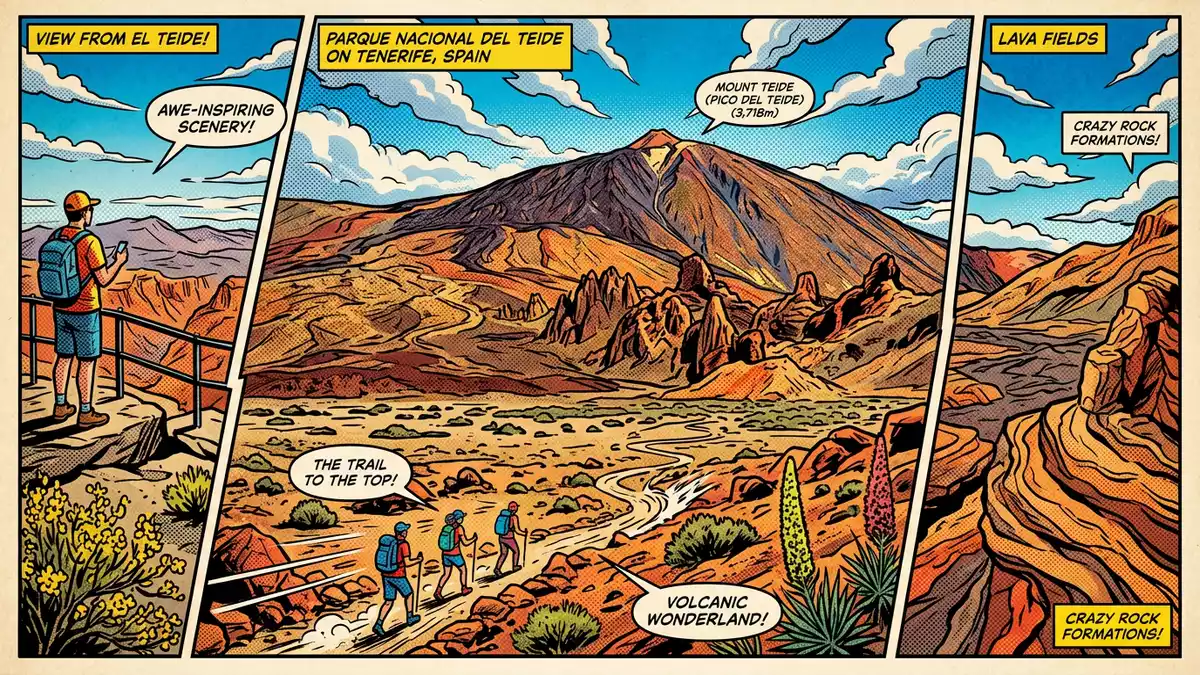
Parque nacional del Teide sits in the centre of Teneriffa and is dominated by the Teide-Pico Viejo volcanic complex, a mass of lava, cones and high rock. The name points to a landscape that rises to 3,718 m, the highest point on Spanish soil.
Teide, Pico Viejo and the lava plain
The park’s most striking feature is the meeting of the summit cone and the broad volcanic plain around it. Black lava fields, pale ash slopes and broken ridges give the area a stark, layered look.
Official park data place the protected area at 18,990 hectares, with Tenerife as the island setting and Santa Cruz de Tenerife as the province. The park’s recorded status as a national park dates from 22 January 1954, and its UNESCO World Heritage inscription dates from 2007.
Las Cañadas and the volcanic frame
Las Cañadas forms a large volcanic basin beneath the summit area, edged by cliffs and slopes of different colours and textures. The basin and the central stratovolcano create the park’s most recognisable landform.
UNESCO’s description calls the site a rich assemblage of volcanic features concentrated in a spectacular setting. That fits the visible variety of rock, ridge and plain across the park.
A high volcanic landscape shaped by rock and altitude
The Teide massif stands above the surrounding island terrain, and the ascent moves into thinner air and wider views across Tenerife. The park’s height is part of its identity, along with the contrast between the summit volcano and the lower lava formations.
Basalt, ash and other volcanic materials shape the ground underfoot, while erosion has softened some surfaces and left others sharply cut. The result is a park where the rock itself supplies the main scenery.
Visiting Parque nacional del Teide: what travellers from Western Europe should know
- Parque nacional del Teide lies on Tenerife in the Canary Islands. Roads cross the park from several directions, and the island’s main road network reaches the high volcanic interior.
- The terrain is high and exposed, with lava fields, steep slopes and rough volcanic ground. Paths and roadside stops lead into an upland landscape rather than a level park setting.
- The official language is Spanish and the currency is the euro. The park is part of Spain’s national park system and a UNESCO World Heritage Site.
- Entry requirements depend on your nationality; UK travellers can check the FCDO travel advice at gov.uk/foreign-travel-advice, Irish travellers the Department of Foreign Affairs at ireland.ie.
Searching for Parque nacional del Teide on social platforms
These links open searches for Parque nacional del Teide on each platform.
Frequently asked questions about Parque nacional del Teide
Where is Parque nacional del Teide?
It lies on Teneriffa, in the Canary Islands of Spain. The park occupies the island’s central high ground around the Teide-Pico Viejo volcanic complex.
What does a visit involve?
The park is a high volcanic landscape with roads, viewpoints and rough terrain. Lava fields, ash slopes and broad basins shape the setting.
What makes Parque nacional del Teide distinctive?
Its summit volcano rises above a wide volcanic basin and a landscape of lava, ash and eroded rock. The park also holds UNESCO World Heritage status and national park protection.


