Parque nacional del Teide and Tenerife’s volcanic core
Published on 09/09/2026 at 20:59 | Editorial responsibility: Rafael Müller, Editor-in-Chief AD HOC NEWS
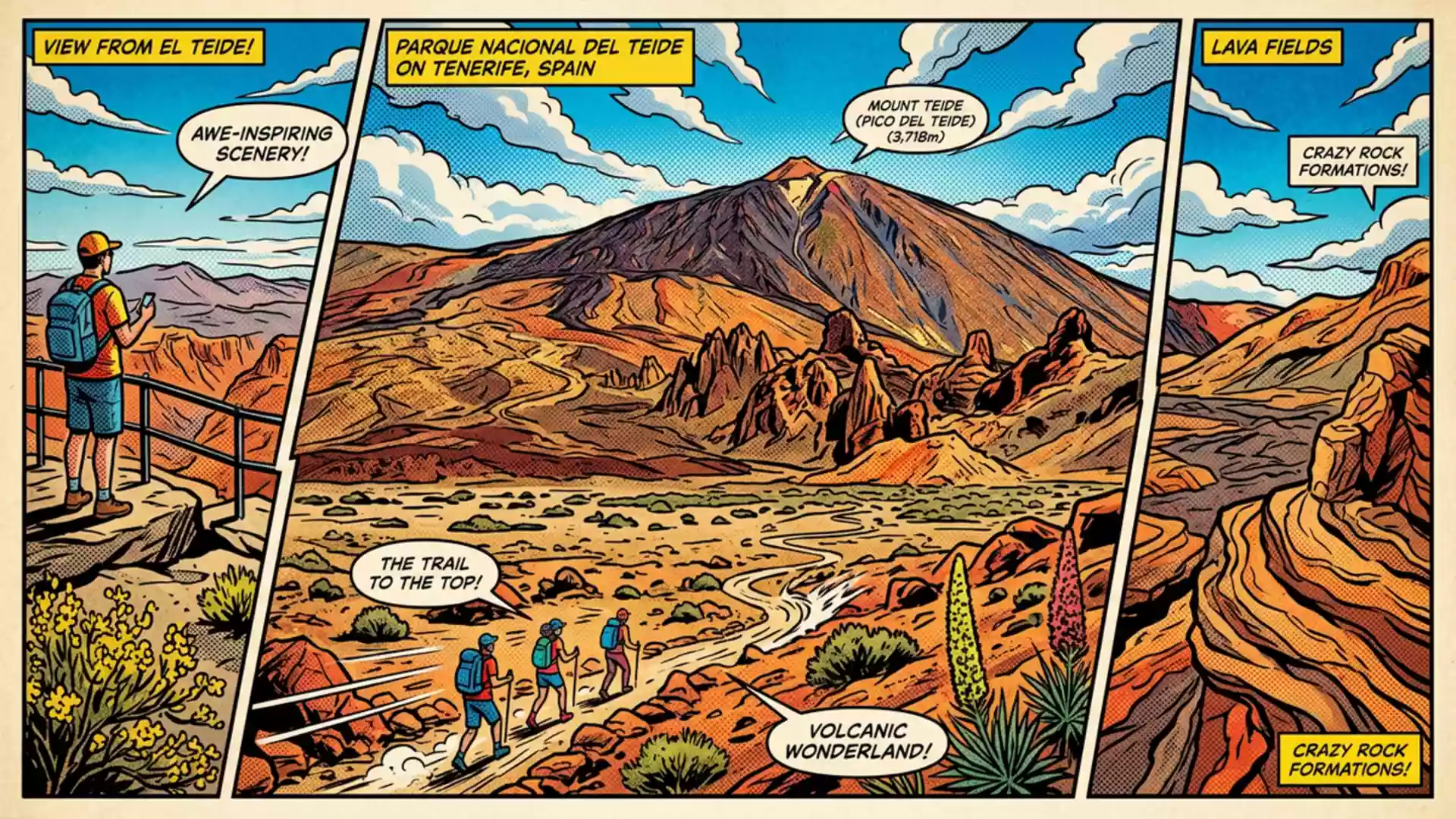
Parque nacional del Teide centres on the Teide-Pico Viejo stratovolcano in Teneriffa, where lava fields, craters and steep volcanic walls define the landscape. The park is a UNESCO World Heritage site and its highest peak reaches 3,718 m (12,198 ft).
Teide-Pico Viejo and the Las Cañadas basin
The core view is a volcanic basin enclosed by rough slopes and broken rock, with Pico del Teide rising above it. The park covers 18,990 ha and lies in Santa Cruz de Tenerife.
Las Cañadas Caldera forms a broad depression in the centre of the island, and the Teide cone stands within it. The park’s geology reflects repeated volcanic construction and erosion across Tenerife.
Rock, height and island relief
Teide stands as a stratovolcano, and the park includes basaltic lava flows, cones and other volcanic forms. The island’s relief climbs sharply from the coast to the centre, where the mountain dominates the skyline.
The UNESCO listing describes Teide as evidence of geological processes that shaped oceanic islands. That context explains why the park matters beyond its summit: the landforms preserve a sequence of volcanic stages.
Volcanic landscape with a long protected history
Parque nacional del Teide was declared a national park in 1954 and entered the World Heritage List on 2 July 2007. Those dates place it among Spain’s long-established protected landscapes.
The park is associated with Teide, Pico Viejo and the Las Cañadas escarpment, with geology visible across the slopes. Named figures such as Teide and the Las Cañadas Caldera make the place easy to read at a glance.
Visiting Parque nacional del Teide: what travellers from Western Europe should know
- The park lies in the island centre of Teneriffa, in Santa Cruz de Tenerife. Roads from the main tourist areas reach the volcanic uplands, and the terrain rises into high-altitude lava country.
- Paths cross loose volcanic ground, rocky ridges and open slopes. The highest parts sit far above the coast, so the air is thin and the ground feels exposed.
- The official language is Spanish and the currency is the euro.
- Entry requirements depend on your nationality; UK travellers can check the FCDO travel advice at gov.uk/foreign-travel-advice, Irish travellers the Department of Foreign Affairs at ireland.ie.
Searching for Parque nacional del Teide on social platforms
These links open searches for Parque nacional del Teide on each platform.
Frequently asked questions about Parque nacional del Teide
Where is Parque nacional del Teide?
It lies on Teneriffa in the Canary Islands, within the province of Santa Cruz de Tenerife. The park occupies the island’s central volcanic highlands.
What does a visit involve?
The landscape is dominated by lava, cones and rocky slopes rather than woodland. Visitors encounter open terrain and high elevations across the park.
What makes it distinctive?
The Teide-Pico Viejo stratovolcano rises to 3,718 m (12,198 ft) and anchors a landscape shaped by volcanism. Its World Heritage status reflects that geological setting.