
Parque nacional de Timanfaya and Lanzarote’s frozen seas of lava
Published on 09/14/2026 at 07:18 | Editorial responsibility: Rafael Müller, Editor-in-Chief AD HOC NEWS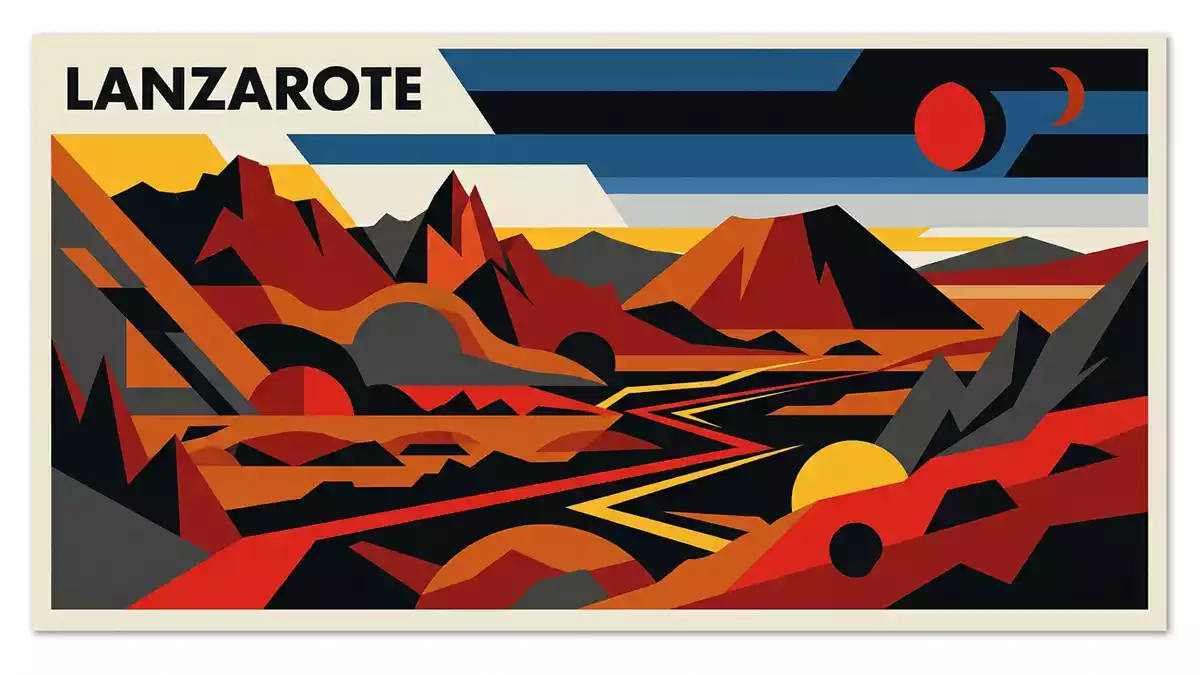
Parque nacional de Timanfaya on Lanzarote is a Spanish national park where dark lava fields, bare volcanic cones and young rock dominate the western landscape of the island. It lies in the municipalities of Yaiza and Tinajo and was established as a national park in 1974 to protect an area that is entirely volcanic in origin.
Lava landscapes born from eighteenth-century eruptions
The terrain of Parque nacional de Timanfaya was created by a series of eruptions on Lanzarote between 1730 and 1736, followed by further volcanic activity in 1824. During those eighteenth-century years, lava and ash covered villages and farmland and extended the coastline under fresh basaltic rock, leaving a wide swathe of land that appears as frozen seas of lava.Timanfaya National Park The park covers just over 51 square kilometres (about 19 square miles), making it a compact but dense concentration of recent volcanic landforms.an area of 5,107 hectares
This is the only national park in Spain that is entirely geological, meaning the protected values are lava fields, craters, cones and ash layers rather than forests or wetlands.Timanfaya is the only one of Spain's national parks with a geological nature The landscape is dominated by the Montañas del Fuego, the “Fire Mountains”, a group of volcanic cones with slopes weathered into shades of black, brown and red. Around them, extensive lava flows have solidified into jagged rock and smoother “pahoehoe” surfaces, crossed by roads and paths that stand out against the bare ground.
A protected park within a wider biosphere reserve
Parque nacional de Timanfaya sits in the south-western part of Lanzarote, one of Spain’s Canary Islands in the Atlantic Ocean off north-west Africa. The park belongs to the Spanish State Network of National Parks and forms part of the Lanzarote Biosphere Reserve designated by UNESCO in 1993, which covers the entire island and surrounding marine areas.Lanzarote was designated a biosphere reserve in 1993 Within that wider framework, the park focuses on conserving volcanic landforms and young soils that illustrate recent basaltic volcanism in the Canary Islands.an eminently geological nature
The protected area takes in parts of Tinajo and Yaiza and reaches towards the island’s north-west coast, enclosing craters, lava tunnels and extensive ash-covered ground.the landscape enclosing the Montañas del Fuego stretches around 51 square kilometres Subsurface temperatures beneath some surfaces remain high, and at Islote de Hilario in the centre of the park simple demonstrations of geothermal heat show how hot the ground can be a short distance below the crust. Across the wider park, isolated plants cling to the younger lava and ash, with patches of hardy vegetation marking places where soils are slowly forming.
Experiencing the Fire Mountains on Lanzarote
Parque nacional de Timanfaya is a place where most of the ground is lava or ash, so visits concentrate on viewing the landscape rather than walking freely across it. Access is controlled to protect fragile surfaces, with large parts of the park seen from designated roads and tracks or from viewpoints at locations such as Islote de Hilario.the park lies in the southwestern part of Lanzarote Classic views include lines of volcanic cones rising above dark lava fields and broad plains of clinker stretching towards the Atlantic.
The Montañas del Fuego area provides close views of crater rims and lava flows that show different textures and colours, from smooth, twisted surfaces to rough blocks. In some places, layers of ash and lapilli form slopes where sparse vegetation breaks the otherwise monochrome ground. Away from the main viewpoints, routes such as authorised guided walks follow older tracks along the edges of flows or across consolidated lava, revealing details such as small hornitos and lava channels that are less visible from the road.the park's main reception point is at Islote de Hilario
Visiting Parque nacional de Timanfaya: what travellers from Western Europe should know
- Parque nacional de Timanfaya occupies the western side of Lanzarote, in the municipalities of Yaiza and Tinajo, and is reached by road along routes such as the LZ-67 from the island’s main resort areas.
- The terrain inside the park is largely bare lava and ash, with viewpoints reached by paved roads and short paths that can include uneven surfaces and some steps.
- Beyond the national park boundary, the surrounding area includes villages such as Yaiza and Tinajo, coastal viewpoints at El Golfo and other volcanic sites linked with the same eighteenth-century eruptive episode.
- The official language is Spanish and the currency is the euro.
Searching for Parque nacional de Timanfaya on social platforms
These links open searches for Parque nacional de Timanfaya on each platform.Frequently asked questions about Parque nacional de Timanfaya
Where is Parque nacional de Timanfaya located?
Parque nacional de Timanfaya is on the island of Lanzarote in Spain’s Canary Islands, covering parts of the municipalities of Yaiza and Tinajo in the west of the island.
What should visitors expect on a visit?
Visitors encounter extensive lava fields, volcanic cones and ash-covered slopes viewed from roads, viewpoints and authorised routes, with most of the ground formed by eruptions in the eighteenth century.
What makes Parque nacional de Timanfaya distinctive?
It is distinctive as Spain’s only national park of purely geological character, showcasing recent basaltic volcanism within a UNESCO biosphere reserve and concentrating lava landscapes rather than forests or lakes.


