
Parque Nacional Corcovado’s forest and coast
Published on 09/09/2026 at 18:47 | Editorial responsibility: Rafael Müller, Editor-in-Chief AD HOC NEWS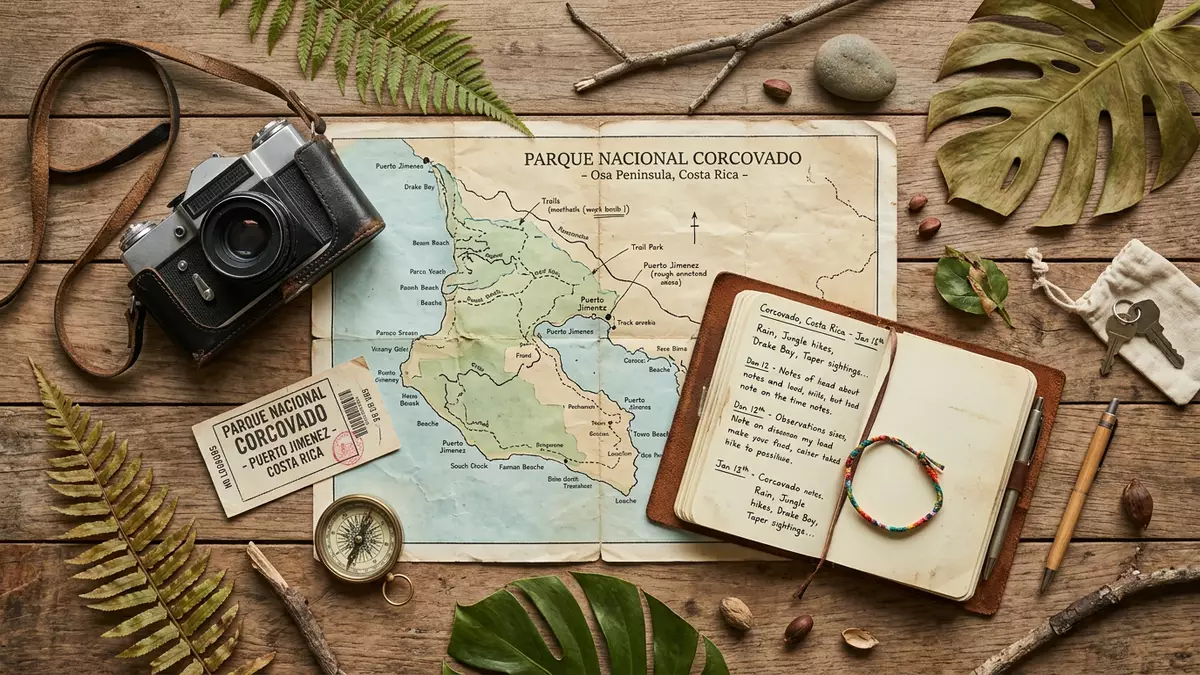
Parque Nacional Corcovado lies on Costa Rica’s Osa Peninsula near Puerto Jimenez, where rainforest, rivers and Pacific shoreline meet in a single protected landscape. Established on 24 October 1975, it is part of the Osa Conservation Area and occupies a broad sweep of south-western Costa Rica.Established on 24 October 1975
A national park of forest and coast
The park’s identity comes from contrast in plain sight: dense lowland forest inland, mangroves and estuaries at the edge, then open Pacific shore. Corcovado National Park is the English name used alongside the Spanish Parque Nacional Corcovado, and both point to the same protected area on the Osa Peninsula.Corcovado National Park
Its scale is part of the experience as much as its vegetation. The park covers tens of thousands of hectares of land and includes marine sectors along the coast, a combination that gives it a broad edge from interior forest to sea.
1975 and the Osa Peninsula
The park belongs to Costa Rica’s period of major conservation expansion in the 1970s. The formal date matters because it fixes Corcovado within that wider national effort and links the park to a named historical moment rather than an approximate era.the 1970s
Puerto Jimenez remains the most useful reference point for approach, and the park sits within Puntarenas province on the peninsula’s south-western side. The Osa Conservation Area frames it as part of a larger protected system rather than an isolated reserve.
What the landscape shows on the ground
Corcovado is known for visible ecological variety rather than a single scene repeated across the park. Forest, rivers, mangrove swamp, lagoon, beach and coastal vegetation all belong to the same place, and the coastline gives the park a maritime edge that inland forest sites lack.forest, rivers, mangrove swamp
That mixture is what separates the park from a simple rainforest reserve. The terrain moves from lowland forest towards the sea, so the place reads as a sequence of habitats rather than a single enclosed woodland.
Visiting Parque Nacional Corcovado: what travellers from Western Europe should know
- Parque Nacional Corcovado is reached through Puerto Jimenez and other access points on the Osa Peninsula. The park sits in Puntarenas province in south-west Costa Rica.
- The landscape is humid tropical terrain with forest, rivers, mangroves and shoreline. Footwear and clothing need to suit uneven ground and wet surfaces.
- The park forms part of the Osa Conservation Area. That wider protected framework is a useful mental map for understanding how the peninsula’s reserves connect.
Searching for Parque Nacional Corcovado on social platforms
These links open searches for Parque Nacional Corcovado on each platform.
Frequently asked questions about Parque Nacional Corcovado
Where is Parque Nacional Corcovado?
It lies on the Osa Peninsula in south-west Costa Rica, near Puerto Jimenez and within Puntarenas province. The park belongs to the Osa Conservation Area.
What does a visit involve?
The park presents tropical forest, rivers, mangroves and shoreline in one protected area. The terrain is humid and varied, so the landscape changes as the route moves through it.
What makes Parque Nacional Corcovado distinctive?
Its strength is the combination of forest and coast rather than a single scenic feature. The park also carries the clear historical marker of its 1975 establishment.


