
Parc national des Calanques where limestone meets the sea
Published on 09/24/2026 at 08:53 | Editorial responsibility: Rafael Müller, Editor-in-Chief AD HOC NEWS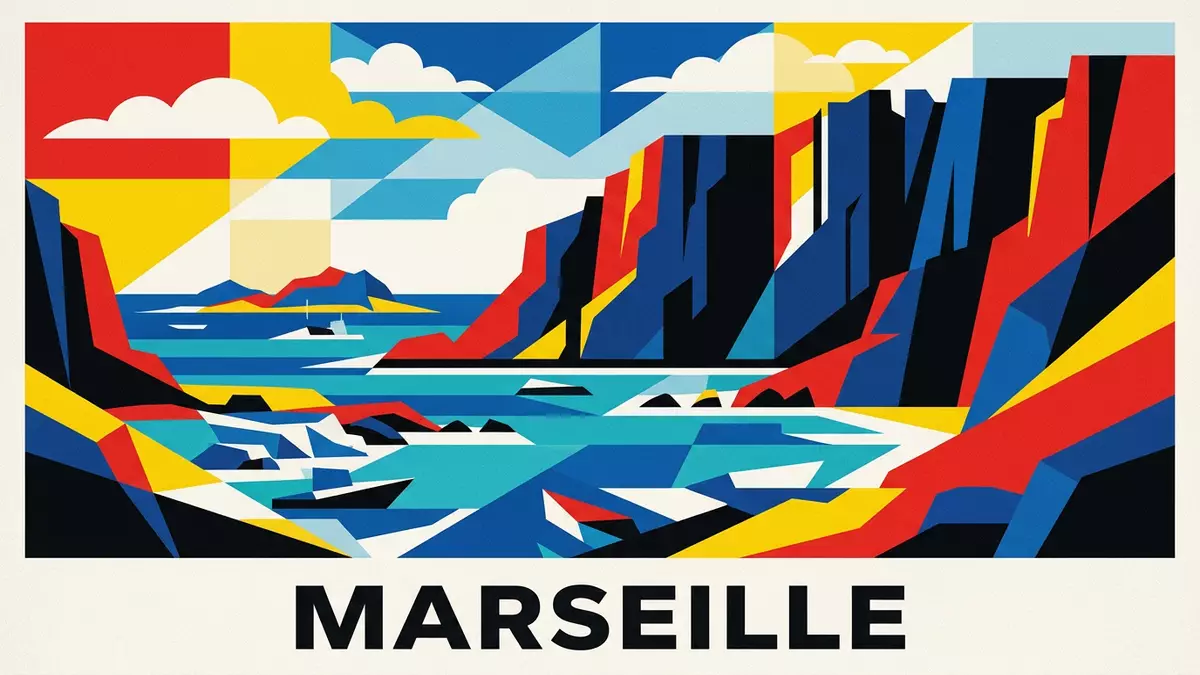
Parc national des Calanques brings limestone cliffs, narrow coastal inlets and Mediterranean water into the landscape of Marseille. Created on 18 April 2012, the protected area extends across land and sea between Marseille, Cassis and La Ciotat.
Parc national des Calanques shaped by limestone and water
The calanques are steep-sided inlets cut into pale limestone along the coast. Their walls descend towards coves, rocky shelves and clear Mediterranean water, while paths cross scrubland above the shore. The landscape combines cliffs, islands, woodland and open sea within the metropolitan area of Aix-Marseille-Provence.
The rock began as marine sediment during the Jurassic and Cretaceous periods, when fragments of shells and other marine remains accumulated on the seabed. The layers later became limestone, and geological movements lifted them above the sea. The limestone landscape records that long geological history in cliffs, ridges and exposed strata.
From Marseille to Cassis across land and sea
The park’s terrestrial core covers 8,500 hectares across Marseille, Cassis and La Ciotat. Its marine core covers 43,500 hectares, linking coastal scenery with underwater habitats and islands. The protected territory therefore includes beaches, rocky inlets, maritime space and the urban edge of Marseille.
Named places give the coast its character. Sormiou and Morgiou are coastal calanques associated with Marseille, while Port-Pin and En-Vau lie near Cassis. Cap Canaille rises near Cassis, and the Riou archipelago occupies the sea south of Marseille. The park’s protected territory also includes cultural and historical sites, including the Cosquer cave system.
A national park with a Mediterranean cultural landscape
Parc national des Calanques is France’s tenth national park. The decree creating it was signed by Prime Minister François Fillon on 18 April 2012. Its protected area sits within an inhabited metropolitan region, where recreation, fishing, conservation and local life occupy the same broad landscape.
Protection of the massif predates the national park. The Massif des Calanques between Marseille and Cassis received listed landscape status in 1975 under France’s landscape protection law. Earlier listed sites include La Gardiole state forest, En-Vau, Port-Pin, Cap Canaille and the Bec de l’Aigle. The national park’s identity combines geological scenery with habitats, maritime space and cultural heritage.
Visiting Parc national des Calanques: what travellers from Western Europe should know
- Parc national des Calanques lies south of Marseille and continues towards Cassis and La Ciotat. Public transport reaches several access points from Marseille, including routes towards Callelongue, Sormiou and Luminy.
- The terrain is rocky and steep in places, with exposed paths, uneven ground and descents towards narrow coastal inlets. Walking routes connect viewpoints, coves and inland scrubland.
- The park includes both terrestrial and marine environments. Coastal excursions therefore involve cliffs, beaches, islands and open Mediterranean water within the same protected territory.
- The official language is French and the currency is the euro.
Searching for Parc national des Calanques on social platforms
These links open searches for Parc national des Calanques on each platform.
Frequently asked questions about Parc national des Calanques
Where is Parc national des Calanques?
It occupies the Mediterranean coast south of Marseille, extending between Marseille, Cassis and La Ciotat in the Bouches-du-Rhône department.
What can visitors expect in the park?
Visitors encounter limestone cliffs, rocky paths, coastal coves, scrubland, islands and marine landscapes. The terrain includes steep sections and uneven ground.
What makes Parc national des Calanques distinctive?
Its protected territory combines land and sea within a metropolitan setting. The park also unites geological formations, Mediterranean habitats and cultural sites around Marseille.


