
Parc national des Calanques, where limestone cliffs meet the Mediterranean
Published on 08/28/2026 at 22:13 | Editorial responsibility: Rafael Müller, Editor-in-Chief AD HOC NEWS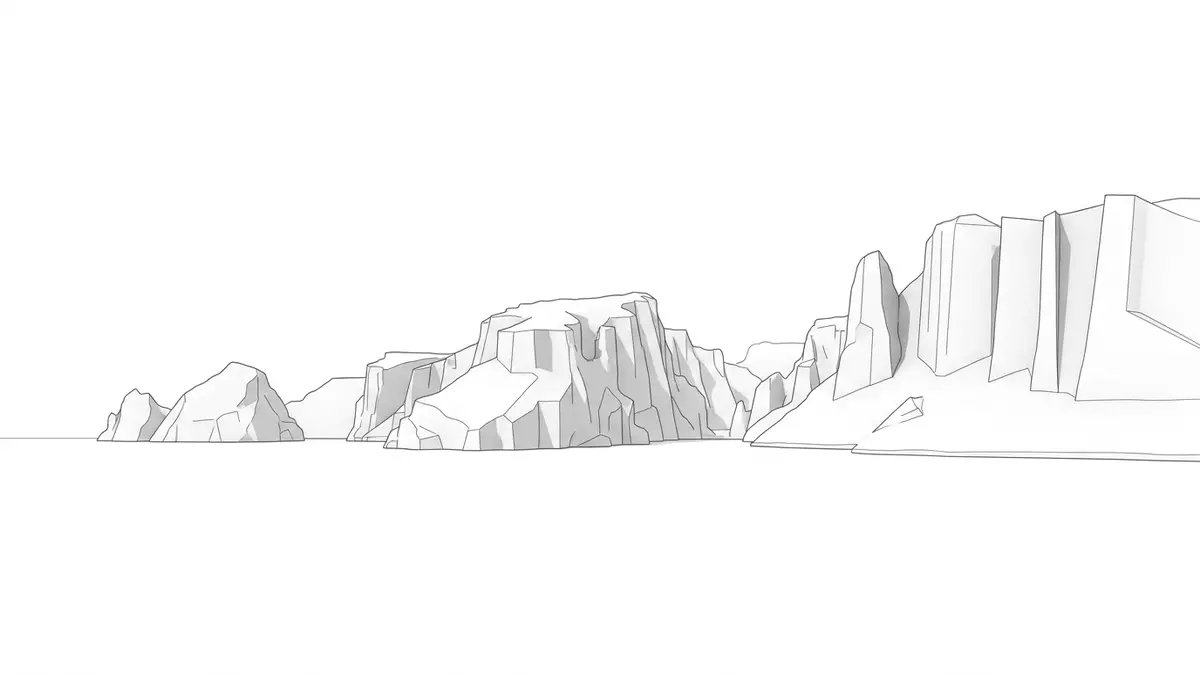
Parc national des Calanques south of Marseille is a protected sweep of pale limestone cliffs, narrow inlets and clear Mediterranean water, where land and sea are bound into one dramatic coastal massif. Created as France’s tenth national park in 2012, it gathers a long-established landscape of calanques and offshore coves into a single protected territory along the Provençal shore.
Limestone massifs falling into the sea
The core of Parc national des Calanques follows the Massif des Calanques, a band of white limestone hills running between the coastal districts of Marseille and the neighbouring communes of Cassis and La Ciotat.Massif des Calanques These hills rise steeply above the sea before breaking into a succession of deep, narrow coves carved into the rock, each with its own cliffs, ledges and small shingle or sand shore.
The bedrock itself is largely urgonian limestone, a compact, fossil-rich stone laid down from marine sediment during the Mesozoic era, including the Jurassic and Cretaceous periods.urgonian limestone In places this limestone is joined by bands of sandstone and conglomerate known locally as “poudingue”, so the cliffs and slopes alternate between clean pale faces and more mixed, boulder-rich rock. The result is a coastline where sharp ridges, vertical walls and broken scree all meet the water.
A national park of land and sea beside Marseille
Parc national des Calanques was formally established on 18 April 2012 as the tenth national park in France.created on 18 April 2012 Its terrestrial heart covers about 8,500 hectares of coastal hills and valleys spread across the communes of Marseille, Cassis and La Ciotat, while its marine heart protects roughly 43,500 hectares of adjoining Mediterranean waters.terrestrial and marine heart Beyond this core, an adjoining maritime area and an adhesion zone on land extend protection further along the shore.
The park’s territory lies within the department of Bouches-du-Rhône and forms part of the wider Aix-Marseille Provence metropolitan area.Bouches-du-Rhône It is one of the few national parks in Europe where steep coastal massifs, insular areas and near-urban districts share the same protected designation, so limestone ridges above housing estates and remote coves accessible only by path or boat fall under a single framework.
Calanques, coves and Mediterranean biodiversity
The park gathers a chain of individual calanques, each a narrow inlet cut into the limestone, along with offshore promontories and islands scattered off the coast between Marseille and Cassis.chain of calanques Some lie close to residential districts, others sit beyond longer approaches on foot, but all share the same relationship between cliffs, slopes and sea. On land, garrigue vegetation with shrubs and low trees clings to thin soils over rock, and pockets of woodland survive in sheltered valleys.
In the water, the protected marine area covers rocky seabeds, underwater cliffs and Posidonia seagrass meadows typical of the western Mediterranean.marine protected area The combination of steep coastal geology and underwater habitats supports a wide range of marine life, from invertebrates living in rock crevices to fish species using the seagrass as nursery grounds, while seabirds use cliffs and islets as nesting sites above the water.
Visiting Parc national des Calanques: what travellers from Western Europe should know
- Parc national des Calanques stretches south of Marseille towards Cassis and La Ciotat, with access points from coastal districts and nearby ports on this section of the Provençal shore.
- Approaches into the calanques often follow stony paths over limestone, with gradients, steps and exposed sections where good footwear and readiness for uneven terrain are important.
- The park lies in France, where the official language is French and the currency is the euro.
Searching for Parc national des Calanques on social platforms
These links open searches for Parc national des Calanques on each platform.Frequently asked questions about Parc national des Calanques
Where is Parc national des Calanques located?
Parc national des Calanques stretches along the Mediterranean coast in Bouches-du-Rhône, south of Marseille and between the communes of Cassis and La Ciotat.
What should visitors expect when exploring the park?
Visitors encounter limestone massifs dropping towards narrow inlets, with stony paths, coastal ridges and clear Mediterranean water in a protected land-and-sea landscape.
What makes Parc national des Calanques distinctive among national parks?
It combines a terrestrial heart and a large marine area beside a major city, bringing calanques, offshore islets and near-urban slopes under one national park designation.


