
Parc nacional d'Aiguestortes: water, rock and high Pyrenean lakes
Published on 08/22/2026 at 17:33 | Editorial responsibility: Rafael Müller, Editor-in-Chief AD HOC NEWS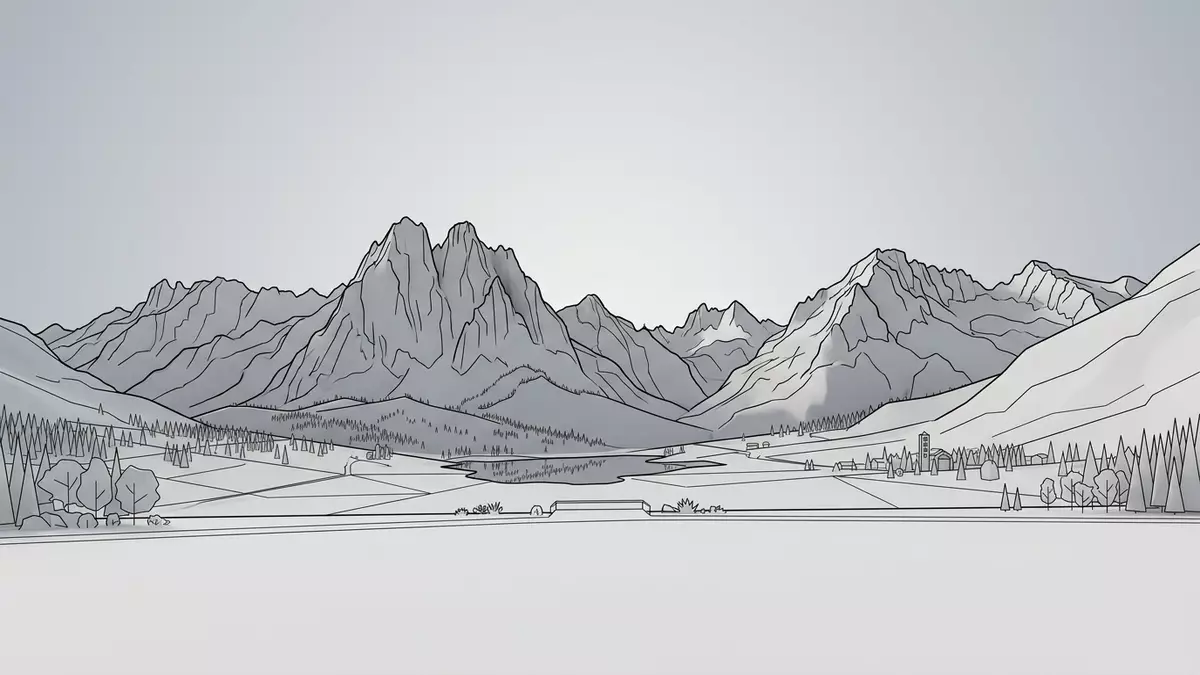
Parc nacional d'Aiguestortes, officially Aigüestortes i Estany de Sant Maurici National Park, is a high mountain landscape above the Vall de Boí in the Catalan Pyrenees where water and rock share the same steep basin. Created as a Spanish national park in October 1955, it remains the only national park in Catalonia and protects a plateau cut by twisting streams, glacial lakes and surrounding peaks.
A high Pyrenean plateau shaped by water
The core of Parc nacional d'Aiguestortes lies in the central Pyrenees in Lleida province, in the most north?western corner of Catalonia, between the municipalities of Vall de Boí and Espot.central Pyrenees in Lleida The park occupies a mountain basin where streams bend sharply across a high plateau before dropping towards forested valleys, giving the “aiguestortes” – “twisted waters” – their name. Peaks rise above the protected area to elevations of more than 3,000 m (9,843 ft), with Besiberri Sud among the summits reaching this height.Besiberri Sud among the summits
The landscape combines long glacial valleys, hanging cirques and a plateau dotted with lakes that hold meltwater from the surrounding ridges. Nearly 200 lakes lie within the national park, many of them of glacial origin and framed by alpine meadows, scree slopes and conifer woodland.nearly 200 lakes The contrast between dark pine forest, pale granite and reflective water is visible across much of the plateau and is one of the most distinctive features of Aiguestortes.
From 1955 national park to a wide protected Pyrenean mosaic
Aiguestortes i Estany de Sant Maurici was declared a national park by decree on 21 October 1955, making it one of the earliest national parks in the Spanish Pyrenees.declared a national park by decree It forms part of the Spanish National Parks Network and is the only park of this category within Catalonia.only park of this category within Catalonia Successive extensions of the protected area have brought the total surface to more than 40,000 hectares, divided between a strict national park core and a surrounding peripheral protection zone that includes neighbouring valleys and ridges.strict national park core and a surrounding peripheral protection zone
The protected territory spans four Pyrenean counties: Alta Ribagorça, Pallars Sobirà, Pallars Jussà and the Val d'Aran, with the strict national park zone centred on the municipalities of Vall de Boí and Espot.Alta Ribagorça, Pallars Sobirà, Pallars Jussà and Val d'Aran Within this mosaic, the park is divided into two main sectors: the Aiguestortes plateau in Alta Ribagorça, reached from the Boí Valley, and the Estany de Sant Maurici sector in Pallars Sobirà, reached from the Espot Valley.two main sectors Both sectors share the same combination of high?altitude lakes, steep slopes and forest but open towards different valleys and villages.
Gateways, valleys and high lakes around Boí
Boi, in the Vall de Boí, serves as one of the main western gateways to Parc nacional d'Aiguestortes, with the Casa del Parque Nacional visitor centre known as Ca de Simamet located in the village.Casa del Parque Nacional visitor centre known as Ca de Simamet From this side, access routes lead through the valley past terraced fields and Romanesque churches towards the park’s plateau, where the streams begin to twist and widen across a high basin. The Estany de Sant Maurici sector on the eastern side is approached from Espot in Pallars Sobirà, where another visitor centre stands beside the valley road.visitor centre stands beside the valley road
Within the park, the terrain alternates between river corridors lined with stone?built huts, open meadows used as summer pasture and steep slopes climbing towards the high lakes. Many of these lakes occupy former glacial hollows and lie beneath serrated ridges, giving views across clusters of summits when conditions are clear.former glacial hollows The mixed woodland includes conifers such as pine and fir alongside deciduous trees lower down the valleys, reflecting the range of altitudes within the protected area.range of altitudes within the protected area
Visiting Parc nacional d'Aiguestortes: what travellers from Western Europe should know
- Parc nacional d'Aiguestortes lies in north?eastern Spain in the Catalan Pyrenees, with main gateways at Boi in the Vall de Boí on the western side and Espot in Pallars Sobirà to the east.
- The terrain within the park is mountainous, with steep paths, uneven rocky sections and high?altitude routes that can involve sustained ascents and descents on foot.
- The protected area extends across several Pyrenean valleys, so approaches from Boi and Espot each give access to different sectors and viewpoints over lakes and surrounding peaks.
- The official language is Spanish and Catalan, and the currency is the euro.
Searching for Parc nacional d'Aiguestortes on social platforms
These links open searches for Parc nacional d'Aiguestortes on each platform.
Frequently asked questions about Parc nacional d'Aiguestortes
Where is Parc nacional d'Aiguestortes?
Parc nacional d'Aiguestortes is in the central Pyrenees of north?eastern Spain, in Lleida province, between the Vall de Boí and Espot valleys and across four Catalan Pyrenean counties.
What should visitors expect on a visit?
Visitors encounter steep mountain terrain with twisting streams, numerous high?altitude glacial lakes, conifer woodland and marked contrasts between plateau, valley floors and surrounding ridges.
What makes Parc nacional d'Aiguestortes distinctive?
The park combines a mid?twentieth?century national park designation with a landscape of nearly 200 glacial lakes, twisted mountain streams and peaks rising above 3,000 m (9,843 ft) in Catalonia.


