
Parc nacional d'Aiguestortes and its twisted waters above Boí
Published on 08/28/2026 at 14:17 | Editorial responsibility: Rafael Müller, Editor-in-Chief AD HOC NEWS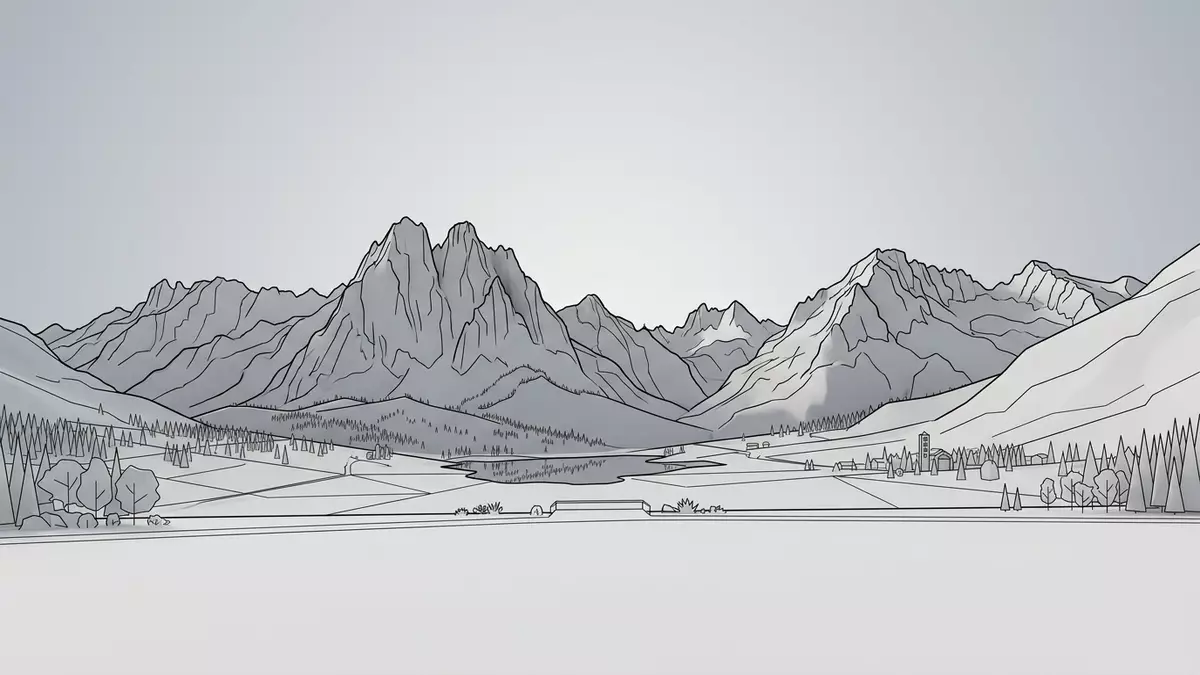
Parc nacional d'Aiguestortes, officially Aigüestortes i Estany de Sant Maurici National Park, lies in the central Pyrenees above the Vall de Boí in Catalonia and is the only Spanish national park in this region.Aigüestortes i Estany de Sant Maurici National Park Created as a protected area in the mid twentieth century, it spans high-mountain valleys where water shapes almost every view, from slow meanders on alpine plains to glacial lakes held in granite bowls.more than 200 mountain lakes
Twisted waters and Pyrenean peaks
The defining impression of Parc nacional d'Aiguestortes is how water threads through rugged relief, giving the park its Catalan name, which refers to winding mountain streams and meanders in the high valleys.high mountain meanders The landscape sits largely between about 1,200 and 3,000 m (3,937 to 9,843 ft), with sharpened ridges and steep faces surrounding broad valley floors where rivers slow and spread.altitudes from 1,200 to 3,000 metres Glacial action carved cirques and hanging valleys, and left behind basins that now hold lakes known locally as estanys, many of them reflecting bare rock and scattered patches of conifer forest.
The heart of the park lies between the Noguera Pallaresa and Noguera Ribagorçana rivers, in valleys such as Sant Nicolau and l'Escrita that can be reached from Boí and Espot respectively.valleys of Sant Nicolau and l'Escrita Above Estany de Sant Maurici rise the steep twin summits known as Els Encantats, one of the most distinctive rock formations in the Lleida Pyrenees.Els Encantats above the lake Together these elements form a mountain landscape where water, rock and forest are tightly interwoven.
From Boí and Espot into the high valleys
Parc nacional d'Aiguestortes is administratively linked with Boí and Espot, two settlements that act as western and eastern gateways into the protected area.administrative seats in Espot and Boí The Casa del Parc building in Boí, housed in Ca de Simamet on Carrer de les Graieres, serves as a visitor centre and park office for the Vall de Boí side of the park.Casa del Parc in Boí From this valley, routes lead towards the Sant Nicolau valley and the stretches of slow, winding water that give the park its name.
The park lies in the province of Lleida and spans several Pyrenean counties, including Alta Ribagorça and Pallars Sobirà, bringing together high pastures, rocky slopes and dense woodland in a single protected area.location in Alta Ribagorça and Pallars Sobirà Its total strict national park area covers 14,119 ha, surrounded by a broader peripheral zone that extends the protected landscape well beyond the upper valleys themselves.14,119 hectares of national park For visitors based in Boí, this means that high-mountain scenery begins close to the village and stretches far into the central Pyrenees.
Romanesque churches and Pyrenean culture around the park
While Parc nacional d'Aiguestortes itself is a natural protected area, it is closely linked with the cultural landscape of the Vall de Boí, where a group of early Romanesque churches has been recognised as a UNESCO World Heritage site for their eleventh and twelfth century architecture.UNESCO-listed Vall de Boí churches These stone churches with slender towers stand on terraces above the valley, and together they form one of the densest ensembles of Romanesque religious buildings in Europe.
The pairing of high-mountain park and historic valley makes Parc nacional d'Aiguestortes a place where Pyrenean ecology and long-settled human life share a single frame. On one side lie glacial lakes, granite peaks and forests; on the other, farmed slopes and villages built in local stone that reflect centuries of adaptation to altitude and climate. Travellers heading into the park from Boí move from streets lined with Romanesque towers into a protected landscape shaped by ice, water and rock, with the two sides closely linked by roads and footpaths.
Visiting Parc nacional d'Aiguestortes: what travellers from Western Europe should know
- Parc nacional d'Aiguestortes lies in north-eastern Spain, in the province of Lleida; Boí in the Vall de Boí valley is a recognised access point on the western side, with park facilities based at Ca de Simamet on Carrer de les Graieres.
- The terrain combines valley floors and steep slopes; many routes involve sustained gradients on uneven mountain paths with rocks underfoot, and higher areas reach elevations well above 2,000 m (6,562 ft).
- The park is in Spain, where the official languages are Catalan and Spanish and the currency is the euro.
- Conditions on the mountain change with the seasons; the local cable-car operators and alpine clubs provide information.
Searching for Parc nacional d'Aiguestortes on social platforms
These links open searches for Parc nacional d'Aiguestortes on each platform.Frequently asked questions about Parc nacional d'Aiguestortes
Where is Parc nacional d'Aiguestortes located?
Parc nacional d'Aiguestortes lies in the central Pyrenees of Catalonia, in the province of Lleida, with its administrative offices in Boí and Espot and valleys stretching across Alta Ribagorça and Pallars Sobirà.
What should travellers expect on a visit to Parc nacional d'Aiguestortes?
Travellers encounter a high-mountain landscape of glacial lakes, winding rivers, steep peaks and forested slopes, with access routes from valleys such as the Vall de Boí and Espot giving way to alpine terrain with significant elevation gain.
What makes Parc nacional d'Aiguestortes distinctive among Spanish national parks?
It is the only national park in Catalonia and brings together more than 200 mountain lakes, dramatic summits like Els Encantats and the nearby ensemble of UNESCO-listed Romanesque churches in the Vall de Boí, giving it a rare combination of natural and cultural interest.


