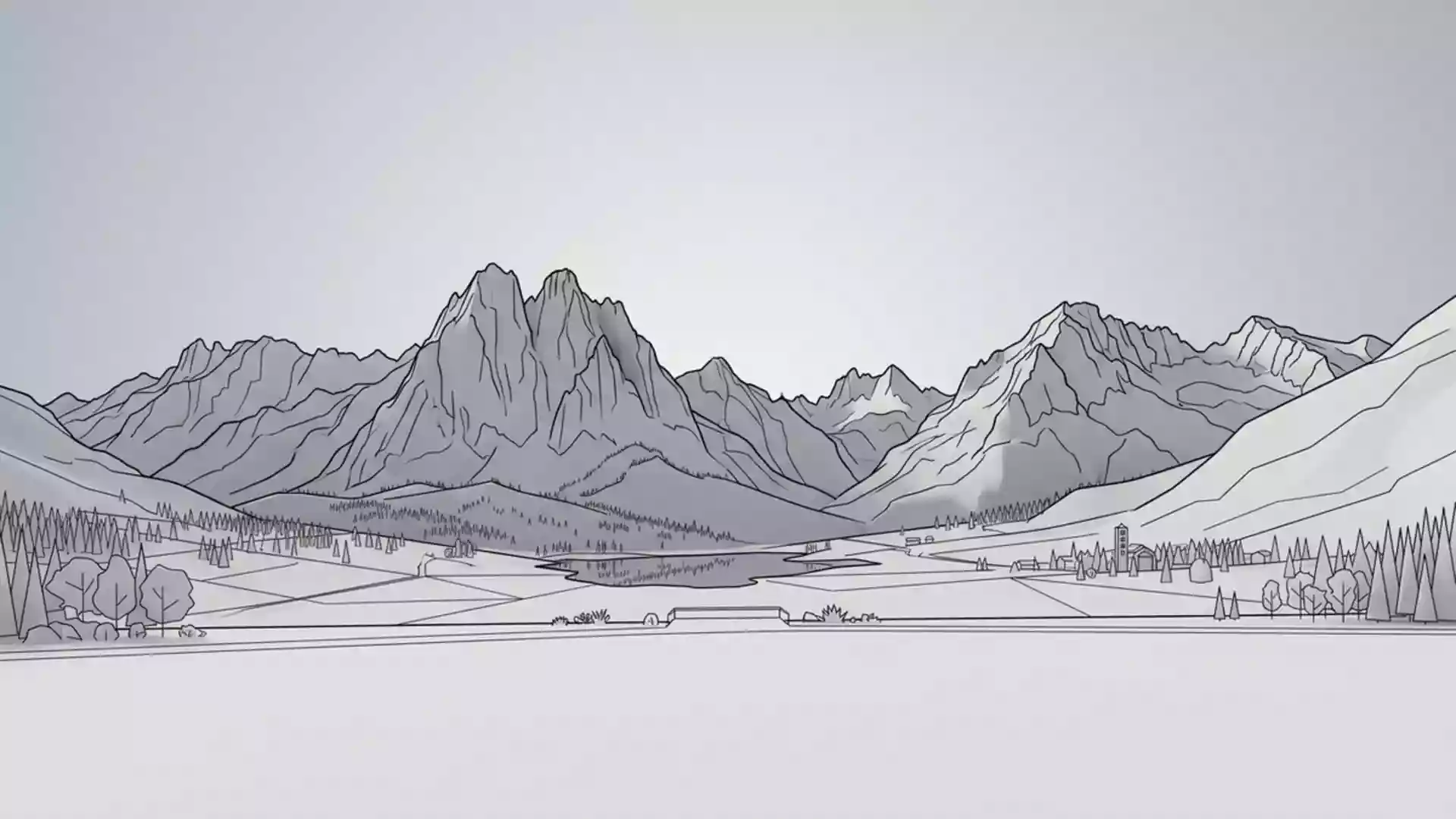
Parc nacional d'Aiguestortes and its high Pyrenean waterscapes
Published on 09/02/2026 at 20:35 | Editorial responsibility: Rafael Müller, Editor-in-Chief AD HOC NEWS
Parc nacional d'Aiguestortes, formally known as Parc Nacional d'Aigüestortes i Estany de Sant Maurici, protects a high mountain landscape above Boi in the Catalan Pyrenees. Established as a Spanish national park in 1955, it is the only park of this category in Catalonia and centres on glacial valleys, dark conifer woods and clear lakes framed by granite peaks.It lies between Alta Ribagorça, Pallars Sobirà, Pallars Jussà and Val d'Aran in the province of Lleida.
Water, granite and U-shaped valleys
The core identity of Parc nacional d'Aiguestortes lies in water running through carved granite. The park preserves glacial U-shaped valleys where streams twist through flat alluvial sections and plunge between blocks of rock, giving Aigüestortes its name of “twisted waters”.
Scattered across the high ground are numerous glacial lakes, known locally as estanys, which occupy rock basins left by retreating ice. These range from smaller tarns ringed by alpine meadows to larger bodies of water backed by steep slopes and jagged summits.The paired name Aigüestortes i Estany de Sant Maurici reflects this combination of rushing streams and a major lake, bringing the character of the park into its official title.
A Catalan national park in the Pyrenees
Parc nacional d'Aiguestortes occupies a section of the central Pyrenees in north-eastern Spain, with its main entrances at Boi in Alta Ribagorça and Espot in Pallars Sobirà.The designation as a national park dates from 21 October 1955, making it one of the earlier protected mountain areas in Spain. Its strictly protected zone covers 14,119 ha, surrounded by a wider buffer where traditional land uses continue.Combined with the peripheral protection belt, the park-related area extends over more than 40,000 ha, with ridges, passes and high plateaus forming a compact mountain block.
Within this space the altitude span brings distinct vegetation belts. Lower slopes carry mixed woodland and meadows around villages and traditional fields, while higher up dense conifer forests give way to dwarf shrubs, alpine grass and bare rock. Snow lingers at altitude, feeding streams that run through the season and sustain wetlands on valley floors.
Villages, Romanesque heritage and mountain access
The valleys around Parc nacional d'Aiguestortes are dotted with small villages built in stone, including Boi in the Vall de Boí. The area is recognised for its Romanesque churches, which together form a UNESCO World Heritage Site and give an architectural counterpoint to the wild terrain of the park.The Casa del Parc Nacional visitor centre in Boi stands in Ca de Simamet on Carrer de les Graieres, reflecting the role of the village as a western gateway.
Historic tracks and paths climb from these settlements into the valleys and towards the high lakes and ridges, following river courses or old transhumance routes. Bridges, small chapels and shepherd structures appear along the approaches, linking human history with the surrounding peaks and waters. The mix of cultural landmarks and protected mountain scenery gives Parc nacional d'Aiguestortes a distinctive character within the Pyrenees.
Visiting Parc nacional d'Aiguestortes: what travellers from Western Europe should know
- Parc nacional d'Aiguestortes lies in the province of Lleida in Catalonia, with main access routes rising from the villages of Boi in Vall de Boí and Espot in Pallars Sobirà.
- The terrain is mountainous, with steep valley sides, rocky paths and sections at high altitude, so routes on foot involve sustained ascents and descents on uneven ground.
- Snow can cover higher areas in the colder months, while spring and early summer snowmelt swells rivers and streams along valley routes.
- The official language in this part of Spain is Catalan alongside Spanish, and the currency is the euro.
Searching for Parc nacional d'Aiguestortes on social platforms
These links open searches for Parc nacional d'Aiguestortes on each platform.
Frequently asked questions about Parc nacional d'Aiguestortes
Where is Parc nacional d'Aiguestortes located?
Parc nacional d'Aiguestortes lies in the central Pyrenees of Catalonia, in the province of Lleida, between the comarques of Alta Ribagorça, Pallars Sobirà, Pallars Jussà and Val d'Aran.
What can visitors expect to see in Parc nacional d'Aiguestortes?
Visitors encounter glacial valleys, numerous high mountain lakes, fast-flowing rivers and streams, dense conifer forests and surrounding granite peaks, together forming a characteristic Pyrenean landscape.
What makes Parc nacional d'Aiguestortes distinctive among Spanish national parks?
It is the only Spanish national park entirely in Catalonia and combines a network of glacial lakes and “twisted” waters with nearby Romanesque villages such as those of the Vall de Boí.