
Parc Guell’s mosaic landscape above Barcelona
Published on 09/05/2026 at 14:36 | Editorial responsibility: Rafael Müller, Editor-in-Chief AD HOC NEWS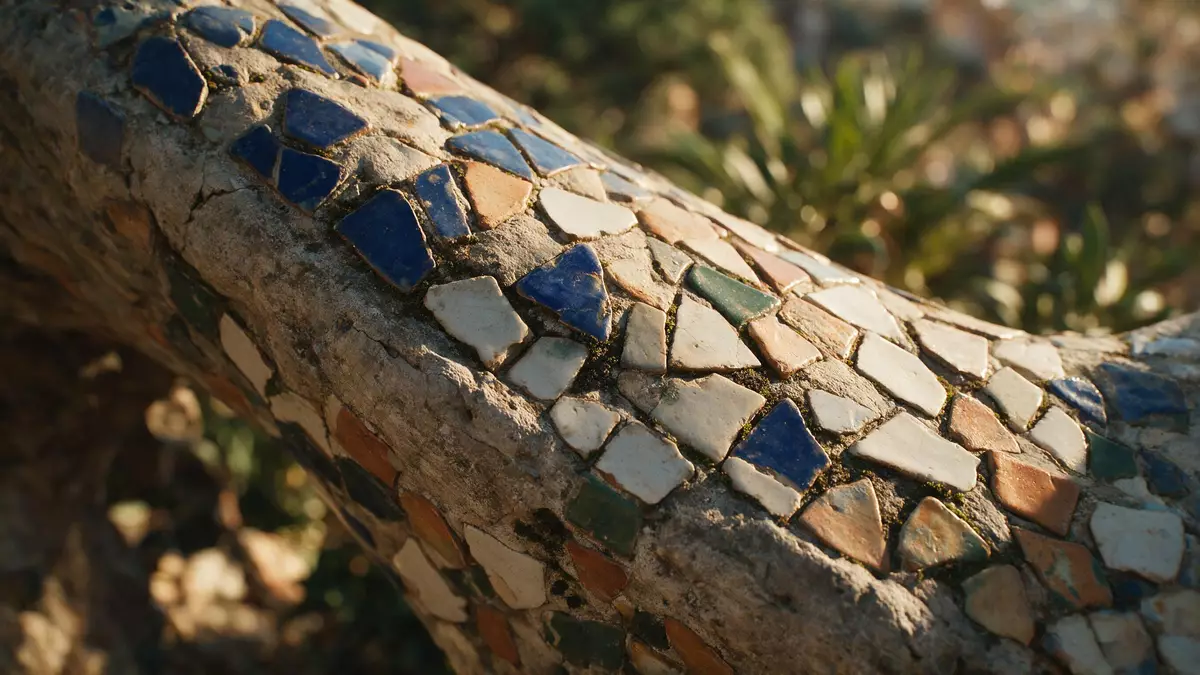
Parc Guell on the northern slopes of Barcelona is a hillside park where Antoni Gaudí turned exposed rock and vegetation into a continuous piece of Catalan Modernisme. Commissioned by industrialist Eusebi Güell in 1900 and opened as a municipal park in 1926, it folds architecture, mosaic and landscape into a single composition that overlooks the expanding city below.
From garden city experiment to municipal park
Parc Guell began life as an ambitious residential estate for wealthy families, planned at the turn of the twentieth century when Barcelona’s population and industry were expanding rapidly.At the time Barcelona was a modern metropolis and Güell acquired the rocky hill known as Muntanya Pelada to realise a garden-city project. Between 1900 and 1914 Gaudí and his collaborators laid out streets, infrastructure and communal spaces on the steep terrain, while only a small number of private houses were ever built.Construction took place between 1900 and 1914
The estate did not become the residential enclave first imagined, but the communal areas and circulation routes remained in place and the city later acquired the land.Barcelona opened Parc Guell as a municipal park in 1926, and its status was reinforced in 1969 when it was recognised as a monument of cultural interest. In 1984 UNESCO included it in the “Works of Antoni Gaudí” World Heritage listing as a site where architecture, gardening and decorative arts are interwoven.Park Güell has been a World Heritage Site since 1984
Gaudí’s Modernisme in stone, tile and concrete
The core of Parc Guell is a sequence of monumental spaces where Gaudí explored structural forms and surfaces that grow out of the hillside. At the main entrance on Carrer d’Olot stand two pavilions with lively profiles and tiled roofs, framing the gate and marking the transition from surrounding streets into the designed landscape.These entrance pavilions belong to Gaudí's mature work and already show the mix of organic forms and Modernist details that runs through the park.
Inside, a monumental staircase climbs towards the terrace, flanked by retaining walls and studded with sculptural elements. One of its landings carries the famous ceramic creature commonly called a dragon or salamander, assembled from brightly coloured trencadís, the broken-tile mosaic technique that appears across the site.The grand staircase and salamander are central features above a lower level formed by the Hypostyle Room. This hall of densely packed columns supports the main terrace, with ceiling coffers also faced in mosaic, turning what might have been simple infrastructure into an interior space that feels ceremonial.
A mosaic terrace above a rugged hillside
Above the Hypostyle Room lies the broad terrace that most visitors associate with Parc Guell. Its perimeter is edged by a long sinuous bench covered in trencadís, where shards of ceramic create patterns and colours that shift along its length.The terrace with undulating mosaic benches offers wide views across Barcelona’s rooftops towards the sea, while the interior of the terrace remains open as a gathering space.
Beyond this monumental axis, paths and viaducts thread through planted slopes, supported by arcades and columns that follow the forms of the underlying rock.Park Güell covers around 12 hectares on the hillside, and Gaudí’s structures appear throughout as retaining walls, elevated walks and viewing points rather than isolated buildings. The combination of masonry, mosaic and vegetation means that movement through the park reveals sequences of spaces, from sheltered colonnades to exposed vantage points over the city.
Visiting Parc Guell: what travellers from Western Europe should know
- Parc Guell stands on a hill in the Gràcia and Horta-Guinardó districts of Barcelona, with a main entrance on Carrer d’Olot in the 08024 postal area.
It lies north of the city centre and is reached from urban streets that climb towards the park. - The park occupies a steep hillside with a network of paths, ramps and staircases; moving between levels involves walking on gradients and using long flights of steps.
- Several entrances connect to surrounding neighbourhoods, including access from Carretera del Carmel and from Passatge de Sant Josep de la Muntanya, where public escalators serve the approach.
- Parc Guell is in Spain, where the official language is Spanish alongside Catalan and the currency is the euro.
Searching for Parc Guell on social platforms
These links open searches for Parc Guell on each platform.Frequently asked questions about Parc Guell
Where is Parc Guell within Barcelona?
Parc Guell occupies a hill in the Gràcia and Horta-Guinardó districts on Barcelona’s northern side, with its main entrance on Carrer d’Olot in the 08024 area.
What should visitors expect on a first visit?
A visit involves walking through a sequence of designed spaces, from the entrance pavilions and monumental staircase to the Hypostyle Room, mosaic terrace and hillside paths.
What makes Parc Guell distinctive among Gaudí’s works?
Parc Guell is distinctive because Gaudí’s architecture forms part of a large landscaped park, combining trencadís mosaics, terraces, viaducts and planted slopes across about 12 hectares.


