
Parc Guell: Gaudí’s hillside mosaic landscape in Barcelona
Published on 08/28/2026 at 16:28 | Editorial responsibility: Rafael Müller, Editor-in-Chief AD HOC NEWS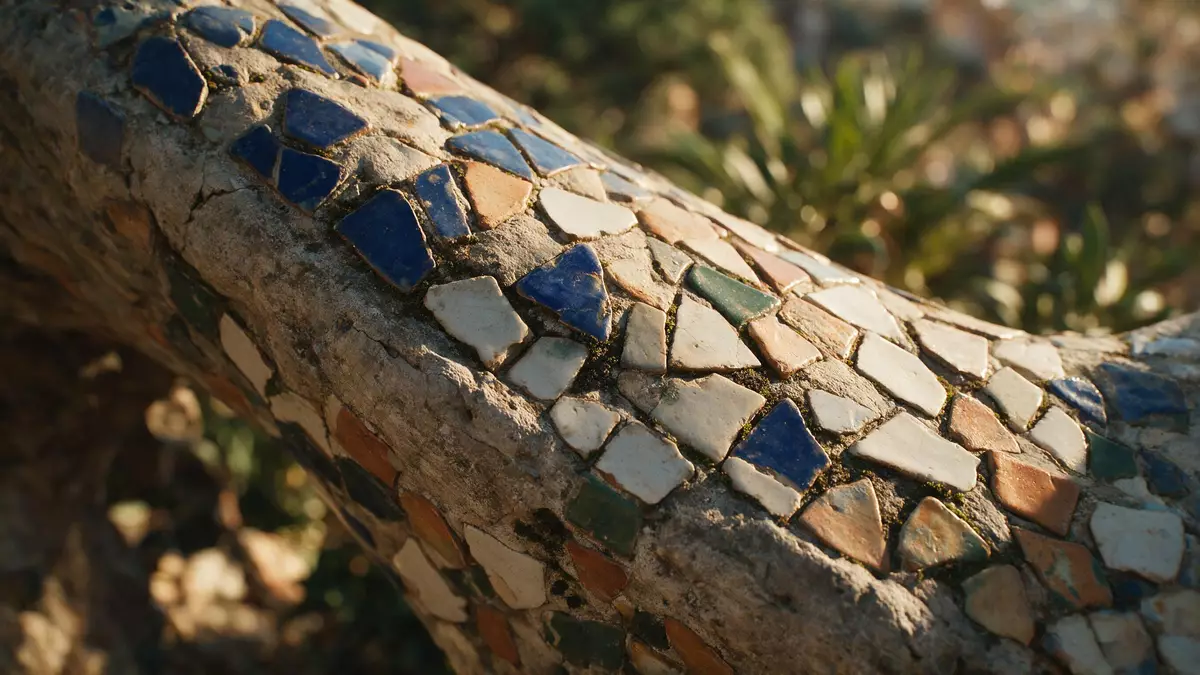
Parc Guell spreads across a hillside in Barcelona, transforming a former private estate into a public park where Antoni Gaudí’s architecture is woven into paths, terraces and planted slopes. Conceived in the early twentieth century as an ambitious residential garden city and opened as a municipal park in the 1920s, it now presents Gaudí’s modernist language in the open air on the southern side of the Carmel hill.
Gaudí’s garden city on the Carmel hillside
The origins of Parc Guell lie in the collaboration between Catalan industrialist Eusebi Guell and architect Antoni Gaudí, who worked together on several projects at the turn of the twentieth century.In 1900 Guell commissioned Gaudí to design a residential estate for wealthy families on land overlooking the city. Construction of the main infrastructure and monumental spaces took place during the first years of the century, in a period when Barcelona’s population and industry were expanding and new urban models were being tested.The project began in 1900 and developed through the first decade.
The garden-city plan envisaged detached houses on individual plots surrounded by gardens, served by shared public spaces such as an entrance area, market hall and terrace.Sixty residential plots were planned, but in the end only a small number of houses were built and the commercial side of the development did not prosper. Work on the residential estate stopped in 1914, and following the death of Eusebi Guell Barcelona City Council acquired the property and opened it as a public park in the 1920s.It became a municipal park in 1926, preserving Gaudí’s monumental structures as the core of the landscape.
Modernist architecture in an open-air monumental zone
Parc Guell is recognised as one of the major works of Catalan Modernism, displaying Gaudí’s mature style in architecture, gardening and decorative arts.The park is described as one of Gaudí’s finest works in Barcelona, and in 1984 it was inscribed on the UNESCO World Heritage List as part of the “Works of Antoni Gaudí” group.UNESCO listed Parc Guell in 1984, recognising its historical, architectural and artistic significance. The monumental zone on the lower slopes condenses many of the elements visitors associate with the park: gatehouses, a grand staircase, a columned hall and a broad terrace edged by colourful seating.
At the main entrance two pavilions flank the gateway, their roofs and facades clad in mosaics of broken tile, a technique known as trencadis that Gaudí used extensively.The entrance pavilions frame the monumental staircase leading upwards from the gate. On this staircase a sculpted reptile figure, often referred to as the dragon or salamander, sits amid ceramic tilework and flowing forms. Above, the Hypostyle Room forms a roofed hall supported by dozens of Doric columns, built as a covered market space. The ceiling is decorated with discs of trencadis, while the forest of columns gives the hall a strong rhythmic structure.
Terraces, paths and planted slopes
Immediately above the Hypostyle Room stretches the broad main terrace, known as Plaça de la Natura or the Greek Theatre. Its outer edge is formed by a long sinuous bench covered in colourful mosaic, curving continuously around the terrace and providing seating along its entire length.The serpentine bench runs for about 110 metres, making the terrace one of the most recognisable spaces in the park. From the terrace the view opens across Barcelona towards the sea, while below, planted slopes and staircases connect the monumental core with the wider estate.
Beyond the monumental zone, Parc Guell includes winding paths, stone porticoes and garden areas that explore the hillside terrain. One of the distinctive features is a colonnaded pathway known as the Laundry Room Portico, where sloping stone columns support a path integrated into the slope.The Austria Gardens and other planted areas occupy spaces where some of the planned houses would have stood, creating a mix of architecture and vegetation that reflects the site’s original garden-city ambition. The combination of masonry structures, ceramic surfaces and Mediterranean planting gives Parc Guell a layered appearance, with built forms emerging from and receding into the hillside.
Visiting Parc Guell: what travellers from Western Europe should know
- Parc Guell lies on the southern face of the Carmel hill in the Gracia district of Barcelona and is reached by city streets that climb steadily from the lower neighbourhoods.
- The monumental zone and terrace involve staircases and sloping paths, and some routes between levels follow narrow stone porticoes built into the hillside.
- The wider park contains wooded areas and open slopes, so footwear suitable for uneven ground helps when exploring beyond the main monumental structures.
- Barcelona’s official language is Catalan and the national currency is the euro.
Searching for Parc Guell on social platforms
These links open searches for Parc Guell on each platform.
Frequently asked questions about Parc Guell
Where is Parc Guell located in Barcelona?
Parc Guell occupies a hillside on the southern face of the Carmel hill above the Gracia district, north of Barcelona’s central grid.
What should visitors expect on a visit to Parc Guell?
A visit combines landscaped paths, planted slopes and Gaudí-designed structures such as entrance pavilions, a grand staircase, a columned hall and a broad terrace with mosaic seating.
What makes Parc Guell distinctive among Gaudí’s works?
Parc Guell stands out as an open-air composition where Modernist architecture, trencadis mosaics and Mediterranean planting are integrated into a single hillside park recognised as a World Heritage Site.


