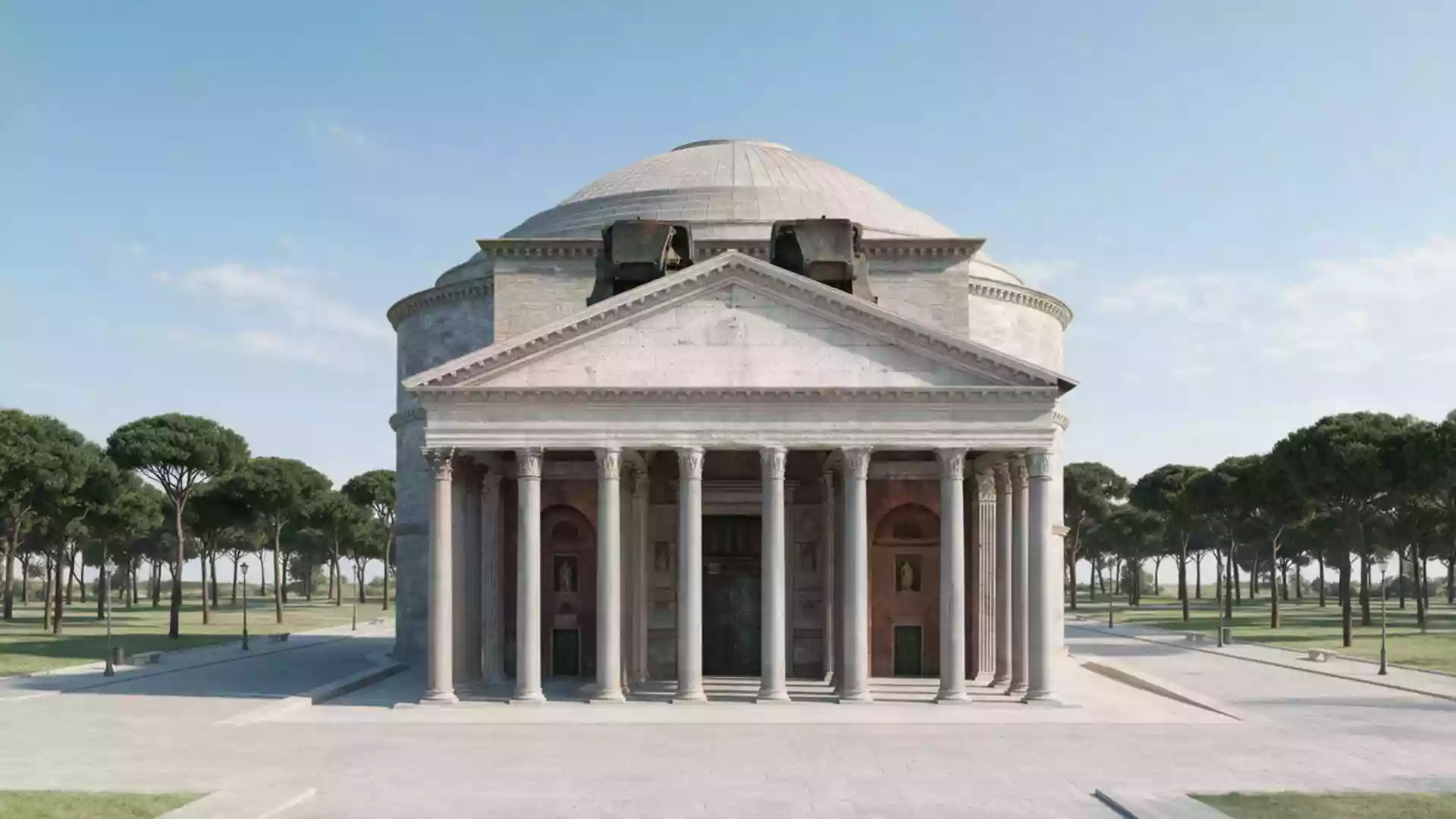
Pantheon in Rome and its perfect concrete sphere
Published on 09/09/2026 at 15:58 | Editorial responsibility: Rafael Müller, Editor-in-Chief AD HOC NEWS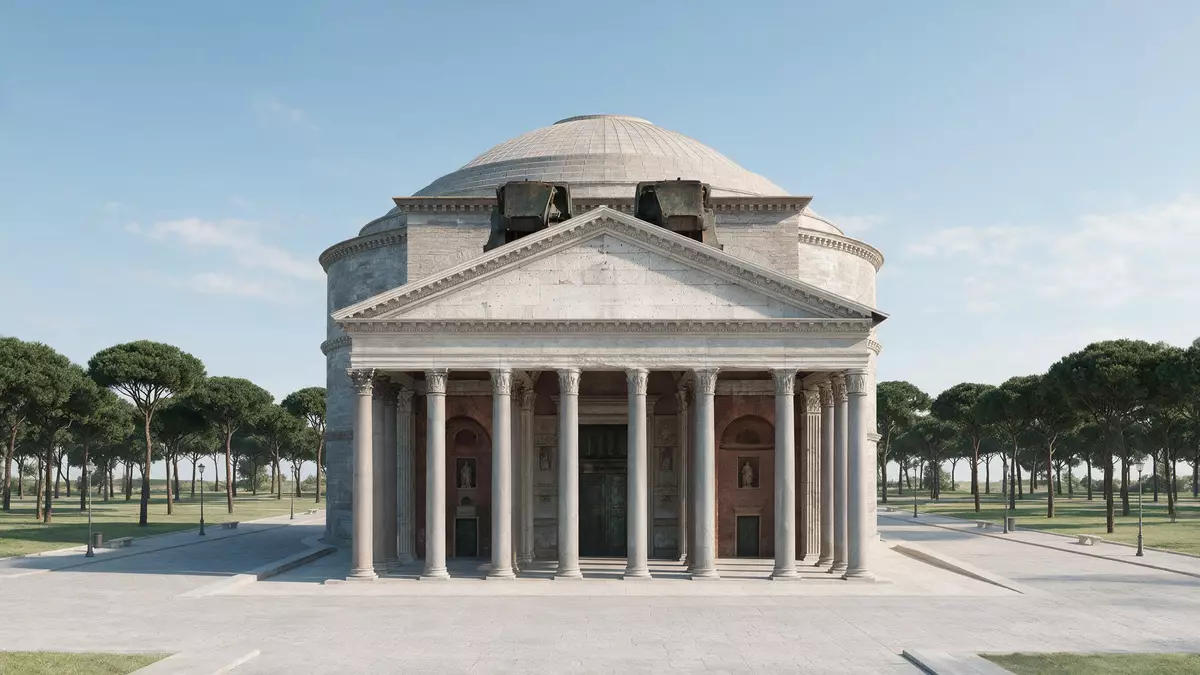
Pantheon in Rome is a Roman temple turned church whose vast concrete dome forms a perfect sphere over the rotunda, still anchored by Marcus Vipsanius Agrippa’s name on its portico.
A temple rebuilt under Hadrian
The origins of Pantheon reach back to the late first century BC, when Marcus Vipsanius Agrippa had a temple constructed under Augustus, inscribing his dedication on the portico that visitors see on Piazza della Rotonda.Marcus Vipsanius Agrippa The present building, however, belongs to the reign of the emperor Hadrian, who oversaw a complete rebuilding between AD 118 and 128, giving the monument the circular rotunda and monumental concrete dome that define its character.completed in c. 125 CE
In early Christian centuries Pantheon changed role when Pope Boniface IV obtained imperial permission to consecrate the building as a church dedicated to Santa Maria ad Martyres, an act recorded for 13 May 609 and marking the transition from pagan temple to basilica.Boniface IV consecrated the basilica This continuity of use under different cults, combined with its robust concrete construction, has left Pantheon remarkably intact compared with many other ancient Roman buildings.
The rotunda and its concrete dome
Seen from Piazza della Rotonda, Pantheon presents a deep portico of granite columns supporting a pediment that leads into a transitional block and then into the vast circular drum, a sequence of elements that Roman architects also used in baths and tombs but rarely combined at this scale.portico, transitional block, drum and dome Inside, the cylindrical walls rise to a cornice that cuts the height in half, above which the concrete dome curves overhead, resting on a drum pierced by niches and lined with coloured stone.
The dome itself is cast in Roman concrete, mixed with lighter aggregates such as tuff and pumice towards the crown, and spans more than 43 m (about 142 ft) across the interior.43.3 metres in interior diameter The height from the floor to the opening in the dome matches this diameter, so the enclosed space forms a perfect sphere, half imaginary below the floor and half visible above. This geometry has helped make Pantheon’s dome the largest unreinforced concrete dome in the world, a record held for nearly two millennia.largest dome in masonry or unreinforced concrete
Light, coffering and the oculus
Within the rotunda, light enters from the great opening at the apex of the dome, casting moving patches across the patterned marble floor and articulated walls as the sun shifts over Rome. Around the interior surface, the dome is articulated by sunken coffers set in concentric rings, reducing the mass of concrete and framing the light that plays across the surface.coffers in five rings
The opening at the top has a diameter close to 9 m (around 29.5 ft) and stands 43.3 m (142 ft) above the floor, marking the centre of the hemisphere and the single point from which the interior geometry is measured.a ball 43 metres across The rim is formed by a thick ring of concrete strengthened with brick courses, creating a compression ring that helps distribute forces around the opening, while a bronze band along its edge recalls the original metal coverings of parts of the structure.
Visiting Pantheon: what travellers from Western Europe should know
- Pantheon stands in Piazza della Rotonda in central Rom, within the historic core of the city and surrounded by narrow streets lined with shops and cafés.
- Approaching the building involves walking across the level cobbled surface of the square and stepping over the threshold into the rotunda, where the marble floor extends beneath the dome.
- The official language is Italian and the currency is the euro.
- Metro and bus services in Rome reach streets close to Piazza della Rotonda, from which the building is reached on foot through the surrounding lanes.
Searching for Pantheon on social platforms
These links open searches for Pantheon on each platform.
Frequently asked questions about Pantheon
Where is Pantheon in Rome?
Pantheon stands in Piazza della Rotonda in central Rom, within the historic fabric of the city’s ancient and Renaissance streets.
What should visitors expect inside Pantheon?
Visitors enter a circular hall beneath a concrete dome forming a perfect sphere, with light entering from the opening above and reflecting off patterned marble surfaces.
What makes Pantheon distinctive among Roman buildings?
The combination of its granite-columned portico, its circular rotunda and its vast unreinforced concrete dome has left Pantheon as one of the best-preserved structures from imperial Rome.