
Pantheon in Rom, the dome of stone and light
Published on 09/19/2026 at 06:39 | Editorial responsibility: Rafael Müller, Editor-in-Chief AD HOC NEWS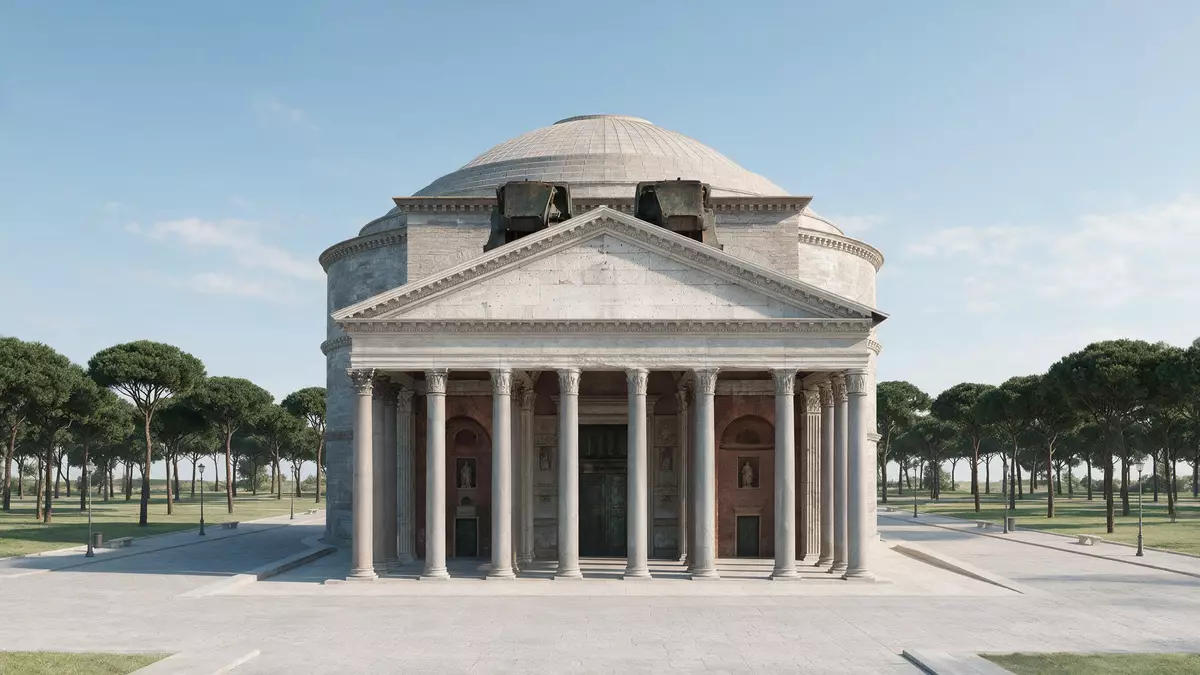
Pantheon in Rom is a Roman temple in piazza della Rotonda, rebuilt under Hadrian in the second century AD and later consecrated as a church. Its great dome and portico make the building read as both monument and sanctuary.
Pantheon’s portico and rotunda
The front porch carries a deep colonnade, while the main body behind it rises as a large round chamber beneath a dome. Hadrian’s rebuilding gave the Pantheon its present form, and Marcus Vipsanius Agrippa remains tied to the earlier temple named on the façade. The contrast between the rectangular porch and the circular interior is visible before a visitor crosses the threshold.
The upper space is crowned by a single opening in the roof, and the walls carry niches, marble revetment and a disciplined rhythm of bays. The building’s long life has left Christian furnishings beside Roman structure, so the same shell holds different layers of use.
The dome as the defining form
The dome is the feature that gives the Pantheon its most immediate presence, both outside and within. Its concrete mass spans the rotunda in a way that has made the building a standard point of reference for Roman engineering. The Pantheon and its 43.3 m diameter place it among the most carefully proportioned buildings of antiquity.
Inside, the round wall and curved ceiling create a clear geometric order that is easy to read from the floor. The coffered surface, the marble floor and the heavy masonry all belong to the same Roman framework, even though the building now serves a different rite.
From imperial temple to church
The Pantheon’s identity is bound to more than one period of Rome. The structure began as an imperial monument linked to Agrippa and was remade under Hadrian, then consecrated in AD 609 as Santa Maria ad Martyres. AD 609 and the early second century AD anchor that change in a fixed historical frame.
That sequence explains why the building carries pagan Roman memory and Christian devotion in one envelope. The inscription on the façade, the rotunda behind it and the church fittings within the interior all belong to the same continuous fabric.
Visiting Pantheon: what travellers from Western Europe should know
- The Pantheon stands in Piazza della Rotonda in central Rome, close to the urban fabric around the square.
- The building’s interior is a large circular chamber with a dome overhead and a single opening in the roof. The floor and walls are in stone and marble.
- The portico fronts the rotunda with a row of columns, and the threshold marks a clear shift from open square to enclosed interior.
- The official language is Italian and the currency is the euro.
- Entry requirements depend on your nationality; UK travellers can check the FCDO travel advice at gov.uk/foreign-travel-advice, Irish travellers the Department of Foreign Affairs at ireland.ie.
Searching for Pantheon on social platforms
These links open searches for Pantheon on each platform.
Frequently asked questions about Pantheon
Where is Pantheon?
Pantheon stands in Piazza della Rotonda in central Rome, within walking distance of the city’s historic core.
What should visitors expect?
Visitors enter a portico and then a large round interior with marble surfaces, niches and a dome above. The building reads as a Roman shell with Christian use inside.
What makes Pantheon distinctive?
The Pantheon’s combination of a classical façade, a circular rotunda and a vast concrete dome defines its character. The façade name, Hadrian’s rebuilding and the later consecration all remain part of the same place.


