
Pantheon in Rom: Hadrian’s dome and Roman stone
Published on 08/29/2026 at 16:30 | Editorial responsibility: Rafael Müller, Editor-in-Chief AD HOC NEWS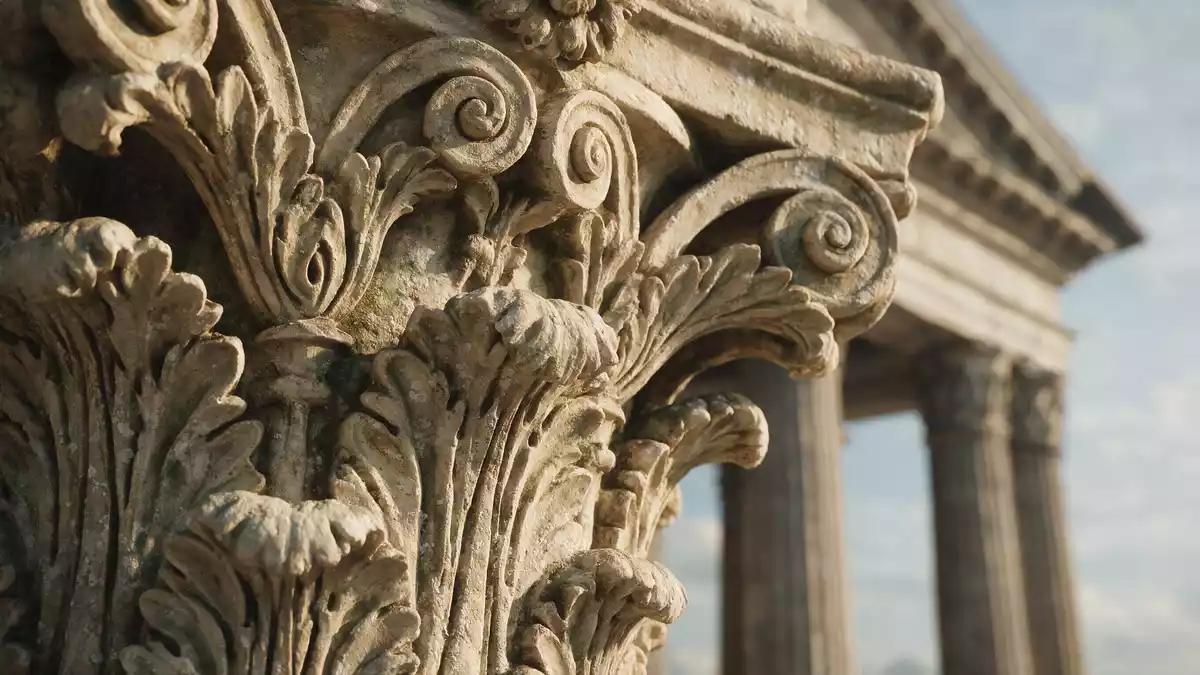
Pantheon in Rom is a Roman monument of concrete, brick and stone with a deep portico and a vast domed rotunda. It combines the name of Marcus Agrippa with the rebuilding under Hadrian, and that pairing still defines the building.
A Roman shell in the centre of Rom
The building stands in the historic centre of Rome and presents a classical front before the round hall behind it. Its exterior reads as a sequence of a colonnaded porch, a heavy wall and the great dome above the rotunda.
The Pantheon is linked with the Roman emperor Augustus through Marcus Agrippa, whose name survives on the inscription across the façade. The present structure belongs to the reign of Hadrian, and that double history is visible in the building’s layered identity.
The rotunda and its concrete dome
The interior is dominated by a single broad round chamber covered by a concrete dome. The dome rises from thick walls and is lined with recessed coffers, while the uppermost opening leaves the sky visible inside.
That opening is the most memorable part of the interior, because it leaves the dome unclosed at the top. The Pantheon was completed in the early second century, and a reliable dating places the surviving building in the Hadrianic period.
From imperial temple to Christian church
The Pantheon changed religious use in AD 609, when it became a Christian church dedicated to St Mary and the Martyrs. That later role helped preserve the building through centuries of continuous use.
Inside, the monument carries both pagan Roman memory and Christian devotion. The survival of the portico, dome and marble interior makes the Pantheon a rare Roman building whose main form remains legible at a glance.
Visiting Pantheon: what travellers from Western Europe should know
- The Pantheon stands on Piazza della Rotonda in central Rome, within walking range of the surrounding historic quarter. Public transport serves the area through central city routes and nearby bus stops.
- The building is entered on foot through the portico and into the rotunda. The interior is a single large chamber with a high dome and a broad marble floor.
- The dome’s central opening leaves the roof open to the sky. The walls carry niches, columns and marble revetment.
- The official language is Italian and the currency is the euro.
Searching for Pantheon on social platforms
These links open searches for Pantheon on each platform.
Frequently asked questions about Pantheon
Where is Pantheon?
Pantheon stands in the centre of Rome on Piazza della Rotonda. It is one of the city’s best-known Roman monuments.
What does a visit involve?
The visit centres on the portico, the round interior and the dome above it. The building reads as a single, unified space rather than a sequence of many rooms.
What makes Pantheon distinctive?
Its most striking feature is the combination of a classical temple front with a vast domed rotunda. The opening at the top of the dome leaves the interior connected to the sky.


