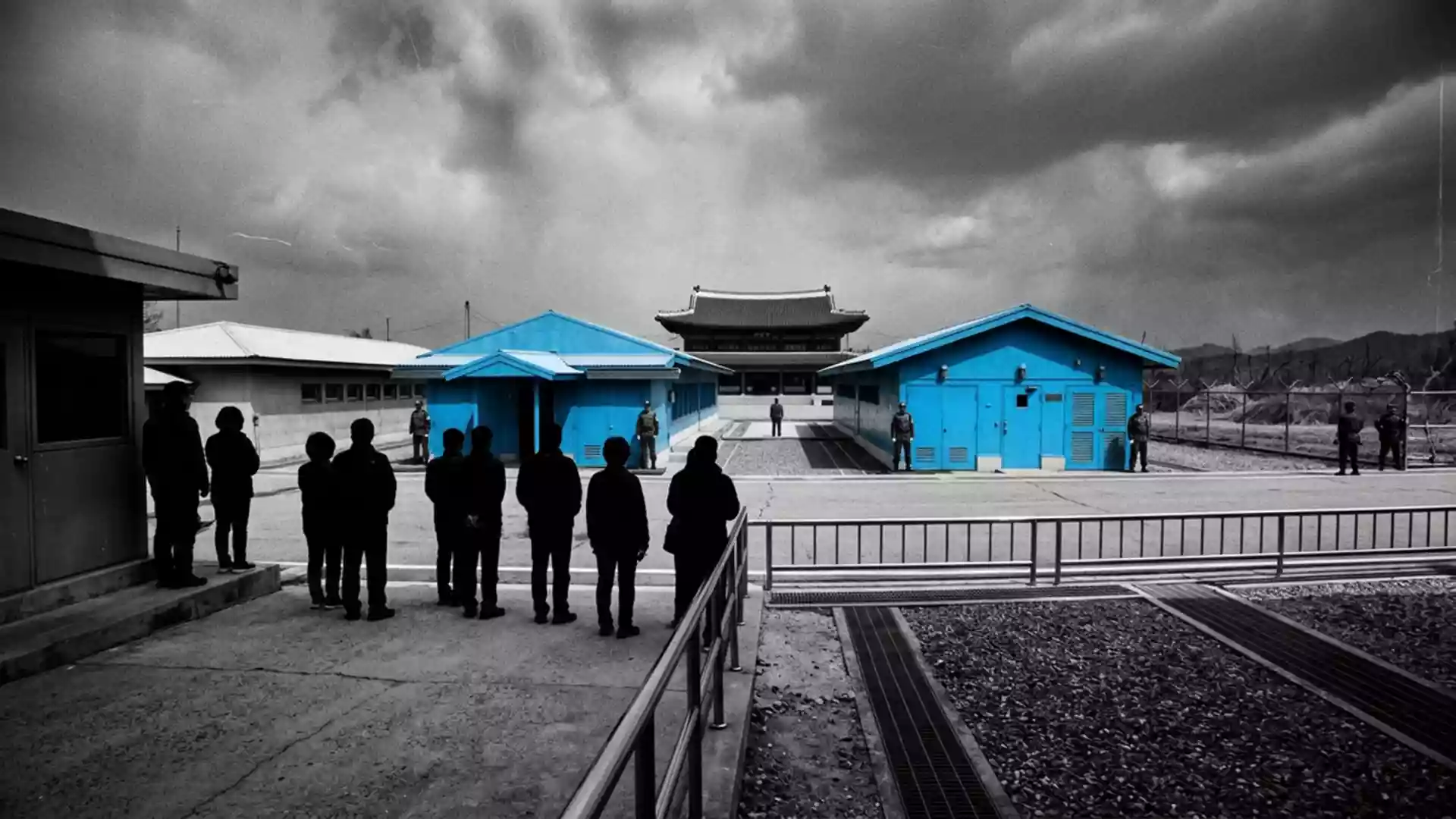
Panmunjom and the blue barracks on the Korean border
Published on 09/09/2026 at 18:48 | Editorial responsibility: Rafael Müller, Editor-in-Chief AD HOC NEWS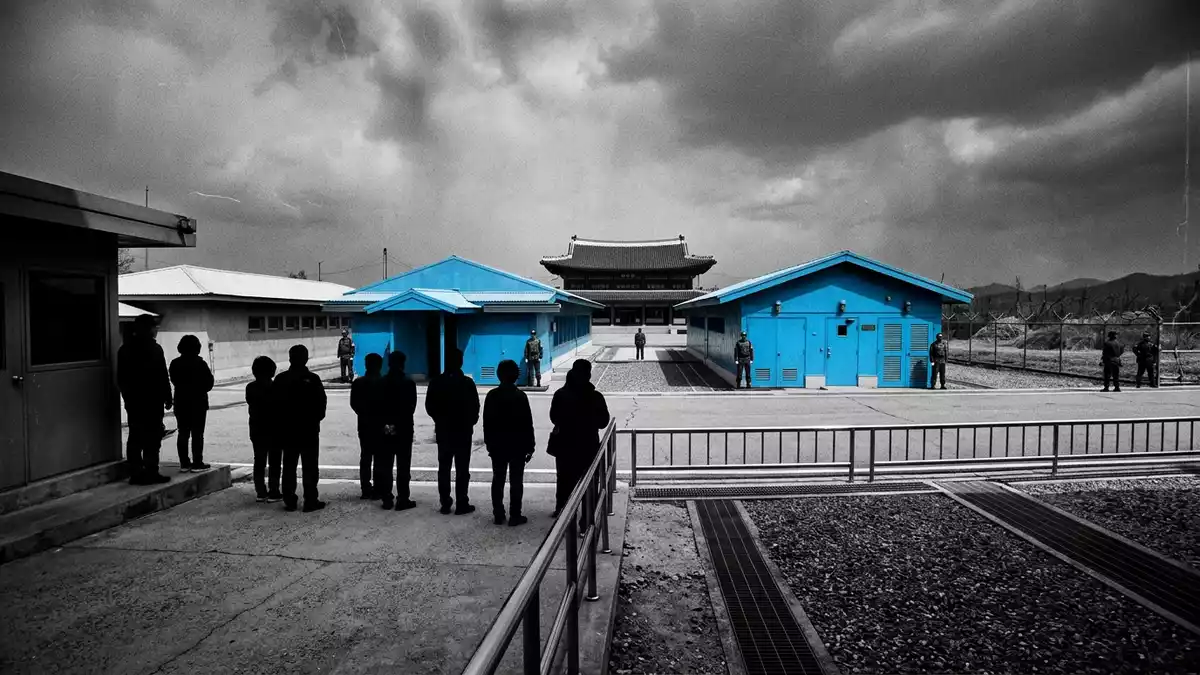
Panmunjom is the name attached to a cluster of low buildings and guard posts on the Korean Demilitarized Zone where the Korean Armistice Agreement was signed in 1953 and where the border between North and South Korea can be seen marked on the ground between two rows of structures.The armistice agreement of 27 July 1953 brought the fighting of the Korean War to an end at this site, and its name has since become a shorthand for the Joint Security Area where soldiers from both sides stand facing each other across the line.
Panmunjom and the Korean Armistice
During the Korean War, Panmunjom served as the location for truce talks between United Nations forces and the armies of North Korea and China, culminating in the signing of the Korean Armistice Agreement on 27 July 1953.The armistice was signed at Panmunjom and established the Demilitarized Zone as a buffer strip between the opposing forces, withdrawing military units from a band of land several kilometres wide and fixing a demarcation line between the two Koreas.The armistice created the Demilitarized Zone The agreement also set up the Military Armistice Commission to supervise adherence to its terms and to provide a forum for discussion of violations, and the truce village became the regular venue for these contacts.
The original village of Panmunjom lay slightly north of the present cluster of conference buildings and checkpoints, and its name is now applied more broadly to the Joint Security Area built after the armistice.The current Joint Security Area sits on the Military Demarcation Line inside the Demilitarized Zone and is used for direct contacts between North and South Korean representatives in the blue-painted meeting rooms that straddle the line.Conference buildings across the line The name Panmunjom therefore refers both to the historical truce site and to the present security compound that grew out of it.
The Joint Security Area and its blue conference rooms
The Joint Security Area, often simply called Panmunjom, is the only section of the Demilitarized Zone where soldiers of North Korea and the United Nations Command, including South Korean troops, stand directly opposite each other on open ground separated by a marked line.The Joint Security Area is the face-to-face zone In the central strip of this area, single-storey conference barracks with distinctive blue paint sit in a row on prepared ground, with the Military Demarcation Line running under them so that meetings can take place literally astride the border.Blue conference buildings over the line On one side of the row stands a larger, pale administrative building facing the line, whose balcony and steps provide a formal viewing position from the South Korean and United Nations side.
The southern half of the Joint Security Area is administered by the United Nations Command, while the northern half falls under the control of the Korean People’s Army, giving the site an unusual split structure visible in details such as guard posts, flags and signage.Administrative division of the JSA Conference rooms on the line are used for military and diplomatic contacts between North and South Korea, and their simple interiors carry equipment and furniture for formal meetings held under close supervision.Meeting venue for inter-Korean talks The compact scale of the compound and the narrow strip of paved ground between the buildings stand in marked contrast to the breadth of the Demilitarized Zone around it.
Panmunjom as a controlled destination on the Demilitarized Zone
Panmunjom lies north of Seoul inside the Demilitarized Zone near the route towards Gaeseong, far enough from ordinary civilian settlements that access is tightly managed and movements are escorted within a defined perimeter.Panmunjom sits inside the Demilitarized Zone The surrounding strip of land is a buffer between the two Koreas, with fences, patrols and watchtowers marking its limits and reinforcing the separation between the northern and southern halves of the peninsula.The DMZ forms the border zone Within this controlled environment, the truce village offers one of the clearest physical views of the division, with the line marked between hard-surfaced forecourts and the buildings aligned squarely against it.
Visits to Panmunjom are arranged through approved tour programmes under the authority of the United Nations Command, and travellers are escorted through the Demilitarized Zone to designated observation points and meeting rooms.Access through designated tour operators The controlled nature of the site means that movement is limited to prepared routes, with clear instructions from escorting personnel and formal briefings on behaviour at the border line inside the conference building.
Visiting Panmunjom: what travellers from Western Europe should know
- Panmunjom lies inside the Korean Demilitarized Zone north of Seoul, with access from the South Korean side organised through roads leading towards Paju and the border region.
- The area visited on a standard tour consists of level paved surfaces, low buildings and steps up to viewing platforms, and movement between points usually involves short walks under guidance.
- The official language is Korean and the currency is the South Korean won.
- Entry requirements depend on your nationality; UK travellers can check the FCDO travel advice at gov.uk/foreign-travel-advice, Irish travellers the Department of Foreign Affairs at ireland.ie.
Searching for Panmunjom on social platforms
These links open searches for Panmunjom on each platform.Frequently asked questions about Panmunjom
Where is Panmunjom?
Panmunjom lies within the Korean Demilitarized Zone north of Seoul, near the approach to Gaeseong in what is today the border region between North and South Korea.
What can visitors expect on a tour of Panmunjom?
Visitors are taken under escort along prepared routes to observation points and conference buildings on the border line, with briefings on behaviour and limited free movement.
What makes Panmunjom distinctive among border sites?
Panmunjom is distinctive for its rows of blue conference barracks straddling the Military Demarcation Line and for its role as the signing place of the 1953 Korean Armistice Agreement.