
Pamukkale’s white terraces and the city above them
Published on 09/04/2026 at 09:09 | Editorial responsibility: Rafael Müller, Editor-in-Chief AD HOC NEWS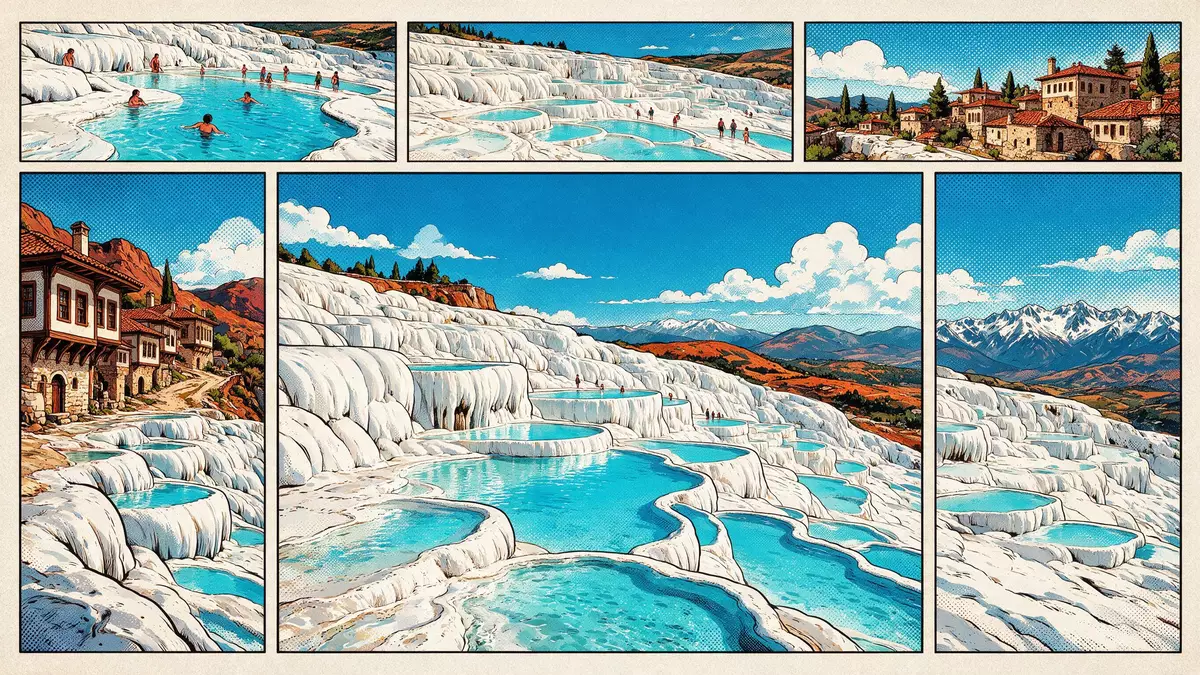
Pamukkale in Denizli is known for white travertine terraces beneath the ruins of Hierapolis. The landscape, the ancient city and the UNESCO inscription of 1988 give it a clear historical frame.
Pamukkale and the ruined city above
The terraces belong to a natural setting formed by calcite-rich springs. calcite-laden waters and the UNESCO World Heritage List link the site to both geology and cultural history. The name Pamukkale, meaning “cotton castle”, points to the colour of the terraces.
Above the formations lies Hierapolis, founded by the Attalids at the end of the second century BC. The ruins include baths, temples and other Greek monuments, and the site is one of the best-known mixed heritage landscapes in Turkey. The long connection between spring water and settlement gives the place its character.
Travertine terraces and thermal springs
The visual centre is the stepped limestone surface below the ancient city. Its shallow basins, white mineral deposits and mineralised outcrops create a strong contrast with the darker plain beyond. The springs are part of the same setting that shaped the spa city above.
Hierapolis developed beside this landscape, with Roman and later Christian remains spread across the plateau. The site preserves a theatre, a necropolis and temple ruins, so the walk between the terraces and the archaeological zone crosses two linked environments. A Hellenistic spa town stands beside a natural formation that remains the main visual element of Pamukkale.
Pamukkale in the long view
The place has been shaped by water, stone and settlement across different periods. The terraced surfaces sit below the ancient hilltop city, while the ruins preserve evidence of Greek, Roman and Byzantine presence. That combination gives Pamukkale a layered profile without relying on spectacle alone.
Its strongest features are visible at a glance: white terraces, ruined walls, baths and the broad slope between them. The formal heritage status and the established name of Hierapolis anchor it in a historical landscape rather than a single monument.
Visiting Pamukkale: what travellers from Western Europe should know
- Pamukkale lies in Denizli in south-western Turkey, and the site is reached through the Denizli area by road.
- The terrain combines travertine surfaces, archaeological ground and uneven slopes between the terraces and the ancient city.
- The official language is Turkish and the currency is the Turkish lira.
- Entry requirements depend on your nationality; UK travellers can check the FCDO travel advice at gov.uk/foreign-travel-advice, Irish travellers the Department of Foreign Affairs at ireland.ie.
Searching for Pamukkale on social platforms
These links open searches for Pamukkale on each platform.
Frequently asked questions about Pamukkale
Where is Pamukkale?
Pamukkale is in Denizli in south-western Turkey. It forms part of the Hierapolis-Pamukkale heritage area.
What can be seen there?
White travertine terraces, thermal springs and the ruins of Hierapolis define the site. The archaeological area includes baths, temples and a theatre.
What makes Pamukkale distinctive?
The combination of calcite terraces and an ancient city on the same slope gives the place its identity. The UNESCO inscription of 1988 reflects that mixed natural and cultural character.


