
Palm Jumeirah, Dubai’s palm?shaped island city
Published on 09/10/2026 at 13:19 | Editorial responsibility: Rafael Müller, Editor-in-Chief AD HOC NEWS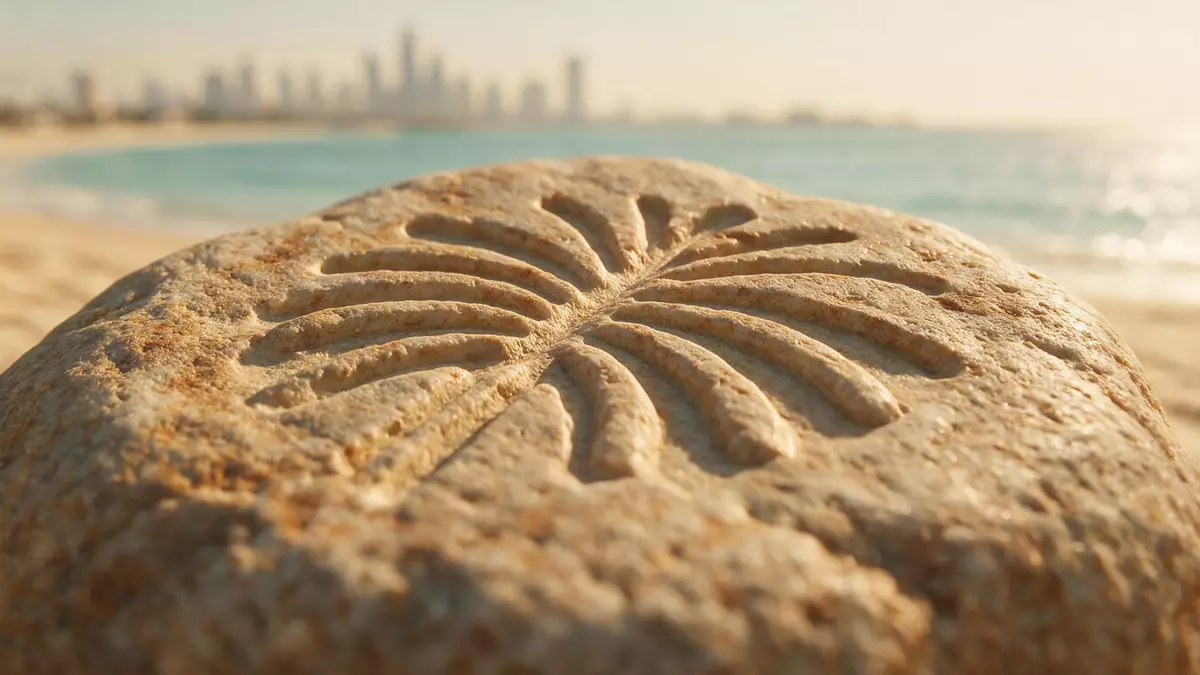
Palm Jumeirah in Dubai is a vast artificial archipelago laid out as a stylised palm tree, projecting several kilometres into the Arabian Gulf and lined with waterfront homes and resorts. Built in the early twenty?first century as part of the Palm Islands programme led by Nakheel, it has become a distinct offshore district with its own skyline, shoreline and transport spine.
A palm tree drawn into the sea
Palm Jumeirah sits off the Jumeirah coastal strip of Dubai, on the southern shore of the emirate facing the Arabian Gulf. It is part of a trio of planned developments known as the Palm Islands, together intended to extend Dubai’s shoreline far beyond its natural coast through large?scale land reclamationPalm Islands development. Work on Palm Jumeirah began in 2001 under the government?owned developer Nakheel, turning open water into a patterned island footprint using dredged sand and quarried rocklaunched in 2001.
From the air the development reads clearly as a palm tree enclosed within a ring. A central trunk runs out from the mainland, carrying apartments, shops and road links, while a series of fronds branch off to either side as residential peninsulastrunk with fronds and crescent. These fronds are lined with villas and low?rise residences, each with direct access to the surrounding water. Around the outside, a broad crescent forms a continuous breakwater, shielding the inner lagoon from the Gulf and providing a platform for large hotels, beach clubs and leisure complexes.
Engineering a new shoreline
The scale of Palm Jumeirah is unusual even in a city accustomed to grand projects. The reclaimed footprint covers on the order of several square kilometres, and together with the other Palm Islands it added dozens of kilometres of waterfront to Dubai’s coastlineadded 56 km of coastline. Marine works specialists such as Van Oord were involved in shaping the outline, using high?precision positioning to spray sand into place and build up the palm and crescent formssand and rock volumes. Beneath the beaches and streets lies a mass of compacted sand and rock, stabilised to carry roads, towers and shoreline structures.
Structurally, the crescent serves both as a visual frame and as an extended breakwater. It runs for around 11 km (just under 7 mi) in length, with hotels, resorts and attractions arranged along its inner and outer shorescrescent-shaped breakwater. Below the waterline, a subsea road tunnel links the trunk to the crescent, allowing vehicle traffic to pass under the lagoon between the inner neighbourhoods and the outer resort beltsubsea tunnel connection. The whole composition effectively creates a sheltered inner basin with calmer water, ringed by beaches and residential plots.
An offshore district of homes and hotels
As reclaiming and infrastructure works were completed in the mid?2000s, Palm Jumeirah began to fill out as a place to live and stay. The trunk combines apartment towers and mid?rise blocks with commercial premises, forming a spine of mixed?use development that connects to Dubai’s mainland road networkmixed residential and commercial trunk. The fronds are laid out as quieter residential cul?de?sacs, each lined with villas, gardens and small jetties for private craftfronds reserved for homes. The crescent has become a continuous arc of luxury and upscale resorts, many with extensive pool decks, private stretches of shore and views back towards the city’s towers.
Population figures for Palm Jumeirah are reported in the tens of thousands, reflecting its evolution into a sizeable residential district offshore from central Dubaipopulation over 25,000. A number of hotels and serviced apartments sit alongside permanent homes, so the island hosts both long?term residents and short?stay visitors. At the outer tip of the crescent, Atlantis The Palm stands out as one of the landmark resort complexes on the archipelago, combining a hotel, aquapark and marine?themed attractionsAtlantis resort and water park.
Visiting Palm Jumeirah: what travellers from Western Europe should know
- Palm Jumeirah lies off the Jumeirah coastal area in Dubai, reached by road bridges from the mainland and by the Palm Jumeirah Monorail running along the trunk.
- The island’s layout involves long waterfront streets on the fronds, a central spine of multi?lane roads and a crescent route accessed through an underwater tunnel, so moving around includes elevated sections and enclosed roadways.
- The shoreline is a mix of sandy beaches and built?up waterfront promenades, with distances between points of interest large enough that public transport or taxis are widely used within the development.
- Dubai is in the United Arab Emirates; the official language is Arabic and the currency is the UAE dirham.
- Entry requirements depend on your nationality; UK travellers can check the FCDO travel advice at gov.uk/foreign-travel-advice, Irish travellers the Department of Foreign Affairs at ireland.ie.
Searching for Palm Jumeirah on social platforms
These links open searches for Palm Jumeirah on each platform.
Frequently asked questions about Palm Jumeirah
Where is Palm Jumeirah located?
Palm Jumeirah is an artificial island off the Jumeirah coastal area of Dubai in the United Arab Emirates, extending into the Arabian Gulf as a palm?shaped archipelago.
What should visitors expect on a first visit?
Visitors encounter a large offshore district structured around a central trunk, villa?lined fronds and a crescent of resorts, with beaches, promenades and long distances between main sights.
What makes Palm Jumeirah distinctive among Dubai’s districts?
Its palm tree plan, crescent breakwater, reclaimed?land foundations and combination of permanent residences with resort complexes give Palm Jumeirah a character different from the city’s mainland neighbourhoods.


