
Palia Poli Rodou, the walled medieval heart of Rhodos
Published on 08/31/2026 at 11:50 | Editorial responsibility: Rafael Müller, Editor-in-Chief AD HOC NEWS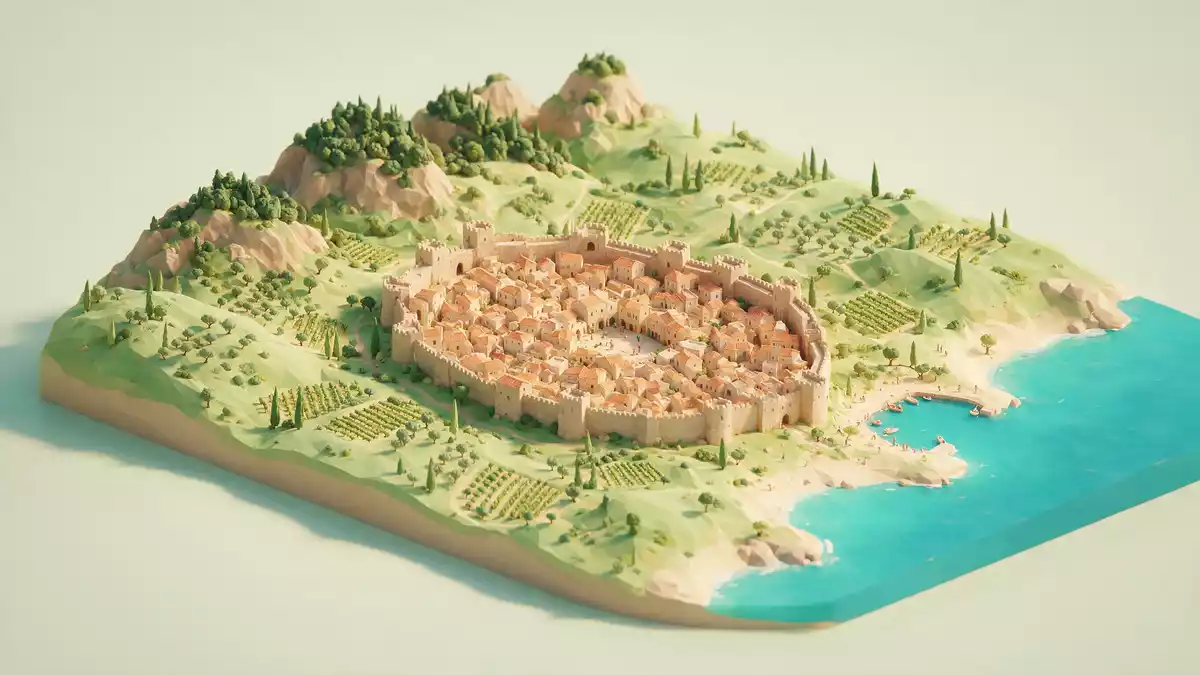
Palia Poli Rodou, the medieval old town of Rhodos, is a fully enclosed historic city where fortification walls, stone streets and lived-in houses occupy the same compact urban space. Within these walls, the district known internationally as the Medieval City of Rhodes forms the fortified core of the modern city and has been recognised as a UNESCO World Heritage Site since the late twentieth century.
Stone walls, gates and the outline of a fortress city
The defining feature of Palia Poli Rodou is its continuous ring of fortification walls, a defensive system that encloses the historic city and marks a clear boundary between the medieval core and later expansion outside. The medieval city is inscribed on the UNESCO World Heritage List under the name “Medieval City of Rhodes”, highlighting its value as a fortified town that retains its historic layout and fortifications.Medieval City of Rhodes The enclosing walls extend for several kilometres and are articulated with bastions, towers and city gates that once controlled movement between the harbour and the interior.fortified city center
Inside the walls the medieval city divides into a higher quarter to the north and a lower quarter towards the south-southwest, an urban structure that reflects the way the fortified town developed on slightly raised and more level ground near the harbour.high town and lower town The fortifications incorporate gates leading towards the sea and towards the inland road network, so that the old town remains connected to the rest of Rhodos-Stadt while still reading clearly as a separate historic entity within its walls.
Layers of architecture from knights to Ottoman and Italian rule
Palia Poli Rodou carries visible traces of several periods of rule, with Gothic military architecture from the time of the Knights Hospitaller standing alongside later Ottoman religious buildings and Italian-era restorations. The Knights of Saint John, also known as the Knights Hospitaller, transformed Rhodes into a major stronghold between the fourteenth and early sixteenth centuries, leaving behind streets lined with austere stone façades and buildings such as the Palace of the Grand Master and the street of the knights.Rhodes Old Town These structures anchor the character of the high town and show how a religious-military order shaped a whole urban quarter.
After the island fell to Ottoman rule in 1522, new monuments joined the existing fabric rather than replacing it completely, adding mosques and houses with different forms and surface treatments to the older masonry. Among the most notable Ottoman monuments in the old town is the Suleymaniye Mosque, which stands out with its dome and striped arches set within the medieval street grid.Suleymaniye Mosque Later, under Italian administration in the twentieth century, parts of the historic centre were restored, maintaining the overall medieval outline while stabilising and adapting individual buildings.
A lived-in medieval city at the tip of Rhodos
The old town occupies the historic core of the city of Rhodes at the northern end of the island, close to the main harbour and modern waterfront. Within the walls, narrow streets, small squares and rows of houses make Palia Poli Rodou an inhabited district, not an isolated monument, and everyday life continues in premises that retain medieval and early modern structures.old town of Rhodes The juxtaposition of residential buildings, religious monuments and civic structures inside the same fortification ring shows how defence, trade and domestic life were concentrated in one compact area.
The UNESCO inscription dates from 1988, placing the Medieval City of Rhodes among the protected historic urban sites recognised for their cultural significance in the late twentieth century.World Heritage City by UNESCO This formal status underlines how Palia Poli Rodou combines a nearly complete medieval fortification system with an urban plan and building stock that still show successive layers of Greek, crusader, Ottoman and Italian presence.
Visiting Palia Poli Rodou: what travellers from Western Europe should know
- Palia Poli Rodou lies within the medieval city walls of Rhodos-Stadt on the northern tip of the island of Rhodos, immediately inland from the main harbour and waterfront.
- The historic core is approached through city gates in the fortification walls, and movement inside the old town involves walking along stone streets and passages where surfaces can be uneven.
- The island of Rhodos belongs to Greece, so the official language is Greek and the currency is the euro.
- Within the walls, streets are often narrow and some routes rise or fall gently, so exploration of different quarters of the old town requires short walks on foot.
Searching for Palia Poli Rodou on social platforms
These links open searches for Palia Poli Rodou on each platform.
Frequently asked questions about Palia Poli Rodou
Where is Palia Poli Rodou located?
Palia Poli Rodou is the medieval old town within the fortification walls of Rhodos-Stadt at the northern end of the island of Rhodos in Greece.
What should visitors expect inside the old town?
Visitors encounter an inhabited historic district with stone streets, houses, religious monuments and civic buildings arranged within a continuous ring of medieval fortifications.
What makes Palia Poli Rodou distinctive among historic towns?
The combination of a complete fortification system, a clearly legible medieval street plan and architectural layers from crusader, Ottoman and Italian periods makes it distinctive.


