
Palazzo Ducale: Venice’s lace-like palace of power
Published on 08/29/2026 at 20:23 | Editorial responsibility: Rafael Müller, Editor-in-Chief AD HOC NEWS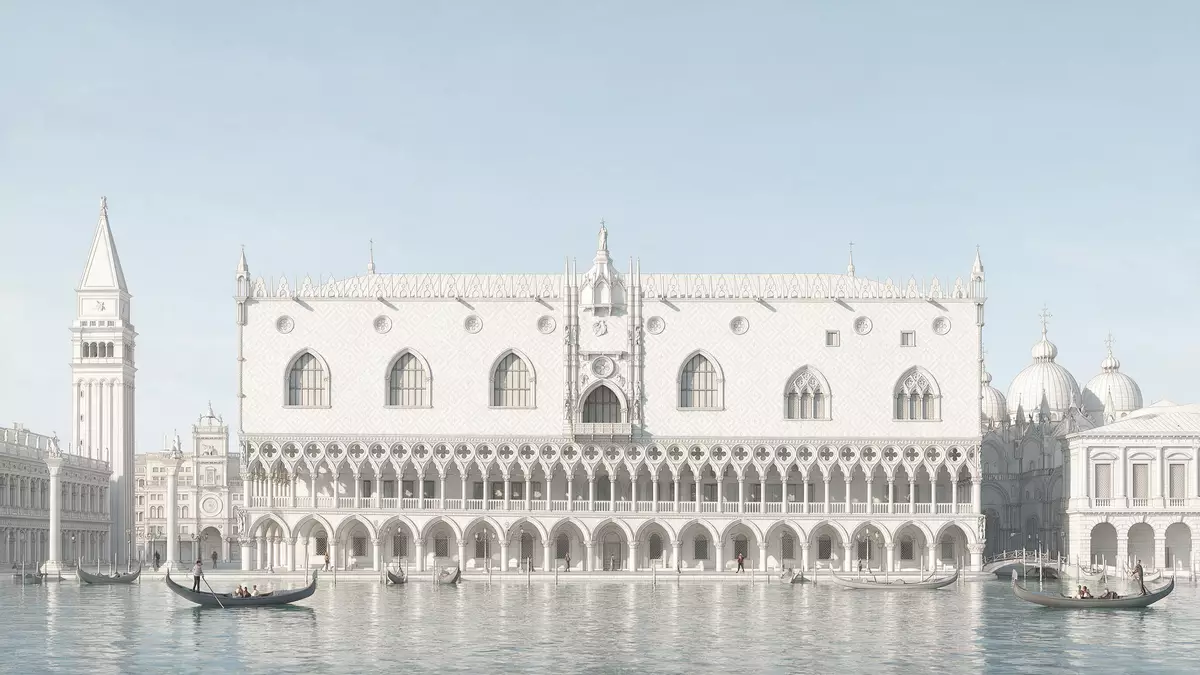
Palazzo Ducale in Venedig is at once a palace, a seat of government and a museum, wrapped in a distinctive skin of pale arcades and patterned stone facing the water. It rose from early medieval origins and took on its present form between the fourteenth and sixteenth centuries, during the height of the Venetian Republic. The palace stands beside the Basilica San Marco and the Molo, placing its ornate façades directly between the city and the lagoon.
A Gothic shell over centuries of government
Palazzo Ducale is widely recognised as a masterpiece of Venetian Gothic, the local variant of Gothic architecture shaped by trade routes and stone from across the Adriatic. Its most visible faces are the south side towards the Bacino di San Marco and the west side towards the piazza, both rebuilt in the fourteenth and fifteenth centuries on foundations that reach back to the ninth century.The wing towards St. Mark’s Basin is the oldest portion in its current Gothic form, reconstructed from 1340 onwards, while the side facing the square reached its present outline from 1424.
The palace is closely tied to the history of the Republic of Venice, which was governed for centuries by an elected doge constrained by councils drawn from the city’s noble families.The building served as residence and workplace for successive doges, while also housing the Great Council and lower bodies, law courts, administrative chambers and a prison. The present three-sided complex grew through repeated rebuilding after fires in the late fifteenth and late sixteenth centuries, with Renaissance phases between 1483 and 1565 adding canal-side apartments and offices for the machinery of state.The eastern wing along the canal dates from this Renaissance campaign, overlaying older cores.
Stone, arcades and patterned façades
From the Molo and the waterfront, Palazzo Ducale appears almost weightless: a pale ground-floor arcade in white Istrian stone carries a second open loggia, above which rises a broad wall patterned in pink and white masonry.The lower levels use white Istrian stone, while the upper surfaces are clad in Verona pink marble set in an oblique diamond pattern that continues around the corners. The loggia’s openings are framed by Gothic tracery and quatrefoil cut-outs, a lace-like stone screen that gives the palace its distinctive horizontal emphasis.
Architectural guides often single out the palace’s structure as unusual: heavy halls sit above comparatively slender colonnades, reversing the expectation of mass below and lightness above.The present Gothic envelope took shape from 1340, incorporating older fortified cores and responding to the needs of expansion rather than fortification. Inside, courtyard façades show a transition between Gothic and Renaissance, with sculpted capitals, balconies and ceremonial portals providing entry from the courtyard towards the grand chambers.
Council halls, chambers and the Bridge of Sighs
Within Palazzo Ducale, a network of staircases and corridors leads to the main institutional spaces: the Sala del Maggior Consiglio for the Great Council, chambers for the Senate and the Council of Ten, and smaller rooms reserved for magistrates and specialised committees.The palace housed the administrative centre, hall of justice, prison and archive of the Republic, allowing legislative, judicial and executive functions to operate under one roof. The doge’s own apartments occupied part of the canal-side wing, close to the centres of deliberation.
The complex is also known for its connection to the city’s former prison through the Bridge of Sighs, an enclosed passage added around 1600 to link the palace to new detention buildings.This bridge carries small cells and corridors across the canal, forming part of a sequence from courtroom to confinement that is still legible in the layout. In the twentieth century Palazzo Ducale was transformed into a museum; since 1923 it has been one of the institutions run by the civic museum foundation, presenting art, architecture and the apparatus of government inside the historical fabric.The building is now among the museums of the Fondazione Musei Civici di Venezia.
Visiting Palazzo Ducale: what travellers from Western Europe should know
- Palazzo Ducale stands on the eastern side of Piazza San Marco in Venedig, beside the Basilica San Marco and facing the Bacino di San Marco, with its main façades fronting the lagoon and the square.
- The approach from the piazza and the waterfront uses arcaded walkways and broad staircases; inside, historic routes between floors include long stair flights and some narrower staircases in the towers and service areas.
- Venedig is reached over water and rail connections from mainland Italy, with the palace lying a short walk from the landing stages on the Molo and from stops serving the historic centre.
- The official language is Italian and the currency is the euro.
Searching for Palazzo Ducale on social platforms
These links open searches for Palazzo Ducale on each platform.
Frequently asked questions about Palazzo Ducale
Where is Palazzo Ducale located in Venedig?
Palazzo Ducale stands on the eastern side of Piazza San Marco in Venedig, beside Basilica San Marco and overlooking the Bacino di San Marco.
What can visitors expect inside Palazzo Ducale?
Visitors move through historic staircases, courtyard spaces and grand council halls, alongside smaller chambers and passages that once linked courtrooms to the former prison.
What makes Palazzo Ducale distinctive among Venetian palaces?
Its combination of a lace-like Gothic arcade, pink-and-white patterned stone façades and a long role as the Republic’s central seat of power gives Palazzo Ducale a singular presence in Venedig.


