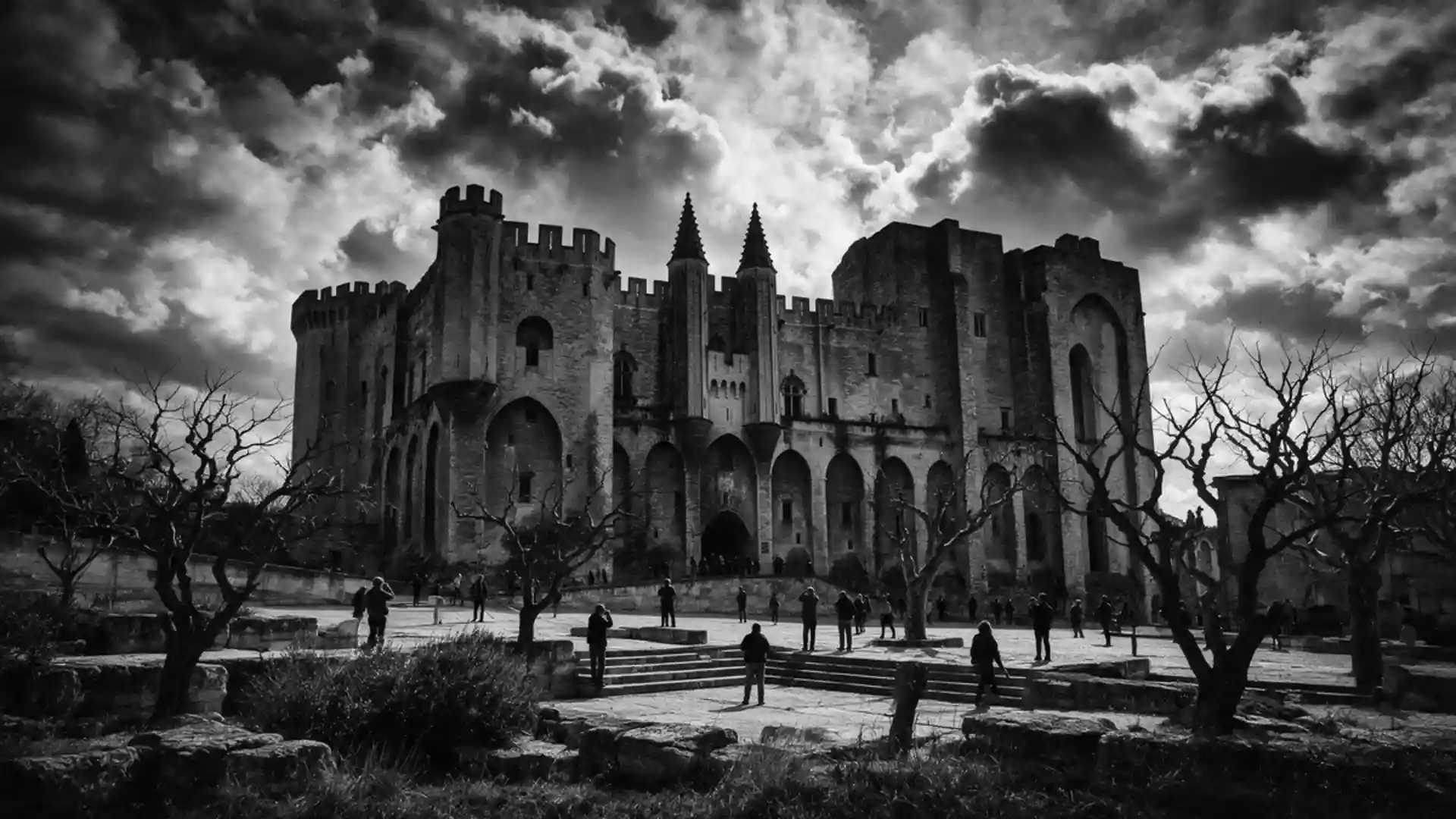
Palais des Papes, Avignon’s monumental Gothic papal fortress
Published on 09/11/2026 at 13:28 | Editorial responsibility: Rafael Müller, Editor-in-Chief AD HOC NEWS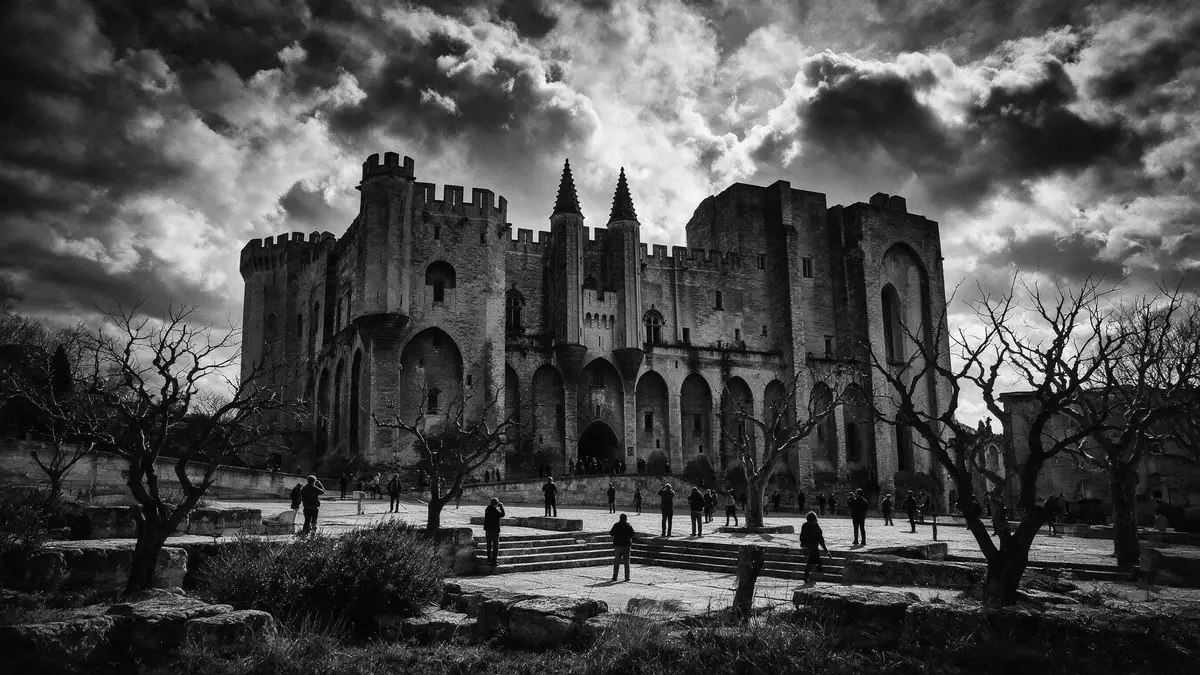
Palais des Papes in Avignon is a vast Gothic fortress-palace where fourteenth-century popes turned a rocky outcrop above the Rhône into a monumental seat of power. Built in the mid-fourteenth century and later recognised within the Historic Centre of Avignon as a UNESCO World Heritage Site, it still dominates the city from the Rocher des Doms.
A double palace carved into rock and skyline
Palais des Papes stands on the Rocher des Doms, a limestone spur above the left bank of the Rhône, with its mass of masonry rising directly from the rock into the Avignon skyline.Rocher des Doms above the left bank of the Rhône The complex is firmly rooted in Gothic architecture, with tall walls, buttresses and towers forming an ensemble that reads as both fortress and palace.one of the largest medieval Gothic buildings in Europe
The palace grew in two principal construction phases, creating a structural contrast that visitors can trace in the stone. To the north and east lies the Palais Vieux, or Old Palace, associated with Pope Benedict XII, whose building campaign began in the 1330s and produced a fortified, relatively austere block.amalgamation of two palaces built by two popes To the south and west, the Palais Neuf, or New Palace, linked to Pope Clement VI, expanded the residence with larger halls and more elaborate interiors. Together they form a single complex whose sheer volume has been described as equivalent to multiple Gothic cathedrals.Palais Vieux and Palais Neuf built by Benedict XII and Clement VI
The Avignon papacy written in stone
The story of Palais des Papes is inseparable from the Avignon papacy, the period during which the papal court left Rome and settled in southern France in the fourteenth century.Avignon papacy with seven popes reigning there Beginning in the 1330s, successive popes commissioned the palace as their residence, administrative centre and ceremonial setting. Benedict XII initiated major building works, replacing an earlier episcopal residence with the fortified Old Palace, and Clement VI continued the transformation by adding the New Palace with grand reception spaces.
Across the fourteenth century, seven popes occupied Palais des Papes before the papacy returned to Rome in 1377, and further claimants to the papal title used Avignon during the Great Schism.seat of Western Christianity during the 14th century Inside the complex, Italian painters such as Matteo Giovannetti created fresco cycles in chapels and private apartments, leaving vivid traces of the ceremonial life that unfolded within the fortress walls.lavishly decorated by Simone Martini and Matteo Giovanetti Later, after the end of the Avignon papacy, the palace served as the seat of papal legates and vice-legates and was eventually used as a military barracks before entering a new phase as a monument open to the public.residence of legates and vice-legates until the Revolution
Halls, towers and chapels on a Gothic scale
The scale of Palais des Papes becomes clear once inside its courtyards and halls. The combined complex reaches around 15,000 m2 (161,000 sq ft) of floor area, with towers, chapels and audience chambers arranged around central spaces.15,000 m2 masterpiece of a monument External walls rise to considerable heights and are reinforced to serve defensive purposes, expressing the dual role of the building as an ecclesiastical centre and a fortress.
Inside, large halls such as audience chambers host high Gothic vaults and long spans, while towers contain chapels with painted interiors. Decorative programmes incorporate heraldic motifs, religious imagery and patterned borders, reflecting both French Gothic tradition and Italian pictorial influence. Courtyards open between the masses of stone, giving perspectives on the layered construction phases of the Old and New Palace. Together, these elements make Palais des Papes one of the defining secular Gothic ensembles of fourteenth-century Europe and a central piece of Avignon’s historic urban fabric, alongside the cathedral and the surviving sections of the bridge across the Rhône.Historic Centre of Avignon inscription
Visiting Palais des Papes: what travellers from Western Europe should know
- Palais des Papes rises above Place du Palais in central Avignon, in the south of France, close to the Rhône and within the walled historic centre.
- The complex stands on the Rocher des Doms, and exploring it involves staircases, changes of level and substantial interior spaces within towers and halls.
- The surrounding historic centre includes Avignon Cathedral and the remains of the famous bridge, so the palace visit sits within a compact area of medieval monuments.
- France’s official language is French and the currency is the euro.
Searching for Palais des Papes on social platforms
These links open searches for Palais des Papes on each platform.Frequently asked questions about Palais des Papes
Where is Palais des Papes?
Palais des Papes stands in Avignon in southern France, on the Rocher des Doms above the left bank of the Rhône within the city’s historic centre.
What can visitors expect inside Palais des Papes?
Visitors encounter large Gothic halls, chapels, towers and courtyards within a fortified palace complex that once housed the papal court throughout much of the fourteenth century.
What makes Palais des Papes distinctive among European monuments?
Its combination of fortress-scale masonry, extensive Gothic interiors and direct association with the Avignon papacy makes Palais des Papes a singular secular palace of the fourteenth century.