Palais Bahia and the layered courtyards of Marrakesch
Published on 09/14/2026 at 20:53 | Editorial responsibility: Rafael Müller, Editor-in-Chief AD HOC NEWS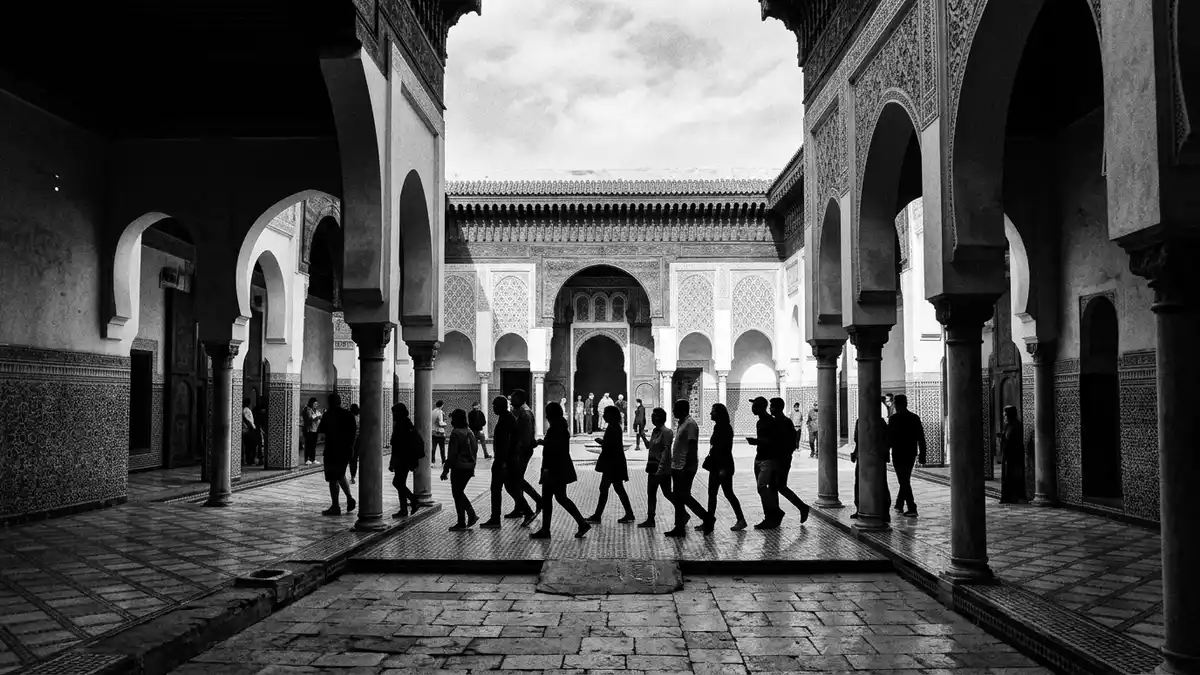
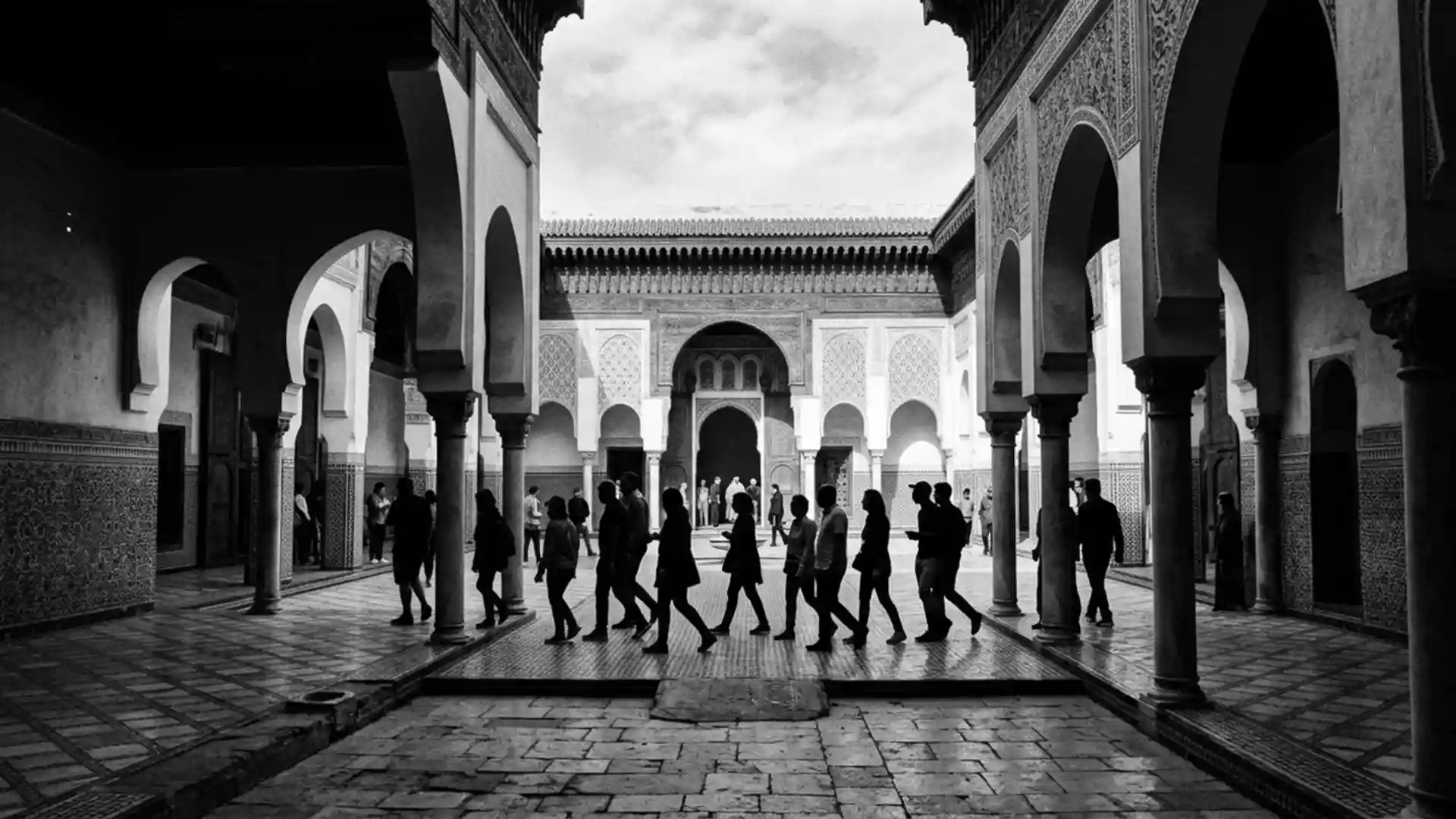
Palais Bahia in Marrakesch is a late nineteenth-century palace whose layered courtyards and richly decorated rooms define its character. It began under Si Moussa, grand vizier under Sultan Muhammad ibn Abd al-Rahman, and was enlarged under Ba Ahmed, grand vizier to Sultan Moulay Abdelaziz.
Courtyards, gardens and painted ceilings
The palace brings together courtyards, gardens, salons and annexes in an irregular plan. Its interiors are known for painted wood ceilings, carved stucco and zellij tilework, with marble and stained glass in several rooms.Bahia Palace
The building’s size is part of the experience of moving through it. One account gives the complex around 150 rooms, arranged around multiple internal courtyards and riad gardens, while another describes an eight-hectare compound in the medina.medina of Marrakech
Si Moussa and Ba Ahmed
Si Moussa, a grand vizier of the Alawi court, began the earliest phase in the 1860s. Ba Ahmed, his son, expanded the residence between 1894 and 1900, and that later campaign gave the palace much of its present form.Si Moussa
The palace is therefore a record of courtly ambition in stone, plaster and timber. Its rooms and courts sit side by side rather than as a single ceremonial hall, and that sequence is part of its appeal as a historic residence.
From palace to historic monument
Palais Bahia later passed into a different public role, and that change is visible in its preserved interiors and formal rooms. It is now one of Marrakesch’s major historic monuments, with the decoration carrying most of the visual weight.historic monument
The palace sits in the medina along the northern edge of the Mellah, the former Jewish quarter. That setting places it among the dense lanes of old Marrakesch, where domestic scale and aristocratic display meet in the same urban fabric.the northern edge
Visiting Palais Bahia: what travellers from Western Europe should know
- The palace is in the medina of Marrakesch, along the northern edge of the Mellah. It is reached on foot through the old city streets, with the surrounding lanes forming part of the approach.
- The route inside passes through courtyards, gardens and rooms rather than a single open hall. Several doorways, thresholds and changes of level shape the movement between sections.
- The decoration is concentrated in timber ceilings, stucco surfaces, marble details and zellij. The interior favours surface pattern over plain wall space.
- The official language is Arabic and the currency is the Moroccan dirham.
Searching for Palais Bahia on social platforms
These links open searches for Palais Bahia on each platform.
Frequently asked questions about Palais Bahia
Where is Palais Bahia?
Palais Bahia stands in Marrakesch’s medina, along the northern edge of the Mellah. The palace is part of the old city fabric rather than a separate compound.
What does a visit reveal?
It reveals a sequence of courts, gardens and rooms with elaborate surfaces. Painted ceilings, carved plaster and zellij dominate the interior decoration.
What makes Palais Bahia distinctive?
Its strength lies in the combination of courtly history and interior richness. Si Moussa and Ba Ahmed left a palace of courtyards, annexes and ornament rather than a single monumental hall.