
Palafitos de Chiloe: Castro’s timber houses above the tide
Published on 09/24/2026 at 08:23 | Editorial responsibility: Rafael Müller, Editor-in-Chief AD HOC NEWS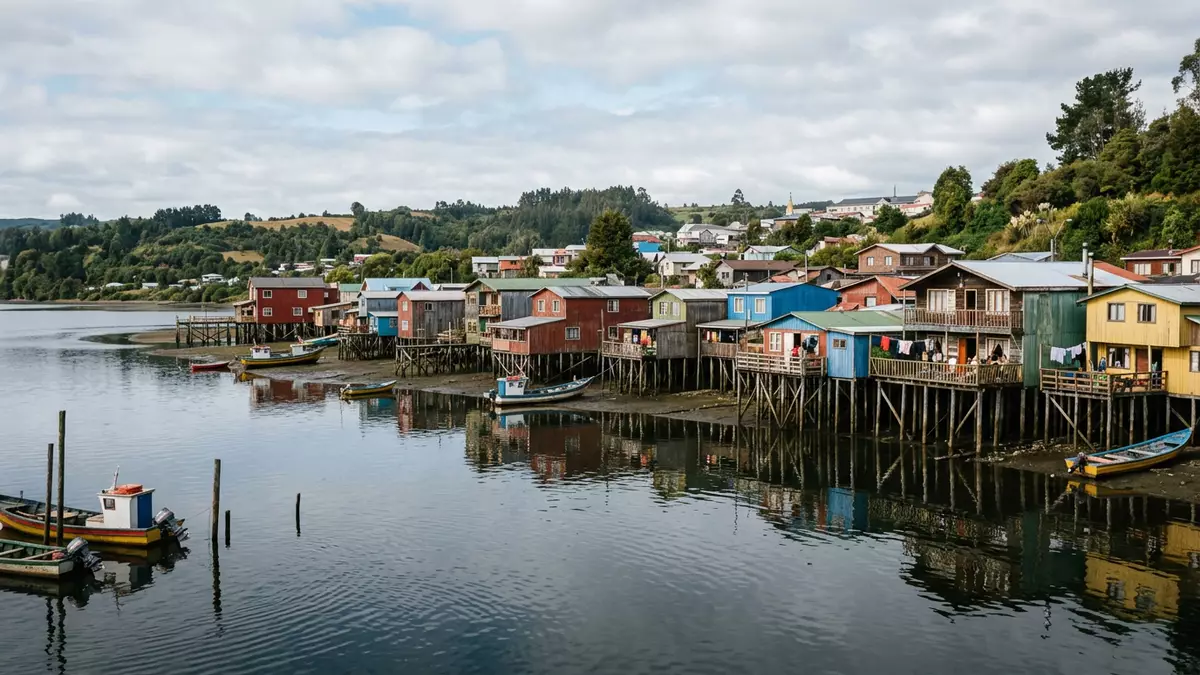
Palafitos de Chiloe are timber houses raised above the tidal waterfront of Castro on Chiloé Island, Chile. Their coloured façades face the town, while terraces, piles and lower platforms reach towards the water.
The houses turn the shoreline into a visible meeting point between domestic architecture and the sea. At high tide, water reaches beneath the raised structures; at low tide, their wooden supports and the tidal ground become part of the view.
Castro’s houses between street and sea
The palafitos occupy sections of Castro’s waterfront, particularly in the Gamboa and Pedro Montt neighbourhoods. The Gamboa group stands beside the Gamboa River, while Pedro Montt follows the bay-facing edge of the city.
Each house has a public face towards the street and another towards the water. Bridges and raised walkways connect the street side with timber platforms, creating a sequence of homes, terraces and waterfront structures. The arrangement is visible from Castro’s streets, the shoreline and the pedestrian bridge over the Gamboa River.
The façades use strong colours, while the construction depends on local timber and wooden piles. The Chilean heritage authority describes piles made from luma wood and walls painted in vivid colours.luma wood piles
From nineteenth-century waterfront to living neighbourhood
Palafitos began appearing in the towns of Chiloé during the nineteenth century. In Castro, the Gamboa neighbourhood became associated with houses that combined domestic life with commercial activity beside the water.
The houses belonged to the working waterfront of the archipelago. Their timber platforms connected homes with boats, shoreline activity and the town above the river. The form belongs to Chiloé’s wider building culture, where wood is both a structural material and a visible part of everyday life.
Castro was founded in 1567 and became the main urban centre of Chiloé. The palafitos form a separate architectural layer within that long history, linking the city’s streets with the tidal inlets around its shore.Castro’s 1567 foundation
Natural disasters have shaped the surviving waterfront. Earthquakes, tsunami waves and fires damaged palafito districts across Chiloé, while the Gamboa neighbourhood retained a visible group of houses after the earthquake and tsunami of 1960.
The buildings have also changed function. Some remain homes, while others contain cafés, restaurants, craft shops, small lodgings and cultural businesses. The houses therefore remain part of a lived neighbourhood rather than a single-purpose monument.Gamboa’s waterfront history
Wood, colour and the changing tide
The defining view is architectural and tidal at once. Rows of painted timber façades rise above the shoreline, while the space beneath the houses changes visibly with the water.
At high tide, the palafitos appear to float above the inlet. At low tide, piles, mudflats and channels become visible below the raised terraces. The same houses therefore present different relationships with the water across the tidal cycle.
The street-facing elevations are connected to Castro by bridges and walkways. On the water-facing side, balconies and terraces extend the houses towards the inlet. This double orientation gives the palafitos their distinctive form without separating them from the ordinary streets of the city.
The Gamboa palafitos are particularly clear from the pedestrian bridge crossing the river. From there, the houses, supports and river mouth appear together, with Castro’s rising streets behind them.
Palafitos de Chiloe also belong to the cultural landscape of the Chiloé archipelago. The island’s wooden churches, traditional houses and maritime settlements share a regional building culture, while the palafitos add a specifically tidal expression to Castro’s urban shore.
Architect Edward Rojas is associated with conservation work on Chiloé’s traditional architecture and with the restoration of palafito buildings. His work includes the Palafito 1326 Boutique Hotel and Palafito Cucao Lodge.Edward Rojas’s restoration work
The result is a waterfront made from ordinary materials but arranged in an unusual urban setting. Timber homes, coloured walls, raised terraces and tidal ground form one continuous view along Castro’s edge.
Visiting Palafitos de Chiloe: what travellers from Western Europe should know
- Palafitos de Chiloe are found along Castro’s waterfront, especially in Gamboa and Pedro Montt. The Gamboa group is reached from the city by streets leading towards the river and its pedestrian bridge.
- The pedestrian bridge over the Gamboa River provides a clear view of façades, terraces and wooden piles. The shore appears different at high tide and low tide.
- Castro is connected with mainland Chile by road and the Chacao Channel ferry route. Flights and buses connect the city with other parts of Chile.
- The official language is Spanish and the currency is the Chilean peso.
- Entry requirements depend on your nationality; UK travellers can check the FCDO travel advice at gov.uk/foreign-travel-advice, Irish travellers the Department of Foreign Affairs at ireland.ie.
Searching for Palafitos de Chiloe on social platforms
These links open searches for Palafitos de Chiloe on each platform.Frequently asked questions about Palafitos de Chiloe
Where are Palafitos de Chiloe?
They line sections of Castro’s waterfront on Chiloé Island, especially around the Gamboa River and Pedro Montt neighbourhood.
What can visitors expect to see?
Visitors can see coloured timber houses, raised terraces, bridges, wooden piles and tidal ground from streets, shore viewpoints and the Gamboa pedestrian bridge.
What makes the palafitos distinctive?
The houses combine domestic architecture with a tidal waterfront setting. Their street-facing façades and water-facing terraces connect Castro’s urban life with the sea.


